Blake Fielder-Civil fell in love in a Camden pub. It cost both of them everything.
Blake Fielder Civil has spent 15 years carrying something that no one else will carry with him. He was a 20-something drug addict who fell in love with a woman in a pub. What happened next destroyed both of them and the album it produced sold 30 million copies. But to understand the night Amy Winehouse met Blake Fielder Civil, you need to understand where both of them were in their lives when it happened.
Because the story of that meeting is not a simple story about a good person and a bad person. It is a story about two young people who found each other at exactly the wrong moment or exactly the right one depending on what you think music is for and what you think it costs. It was 2005. Amy was 21 years old and she had already done something that most musicians spend entire careers trying and failing to do.
She had made a record that mattered. Frank, her debut album, had been released two years earlier and had introduced her voice to anyone who was paying attention. The Jazz Inflections, the Ivor Noll Award, the critics reaching for comparisons that hadn’t been used in decades. She was signed to Island Records. She had a manager, a team, a trajectory.
She was, by any reasonable measure, on her way. She was also deeply unhappy in the specific way that 21-year-olds are unhappy when the external facts of their life look better than the internal ones. She had broken up with a boyfriend named Chris. She was drinking more than was good for her. She was in the early stages of a relationship with food and with her own body that would become in the years that followed one of the more painful threads of her story.
She was performing regularly in the Camden music scene, the bars and small venues of the neighborhood. She had never left and never wanted to leave, and her voice was extraordinary, and everyone who heard it knew it, and none of it was quite enough to fill the thing that was empty. Blake Fielder Civil was 23.
He was from Northamptonshire, a long way culturally from Camden, and he had come to London in the way that young men come to London when they are restless and not sure what else to do. He was working as a video production assistant. He was charming in the particular way that people are charming, when they have not yet been required to be anything else, naturally, effortlessly, without calculation.
He was also, by his own later admission, already deep into the lifestyle that would eventually consume years of his life and land him in prison. He was the kind of person who moved through rooms easily and left an impression and did not always think carefully about what came after. On the night they met, he had just won a bet.
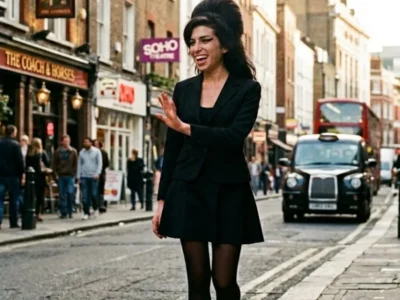
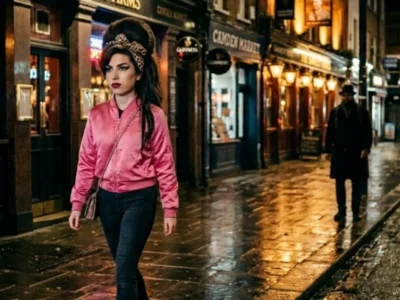
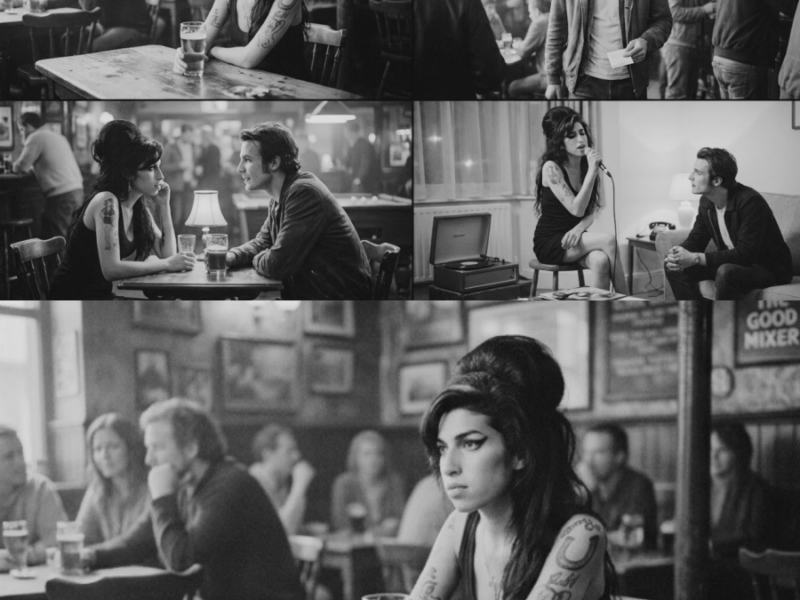
He was feeling lucky in that loose expansive way that a small wind produces the sense that the evening had already given him something and might give him more. He walked into the good mixer on Inest Street in Camden. It was a pub that had been a fixture of the local music scene for years, an old-fashioned place with pool tables and live music and the particular atmosphere of somewhere that took itself seriously without being precious about it.
It was exactly the kind of pub Amy spent time in. It was exactly the kind of pub Blake gravitated toward. They found each other across the room. The Good Mixer had a particular reputation in Camden at that time. It was a pub where musicians ended up after gigs, where the music scene bled into ordinary drinking hours, where the boundary between performing and existing was thinner than in most places. It was not glamorous.
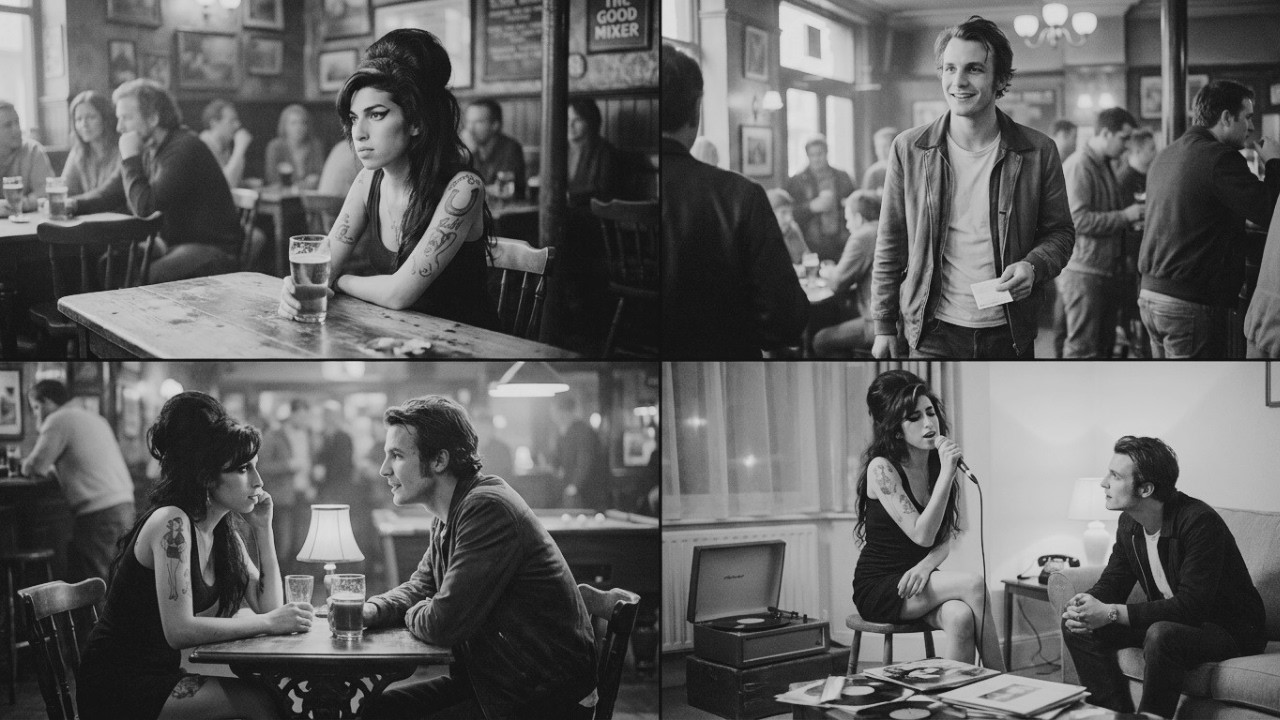
It was not trying to be. That was precisely its function, a room where people could be whoever they were without the performance that the rest of the city required. Amy was comfortable in rooms like that. She had been performing in them since she was a teenager, since the nights when she would sit on a bar stool with a microphone and sing jazz standards to whoever happened to be there, long before anyone outside Camden knew her name.
She introduced herself as a singer. He had not heard of Amy Winehouse, which was either a disadvantage or an advantage, depending on how you look at it. He had no framework for who she was supposed to be, no expectation to project onto her, no version of Amy Winehouse, the icon to overlay on Amy Winehouse, the person. He saw a young woman with an elaborate hairo, and a directness that was unusual, and a quality of presence that was difficult to look away from.
She saw something in him, too. Something she would later describe in song with an honesty so complete that the songs became the definitive account of the relationship, more reliable than anything either of them said in interviews. They talked and then later that night she took him back to her flat.
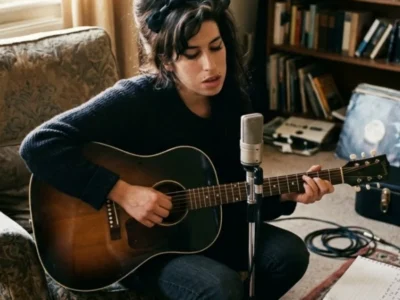
In the flat, she sang to him not one of her own songs, a jazz standard called Round Midnight, a Thelanon Monk composition from 1944 that had been covered by everyone from Miles Davis to Ella Fitzgerald, and that Amy had absorbed somewhere in the musical education her father had given her, without particularly planning to. She sat down and she sang it at 2 in the morning for a man she had met a few hours earlier and Blake Fielder Civil who had said he fancied her before that moment said afterward that he fell in love with her during the song. That is
the detail that tells you something true about Amy, not just about this relationship, but about who she was. She communicated through music in the way that some people communicate through language more fluently, more honestly, more completely. She could say in a song what she could not find other words for.
And on the night she met the person who would define the next chapter of her life, the most natural thing in the world, was to sit down and sing. Within weeks, they were inseparable. Within a month, she had tattooed his name on her neck. Not a small private tattoo, his name visible, permanent on her neck, the declaration of someone who did not believe in half measures and did not understand why anyone would want to love carefully.
Her management saw it and understood immediately that something had shifted. Her manager, Nick Godwin, said later that Amy changed overnight after she met Blake. Not gradually, overnight. Her personality became more distant. he said, and it seemed to him that this was connected to the drugs, that the woman who had told him class A substances were for idiots who had laughed at people who used them was now in proximity to someone for whom they were ordinary.
The relationship moved fast and burned hot and began to produce within months the particular wreckage that comes when two people with no emotional moderation find each other and decide to go all the way. There were fights that ended with both of them bleeding. There were nights that went somewhere neither of them had planned. There were tender moments that the tabloids never photographed and that only the people who were there know anything about.
And there was underneath all of it something that people who observed them consistently described as real, a genuine connection, a genuine recognition, the sense that these two people had found in each other something they had not found elsewhere. even if what they did with that finding was consistently destructive. 6 months after they met, Blake left.
He went back to a former girlfriend. He walked away from Amy in the abrupt clean way that some people walk away from things, not gradually, not with long conversations, but suddenly and then gone. And Amy Winehouse, who had tattooed his name on her neck and told everyone who would listen that she was in love, sat down in her flat in Camden and did what she always did when the world gave her something she could not otherwise carry.
She wrote. The songs came quickly because they were not invented, they were reported. She was not constructing an emotional landscape. She was transcribing one that already existed note by note and word by word with the accuracy of someone who had no interest in making the pain more manageable by making it less precise.
She wrote about loving someone who was wrong for her. She wrote about knowing it was wrong and not being able to stop. She wrote about the specific grief of a love that had burned itself out and left something blackened where something living had been. She wrote back to black.
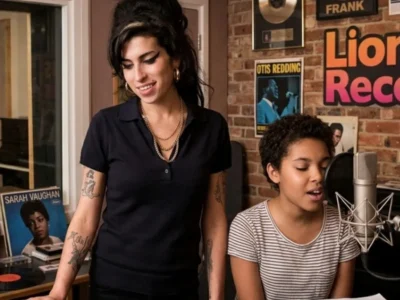
Mark Ronson heard the songs and understood what he was dealing with. He brought in the Dap Kings, the New York soul and funk band, who had never heard of Amy Winehouse until they were in a studio with her. And within minutes of her opening her mouth, they understood, too. The album was recorded in a state of sustained urgency.
The urgency of someone who needed to put something down before it shifted, before time or distance softened the edges of what had happened into something less true. It came out in October 2006. Within weeks, it was clear that something unusual had occurred. Back to Black came out in October 2006.
Within weeks, it was clear that something unusual had occurred. Not the ordinary success of a talented artist releasing a good record, but the rarer thing, the kind of impact that only happens when a piece of work finds the exact intersection between personal truth and universal feeling. People heard rehab and laughed.
They heard back to black and went quiet. They heard love is a losing game and recognized something in it that they had never heard said so precisely before. the specific experience of loving someone you know will not be good for you and choosing to love them anyway fully without the self-protective distance that wisdom would recommend.
The album went to number one in the United Kingdom. It entered the American charts higher than any British female artist had debuted before. Critics ran out of superlatives quickly and started reaching for historical comparisons. Billy Holiday, Nenah Simone, the great voices of a different era. Amy, when told about these comparisons, tended to deflect them with the self-deprecating humor that had always been her first line of defense.
She was not trying to be historic. She had been trying to tell the truth about what it felt like when Blake left. Blake came back. He reappeared in Amy’s life with the timing of someone who had been watching and waiting, or perhaps simply with the timing of someone who had made a mistake and wanted to correct it and did not think carefully about the consequences.
Amy took him back with the totality that characterized everything she did, not cautiously, not on probation, but completely. They married in May 2007 in Miami in a ceremony that neither of their families had been informed about in advance. Mitch Winehouse, who would later describe Blake in terms that cannot be repeated in polite company, found out from the press.
The marriage lasted 2 years and produced between the chaos and the legal trouble and the tabloid photographs and the jail sentences moments that the people who were there say were genuinely loving. Blake Fielder Civil is not a cartoon villain, however convenient that narrative has been. He was a young man with his own damage who found a young woman with her own damage and the combination of the two produced something that neither of them could control.
He admitted introducing her to heroin. He has carried that admission for 15 years in the specific way that people carry things they cannot put down publicly, painfully, without resolution. He was in prison when Amy died. He collapsed when he heard the news. A man who had known her since she walked across a pub and introduced herself as a singer who had heard her sing round midnight at 2:00 in the morning in her Camden flat and fallen in love with her voice before anything else.
Received the information in a cell and fell apart in the way that people fall apart when something irreversible happens and there is nothing to do and nowhere to go. There is a version of this story that is easy to tell and that many people have told. In that version, Blake Fielder Civil is the man who destroyed Amy Winehouse, who introduced her to heroin and pulled her into a world she could not escape and bears primary responsibility for what happened in a Camden flat on a July morning in 2011.
That version has the virtue of clarity. It has a villain and a victim and a moral. It is also by the account of almost everyone who knew both of them incomplete. Amy Winehouse was not someone who was acted upon. She was someone who acted fiercely completely with the same refusal to do anything by half measures that made her music what it was.
The choice to love Blake was hers. The tattoo on her neck was hers. The songs were hers. The grief that produced them and the love that preceded the grief, all of it hers. Blake Fielder Civil walked into the good mixer on a Tuesday night and found someone who was already in her own way on her way towards something difficult.
What he contributed was not destruction from the outside, but acceleration from the inside, a presence that intensified everything she already was, including the parts that were dangerous. In the years since, he has given interviews in which he has tried with varying degrees of success to explain something that resists explanation, the reality of what they were to each other underneath the wreckage and the headlines and the version of the story that had already been decided before anyone asked him.
He said once that he was a 20-some yearear-old drug addict and that the idea of him as a Machavevelian puppet master pulling the strings of Amy’s destruction was both flattering and wrong. He said he felt like the only person in the story who had ever held himself accountable. He said he had carried the burden alone for over a decade and that it was too heavy and that he needed to put some of it down.
What he cannot put down and what no version of the story can take away from him is the part he played in producing something that will outlast all of them. Back to Black exists because he left Amy in 2005 and she sat down and wrote the truth of what that felt like. The album has sold 30 million copies.
It has been called one of the greatest records of the 21st century. It is the kind of work that comes from the kind of pain that nobody chooses and that only certain people can transform into something permanent. On a Tuesday night in Camden in 2005, a young man walked into a pub having just won a bet. A young woman across the bar sang Jazz Standards and had a voice that did not sound like it belonged to someone her age.
They found each other and what happened next was the best and worst thing that either of them ever did. The album is still playing. Both of them are still living with what it