“Don’t Tell The Americans” — How A Canadian Corporal Broke The Most Famous US Marine Sniper Record
Three al Qaeda fighters were climbing toward a mortar nest on an Afghan mountainside. None of them knew that one and a half miles away on a different mountain, a Canadian corporal from a fishing island in Newfoundland already had them in his crosshairs. The bullet that killed one of them traveled for almost three full [music] seconds before it arrived.
By the time they heard the shot, the man was already dead. That single round broke a record an American legend had held for 35 years. And for a brief [music] window in 2002, the two longest kills in the history of warfare belonged to the same six men on the same mountain. [music] The Americans were so stunned they pinned medals on every one of them.
And then this corporal came home to Canada where his own army did something almost no one believes when they first hear it. They put him under investigation. This is the story of Rob Furlong, the longest shot in military history, and the strange, bitter aftermath that almost erased it. There’s a detail in this story [music] that almost nobody gets right.
For years, the record Furlong set was credited to a different man. The wrong sniper’s name went into the books. And Furlong, the one who actually pulled the trigger, said nothing, and let it stand. Why he stayed silent is tied directly to what happened to these men when they came home. And it’s the reason a national hero handed in his uniform and disappeared.
To understand the shot, you first have to understand where it happened. In March of 2002, [music] the war in Afghanistan was only a few months old. The Sha Ecot Valley in the mountains of eastern Afghanistan near Pakistan had become a stronghold for al-Qaeda and Taliban fighters who had pulled back into the high ground after the fall of Carbell.
The American plan to clear them out was called Operation Anaconda and it ran from the 2nd to the 11th of March 2002. It was some of the hardest fighting American forces had seen in the entire war up to that point. And in the middle of it was a small Canadian sniper team attached to the Americans doing work that would not become public for years.
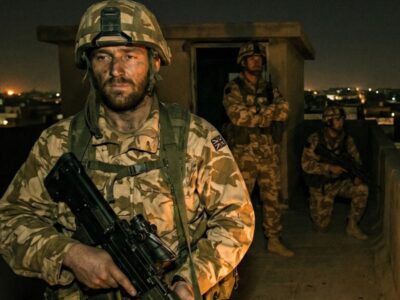
The team was made up of six men from the third battalion of Princess Patricia’s Canadian Light Infantry based out of Edmonton, Alberta. Master Corporal Graham [music] Ragdale was the team commander. Alongside him were Master Corporal Tim McMeakin, Master Corporal Aaron [music] Perry, Corporal Dennis Een, and Corporal Rob Furlong.
These were not special forces operators in the way most people imagine them. They were infantry snipers, highly trained, but regular army. And over those nine days in the Sha Ecot Mountains, they would hunt al-Qaeda fighters across some of the most punishing terrain on Earth. Rob Furlong himself came from about as far from an Afghan mountain as you can get.
He was born on Fogo Island, a small fishing community off the coast of Newfoundland in 1976. As a kid, he taught himself to shoot and he taught himself to do it with both hands, firing equally well off either shoulder. That kind of [music] self-made obsessive precision would matter more than anyone could have guessed. He joined the Canadian Army in 1997, served as a peacekeeper in Bosnia in 1999, and by 2002, he was lying in the dirt at 9,000 ft, looking through a scope at the enemy.
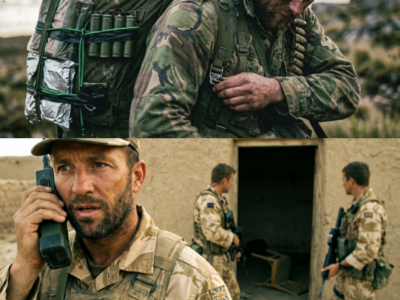
On that March afternoon, Furlong was lying flat against the rock, his stomach pressed to the cold ground. The rifle stretched out in front of him almost as long as he was tall. It was a McMillan Tac 50, the weapon the Canadians called the C-15, a 50 caliber bolt-action rifle loaded with heavy rounds built to punch through wind and hold their line over open ground.
On paper, the distance in front of him was past what this rifle was supposed to do against a man who was moving. He knew that he was going to try anyway. Across the valley on the opposite mountain, three men were climbing toward a mortar nest. They were carrying weapons up the slope. One of them had an RPK machine gun slung across his body.
None of the three of them looked across the valley. None of them had any reason to. As far as they knew, they were alone on that mountain doing what they had done a hundred times before. They could not have heard him. They could not have seen him. A mile and a half of empty air sat between them and a man they didn’t know existed.
And whatever was about to happen to the man with the machine gun had already happened by the time he could have known anything was wrong. Furlong settled his breathing. In, out, in, out. Slow, but not too slow. deep, but not too deep. At this range, the smallest thing, a hard exhale, a heartbeat felt too strongly through the stock, would throw the round wide.
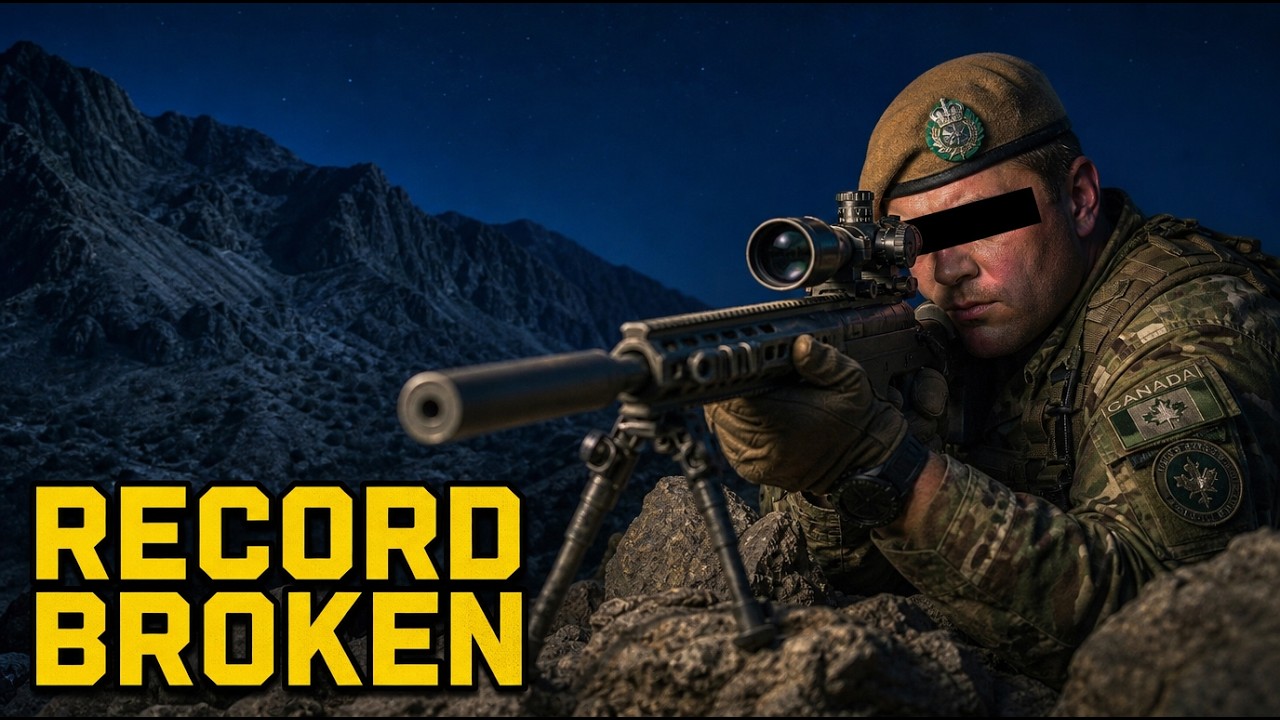
So he breathed and he waited and he watched the man climb. He fired. The first shot missed. Now picture the gap. The man with the machine gun is still walking. He has not heard anything. The round that was meant for him has already gone by somewhere into the rock. And he is still climbing toward a position he will never reach with no idea that a Canadian on the far mountain is already working the bolt for a second try.
The second shot hit the knapsack on his back. Close. Not a kill. Still, he kept moving. And the third shot struck him in the torso and he went down. Here is what the man never got. He never got the sound. The distance was measured and confirmed at 2,430 m. It was just over a mile and a half and the bullet left the barrel at around 800 m/s, which means each round spent nearly 3 seconds in the air.
3 seconds is a long time. It’s long enough to take a breath. It’s long enough that Furlong wasn’t aiming at where the man was. He was aiming at where the man would be. 3 seconds into the future, allowing for the curve of the bullets fall and the wind dragging across the open valley. He killed a moving man by predicting the future and putting around exactly where that future would be.
And the man he killed died before the noise of his own death could cross the valley to reach him. So, how does a shot like that even become possible? Part of it is the mountain itself. The valley sits around 9,000 ft up, and the air that high is thin air. Thin air means less drag, which means the round holds its speed and stays deadly over a distance it could never manage down at sea level.
The same brutal altitude that made every step of this operation a misery was quietly extending the reach of Furlong’s rifle. The mountain that was trying to kill the Canadians was in this one moment helping one of them make history. And that brings us to the record itself and why this story matters far far beyond Canada.
For 35 years, the longest confirmed sniper kill in [music] combat had belonged to an American. His name was Carlos Hathcock, a United States Marine. And to anyone who knows anything about military sniping, that name carries enormous weight. Hathcock was a near mythic figure, a legend of the Vietnam War, the man other snipers studied and revered for generations.
In 1967, he recorded a confirmed kill at 2,286 m. That record stood untouched through three and a half decades [music] of warfare. Furlong shot beat it by 144 meters. A Canadian corporal, [music] an infantry sniper from a fishing island, had broken the most revered long range record in United States Marine Corps history.
And that’s what makes the comparison legitimate, not jingoism. This wasn’t a small thing in the world of marksmanship. It was the toppling of a 35- year benchmark held by one of the most respected names the craft has ever produced. But here’s the part that makes the story almost unbelievable. The record was broken twice in that one operation.
And both times it was a Canadian. Just days before Furlong shot, his teammate, Master Corporal Aaron Perry, recorded his own confirmed kill at 2,310 m, also with attack 50. That shot alone had already passed Hathcock’s record. Then Furong surpassed Perry by another 120 m. So for a brief window in March of 2002, the two longest confirmed kills in the history of warfare both belonged to the same six-man Canadian team set on the same mountain range during the same operation within days of each other.
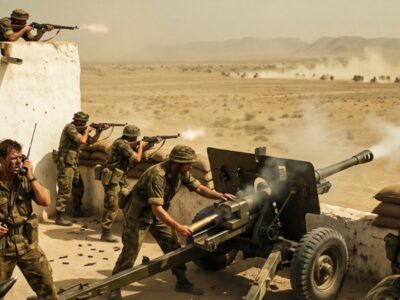
Two men on the same crew rewrote the record books back to back, and their accomplishment becomes even harder to believe when you picture the setting. They were roughly 10,000 ft up an Afghan mountain, firing across a valley at insurgents positioned on the opposing mountain. This wasn’t a shooting range. This was war at altitude against an enemy who was shooting back.
Across the whole operation, the Canadian snipers racked up a remarkable tally of confirmed kills against Taliban and al-Qaeda fighters, and they destroyed enemy positions that had been pinning down allied troops. By the time Anaconda ended, the Americans who had fought alongside them had seen exactly what these men could do.
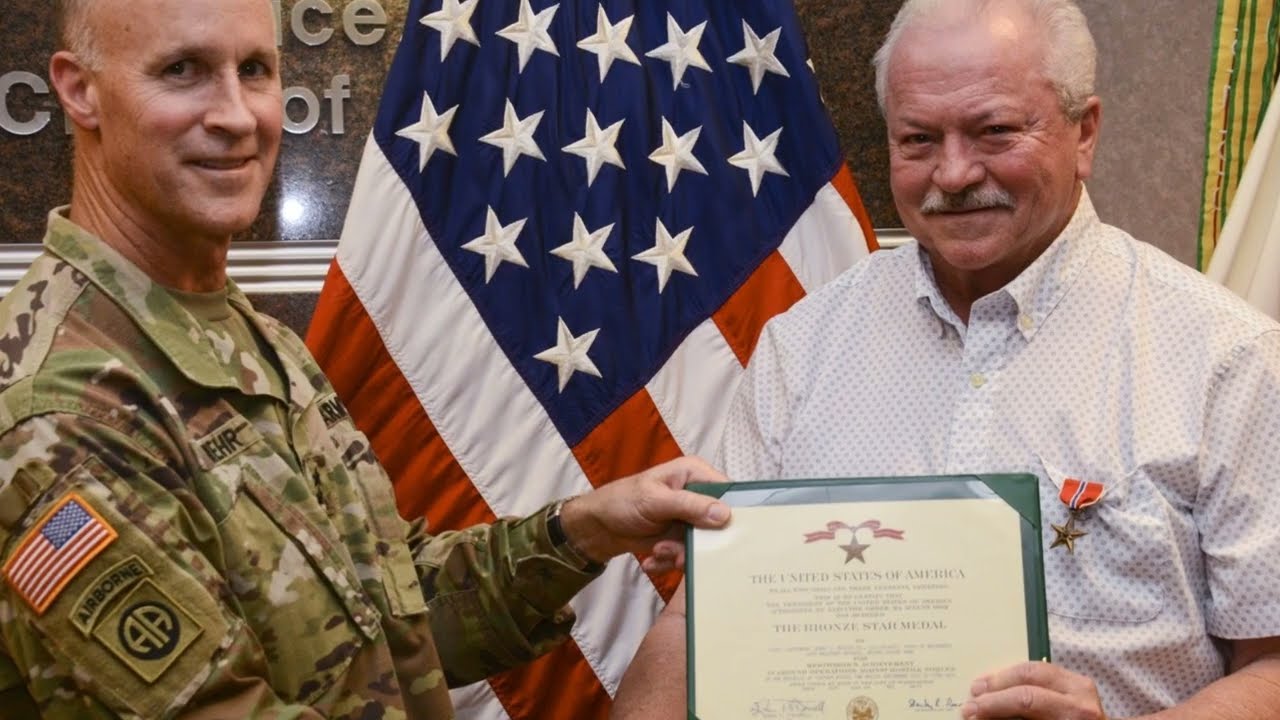
And the American response was total. The United States Army didn’t just acknowledge the Canadians. The commanders who served with them nominated the entire team for the Bronze Star, one of the United States military’s significant decorations for service in a combat zone. In December of 2003, all five snipers received it.
It was presented by Paul Tuluchi, the American ambassador to Canada. Ragsdale received his with the letter V device for valor, but the medals are only half of it. The American soldiers who fought beside these men did not hold back when they described them. One US sergeant who fought alongside them said these were the type of people he would want to put up on a pedestal as the very best his own side had to offer.
Another who marched through those mountains with the Canadians said a man goes out, puts his life on the line, comes home and isn’t really recognized for it. And called that a rough pill to swallow. Among the American troops who served with the snipers, the view was unanimous. These men were the best of [music] the best.
The Canadian response was the exact opposite. And that contradiction is the real heart of this story. While the Americans were lining up to honor them, something very different was happening inside the Canadian forces. It had nothing to do with the record shot at all. It started with a plastic bag. As soon as the sniper cell came back to camp, an officer pulled them aside with a warning.
One of their own, Aaron Perry, was under investigation. The allegation was that he had desecrated the body of an enemy fighter. The accusations that circulated were grim, that he’d placed a sign that read, “Fuck terrorism,” on a corpse, that he had interfered with the body in other ways. There was even a separate suspicion involving a second body.
To be clear, these were allegations and how much was true was exactly what the investigation was supposed to determine. The Canadian Forces National Investigation Service, the military’s major crimes unit, took over the case, and from the moment it did, the team began to come apart. First, Ragsdale, [music] the commander, was stripped of his command.
Then, Perry was searched, arrested, and put on a plane back to Canada. and the rest of the team, including Furlong, found themselves sitting across from investigators, answering questions about their own conduct instead of being celebrated for what they had just done on that mountain.
5 days earlier, a colonel had met them off the plane and told them they were outstanding. [music] Now they were suspects. And it got worse from there because the investigation did not just bruise these men, it broke them one by one. One, start with Ragdale. He had already taken the worst of a prolonged mortar attack during Anaconda and came away having lost the hearing in one ear.
Now stripped of his command and ground down by the probe, he sank into depression and was diagnosed with post-traumatic stress disorder. The team commander, one of the finest snipers his country ever produced, was discharged from the army a broken man. Then Perry, the soldier who had fired the first record-breaking [music] shot in history, left the Canadian military in 2005.
And the way he described himself on the way out tells you everything. [music] He said he felt abandoned. He said he no longer trusted anyone. And then Furlong, the man who had just fired the longest shot in the history of warfare, who should have spent the rest of his career as a living legend, was so sickened by an investigation that had treated him and his teammates like criminals that he walked away from the army in 2004.
He didn’t get pushed out, he left. The record holder simply decided he was done. So, picture where these three men have landed. One discharged with post-traumatic stress disorder. One gone, trusting no one. One walking away from the uniform that made him [music] famous. Their careers, their team, their reputations, all of it wrecked by an accusation.
Now, here’s the part that turns this from sad to infuriating. After 10 months of digging, the major crimes unit closed the case without laying a single charge. There wasn’t enough evidence because much of what had sounded so monstrous turned out to be rumor and grim battlefield jokes that fell apart the moment anyone examined them.
Remember the plastic bag? One of the things that helped fuel the whole case was a moment when Perry was seen holding a plastic bag and joked that it held a severed finger. Dark, exhausted, gallows humor, the kind soldiers used to stay sane. That joke went into the file as evidence and in the end the file held nothing. They were broken for nothing.
And only after the case collapsed could the Bronze Star ceremony for the whole team finally go ahead. Medals handed out to men the system had already hollowed out. For years afterward, the snipers and their supporters described what happened with a single phrase. They said they were abandoned.
Many called the investigation a witch hunt driven by jealousy and resentment of how good these men were and how much attention they had drawn. That is the version that became famous when the journalist Michael Friscalante told their story in McClean’s magazine in 2006 under the headline we were abandoned. The official record though does not fully agree and an honest telling has to say so.
The treatment of the snipers became the subject of yet another investigation. this one by the Canadian Forces onbudsman running 2 and 1/2 years and hearing from nearly 150 witnesses. His formal finding was that the snipers were not in the strict sense abandoned. And yet the very same report admitted that the pileup of events around the investigation had shattered the team’s cohesion and morale.
So you are left holding two truths at once. On paper, the system did not fail them. In life, it destroyed them. You can decide for yourself which one is the real verdict. What nobody disputes is the contrast. The same men one allied nation called the best it had ever fought beside were at home doubted, investigated, and quietly pushed out of the army they had just made famous.
Which brings us back to the wrong name. For years, even the record itself was credited to the wrong man. Through all the confusion, Furlong’s world record was sometimes attributed to Perry, and Furlong said nothing. He called it quiet professionalism and said it was simply what they had been taught.
When the journalist finally tracked him down more than 4 years after Anaconda, he insisted he had not come for credit and that as far as he was concerned, the whole sniper cell deserved the record, not him alone. So what happened to the record after Furlong? It stood for over 7 years.
Then in November 2009, a British sniper named Craig Harrison set a new mark in Afghanistan. A confirmed kill at 2,475 m using an L115 A3 rifle. Harrison beat Furong by just 45 m and then the record came home to Canada again. In 2017, Canadian Special Operations Command confirmed that a sniper from Joint Task Force 2, Canada’s Elite Special Forces Unit, had hit an ISIS fighter in Iraq at a staggering distance of around 3,450 m.
That shot, again fired with Attack 50, took roughly 10 seconds to reach its target, and it remains the longest confirmed kill in history. It is nearly a kilometer farther than furlongs, which means that of the longest confirmed sniper kills in modern military history, Canadians hold a remarkable share. But there is an important distinction that often gets blurred, and getting it right is part of telling this story honestly.
Rob Furlong was infantry, a member of Princess Patricia’s Canadian Light Infantry. The 2017 shooter was joint task force 2, a completely separate special forces unit and a separate event 15 years later. They are not the same men and furlong was never joint task force too. What links them is not a unit.
It is a lineage, a thread of Canadian longrange marksmanship that runs from that mountain in the sha ecot all the way to a rooftop in Iraq. And at the start of that lineage is a corporal from Fogo Island who broke an American legend’s 35- year record. [music] Came home a hero in the eyes of the soldiers he had fought beside and walked away from the uniform 2 years later.
He went on to become a police officer. For a long time, even the record books had the wrong name on his shot. The man he killed never heard the round that did it. And for years, neither did most of his own country hear Rob Furlong’s name. If you want more stories, the official record Almost Lost, the channel is full of them. The next one’s already waiting.