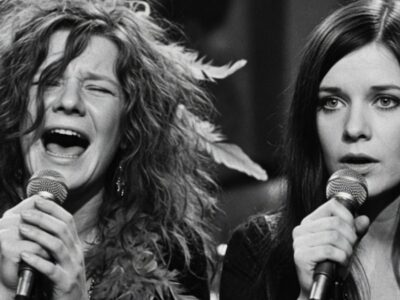
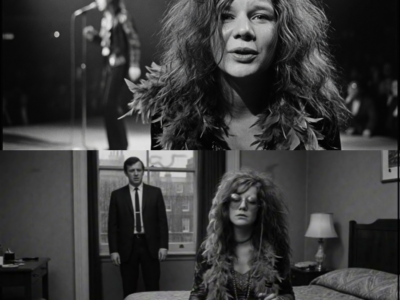
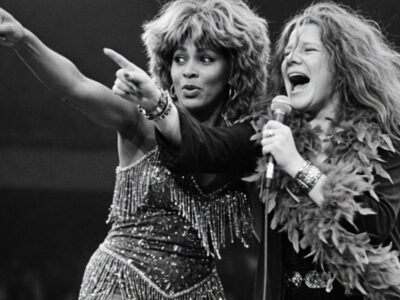
Janis Joplin Changed One Thing in Bobby McGee — And That’s Why You Remember It
Kris Kristofferson wrote Me and Bobby McGee in 1969. Roger Miller recorded it. Gordon Lightfoot recorded it. Then Janis Joplin heard it. And she changed one thing. One single thing. And that one change is the reason you still remember the song today. Before we get to what Janis Joplin changed, we need to understand what the song was before she touched it.
Kris Kristofferson was 32 years old in 1969 and not yet famous for anything that had happened in Nashville. He had been a Rhodes Scholar at Oxford. He had served as an Army officer and a helicopter pilot. He had been offered a teaching position at West Point. The kind of offer that, in any reasonable accounting of a life, you accept.
He turned it down. He moved to Nashville to write songs. Most of the people who knew him at the time considered this one of the more bewildering choices a person could make. Nashville in the late 1960s was not a city that made space easily for people who arrived without credentials. The music industry there had its own hierarchy, its own gatekeepers, its own understanding of what country music was and what it was not.
A former Army officer who wanted to write songs was not, by any obvious measure, what the industry was looking for. Kristofferson cleaned floors at Columbia recording studios during the day. He wrote songs at night. He handed them to anyone who would take them. Musicians, producers, anyone moving through the studio with a moment to spare, with the particular persistence of someone who believes so completely in what they are doing that the absence of external confirmation does not, by itself, constitute proof that they are
wrong. Me and Bobby McGee came to him the way the best songs sometimes come, not as a complete structure, but as a single line that arrived before he understood what it meant. Freedom’s just another word for nothing left to lose. 11 words. A philosophy of loss that most people spend a lifetime trying to articulate and never quite reach.
He built the song around that line, a country song, road worn and forward moving, the kind of song that sounds like it was written in a car going somewhere and doesn’t particularly care where. Roger Miller recorded it first. It was a fine recording, clean, professional, the kind of performance that does everything a country song is supposed to do.
It moved. It had momentum. Gordon Lightfoot recorded it. Other artists found their way to it. Each recording located something in the song, the road feeling, the easy sadness of it, the way that 11-word line landed if you were in the right mood to let it. But there was something else in the song, something underneath the country road structure that those recordings had not reached, something that required a different kind of voice and a different kind of life to find.
By early 1970, Kris Kristofferson’s name was beginning to move through Nashville with the energy of someone who is about to become known. He was performing his own songs. He was being taken seriously in rooms that had not taken him seriously 18 months before. And sometime in that period, he encountered Janis Joplin.
Janis Joplin in 1970 was 27 years old. She had been performing at what most people close to her considered maximum capacity for three consecutive years since Monterey had changed everything in June of 1967 and the world had arrived at her door all at once. She had disbanded Big Brother and the Holding Company in 1968.
She had formed the Cosmic Blues Band and taken it through a tour that produced recordings of extraordinary power and consumed in the process more of herself than she could easily replace. By 1970, she had assembled the Full Tilt Boogie Band, a group that everyone who worked with her agreed was musically the best she had ever been surrounded by.
She was planning Pearl, the album that would define what she was still becoming. She was in better creative form than she had been in years. She was working well and she was tired. Not the kind of tired that sleep fixes, the kind of tired that lives underneath everything, present even when you have slept, even when the show has gone well, even when the crowd has given back everything you put into it.
The specific exhaustion of someone who has been giving more than they are receiving for long enough that the arithmetic no longer works in their favor. She had sought freedom her entire life from Port Arthur, from the lunchroom cruelty, from the expectation that she would become something manageable and contained and quiet.
She had found it. She was standing inside it, and in standing inside it, she was learning something about freedom that Kristofferson’s line already knew. That it arrives at the same address as loss. And that you cannot always tell from inside which one you are holding. When Kristofferson played her Me and Bobby McGee in whatever room it was at whatever hour, Janis Joplin heard something in it that the previous recordings had not contained.
She heard herself. Freedom’s just another word for nothing left to lose. It has been described by people who knew her in that period as a recognition. The specific physical experience of encountering a line that describes your life more accurately than you have managed to describe it yourself. She understood that line not as a lyric, but as a fact.
Not as a craft achievement, but as a report from inside a condition she was living in. She told people she was going to record it. She said it with the particular certainty that musicians use when they have found the song that was waiting for them. Not the one they wrote, but the one that was written for them by someone who did not know that was what they were doing.
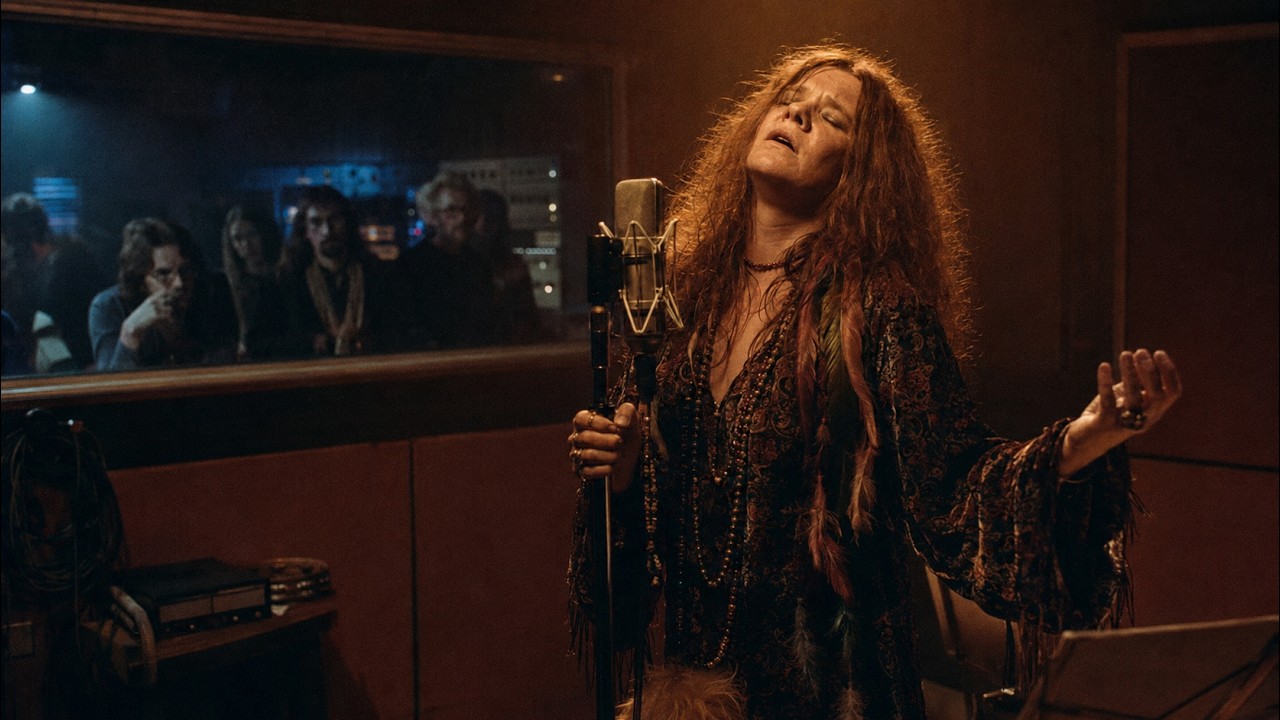
The Pearl sessions in the fall of 1970 were, by most accounts from the people who were in the room, some of the most focused and powerful recording work of her career. She was working quickly and with precision. She was giving the songs everything they required and then a little more. The Full Tilt Boogie Band was tight and responsive around her.
Something was working. She recorded Me and Bobby McGee in those final weeks, and she changed one thing. The song, as Kristofferson had written it and as every previous artist had recorded it, ends where a song is supposed to end. The road closes, the lyric finishes, the music resolves, the final chord lands where it is supposed to land, and the song completes itself, clean and contained, the way a good country song does.
Janis Joplin did not end it there. After the final verse, after the words ran out, she kept going. She let the band keep playing, and she started to improvise. Not words, exactly, but sound. Her voice doing what it did when language was no longer large enough for the thing it was trying to carry. A calling out, a wailing.
The specific sound of a voice that has gone past the edge of what music normally contains, and is operating in some territory beyond the lyric, beyond the melody, beyond any of the structures that music normally uses to make feeling manageable. She sang for several seconds past the point where the song was supposed to be over.
And in those seconds, she changed everything the song had been before she arrived at it. Kristofferson heard the finished recording. He has said in interviews that it was the first time he fully understood what he had written. That Janis Joplin’s version revealed something in the lyric that had been in there all along.
Some layer of meaning that required her specific voice and her specific life and her specific knowledge of what the line actually describes to become fully visible. That is what she changed. Not the words, not the chords, not the structure of the verse or the chorus or the arrangement. She changed the ending.
She kept going past the point where the song expected to stop. And in keeping going, she made the song into something none of the previous recordings had found. A document of what it actually feels like to have nothing left to lose and to keep singing anyway. Pearl was released on January 11th, 1971. Me and Bobby McGee reached number one on the Billboard Hot 100 on March 20th, 1971.
It was the first posthumous number one single in the history of American popular music. Janis Joplin never heard it on the radio. She never knew it went to number one. She never knew that the version she recorded in the last weeks of her life would become, for most people on Earth, the only version that has ever really existed. The one that replaced every recording that came before it, including the one Kristofferson had written it for.
He has said that he thinks about this, that a song he wrote and handed to her became, through what she did with it, something larger than what he had made. That the ending she added, the seconds she sang past the final chord, was not a modification of his work, but a completion of it. He wrote the line, she found what the lion meant.
That is what great interpreters do. They do not simply perform a song. They locate something inside it that the songwriter could not locate alone. Something that required a specific voice, a specific life, a specific understanding of what the words actually describe to become fully real. Janis Joplin spent her life being more honest than the situations she was in and could comfortably contain.
She was honest on stage in ways that made audiences feel they were witnessing something they had no right to be witnessing. She was honest in a recording studio in the fall of 1970 when she sang past the point where a song expected to stop and gave the world something it had not asked for and would not forget.
She changed one thing. She kept singing. And that is the reason you still remember it today. If this story moved you, leave a comment below. Tell us, what song do you think belongs more to the singer than the person who wrote it? Subscribe to Echoes of Greatness. New stories every week from the moments behind the music that changed everything.
Share this with someone who has ever felt a song understand them better than they understand themselves. We will see you in the next story.