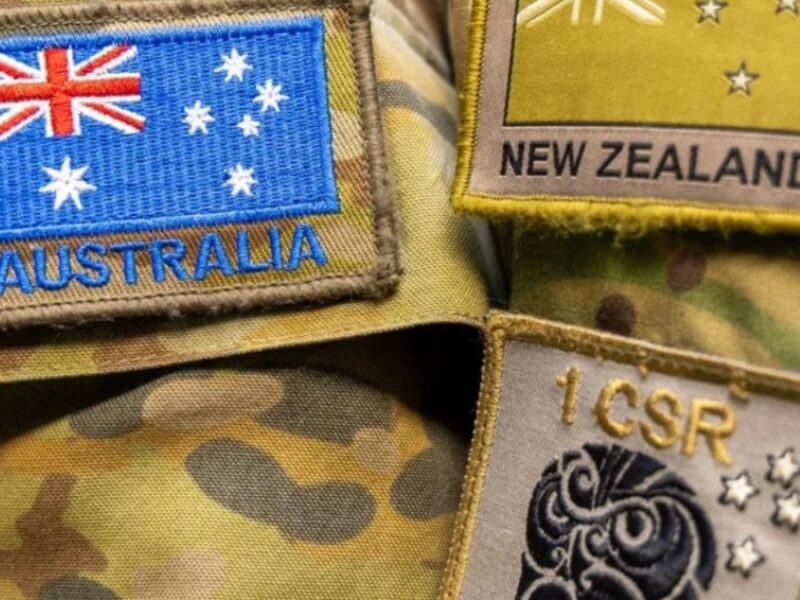
Why the ANZAC Special Forces Unit Confused Everyone Including Their Own Side
Kuwait, February 1998, and the ANZAC SOF commander is staring at a coalition planning board with a question mark where his unit’s command chain should be. He commands more than 80 soldiers from two countries. The first fully combined Australian and New Zealand special forces unit in history, and not one person in Canberra or Wellington has told him who authorizes the launch if one of the hundreds of coalition aircraft on the flight line goes down in enemy territory tonight.
Both governments sent their best soldiers, and neither one signed off on who makes the call. The question is whether he gets that answer before the air strikes begin. The briefing room holds all the answers except his. American flags run down the left wall. British flags hang beside them. Long rows of unit designations fill the whiteboard.
Each one locked into a chain of command that runs cleanly from the soldier in the field all the way up to a government with the authority to act. Every entry has a name behind it. Every name has a government behind it. The room shows exactly how a coalition is supposed to work. Except for one line near the bottom, written in block capitals because nobody had been sure where else to put it.
ANZAC SOF Beside it, in the command chain column, someone had drawn a question mark in pencil. It had been there for four days. Nobody had rubbed it out. Nobody had come forward with an answer. Outside the air smells of dust and jet fuel. Generators run behind every building. The base sits under a flat gray sky, and even in February, the heat presses down by midday.
American operators move between the buildings with the ease of men who know exactly where they belong. Every unit here has a place in the order of battle, a command chain, and a government that has told it exactly what it is authorized to do. And that question mark is about to matter. In late 1997, Saddam Hussein told the United Nations weapons inspection team to get out of Iraq. They got out.
Within weeks, the United States began assembling the largest military force the Gulf had seen since 1991. More than 300 aircraft staged across the region. Think about that number. The entire Australian Air Force at the time operated fewer than 100 combat aircraft. The Americans had three times that number in the Gulf alone, and the coalition behind them added more.
Carriers moved into position in the Persian Gulf. Ground units assembled in Kuwait. The message to Saddam was simple. Let the inspectors back in or face the strikes. When aircraft go down, someone has to go in and get the pilots. That has been true in every air war, and it was true here. The mission is called combat search and rescue.
SAR, a downed pilot behind enemy lines has minutes before the enemy closes in on the crash site. The SAR team needs to be moving the moment the call comes in. Fast, dangerous, and almost no margin for error. The coalition needed every unit that could do this job. Australia was asked to contribute. One squadron of the SASR would deploy, supported by the regimental headquarters.
Then, New Zealand asked to be included. An interest troop of 24 operators would join the Australian force and become its third element. Not as a separate New Zealand force running missions alongside the Australians. Directly inside the Australian squadron at the team level, mixed into the same patrols, the same briefings, the same rehearsals.
More than 80 operators in total. More than 80. The coalition in the Gulf numbered in the hundreds of thousands. These operators were the only ones authorized to go into Iraqi territory on foot and bring back a downed pilot. One unit. Two countries. Two flags. Nobody had written down exactly how that was supposed to work under pressure.
And nobody had warned the coalition command structure to expect it. The ANZAC SOF commander looked at the question mark again. The soldiers themselves had no confusion about who they were. More than 80 men who had been training together for weeks, sharing accommodation in a Kuwaiti desert, eating from the same galley, running the same drills at the same hours.
Australians and New Zealanders had operated alongside each other in jungles before. They knew how each other moved, communicated, and made decisions under fire. At the team level, the two forces came together without friction. They already trusted each other. That was not the problem. The confusion sat above them.
American planners building the coalition order of battle had the ANZAC SOF listed under Australian command in one column and New Zealand command in another, depending on which officer had done the filing. British liaison offices were not sure which national headquarters to send their queries to. In the first week alone, the ANZAC SOF appeared in three separate planning systems under three different national designations.
None of it came from any failure by the soldiers. The soldiers knew exactly who they were. The problem was that the system around them had no slot for a unit that carried two flags, reported to two governments, and ran on a single command chain that nobody had finished writing yet. If the air strikes began tonight and a pilot went down over Western Iraq, the Anzac SOF had everything it needed to go.
Every operator had run the rehearsals. [music] The teams had mapped every route. The helicopter sat on the pad ready to lift. The machine was ready. The only missing piece was the authority to send it and that authority needed to come from two governments at the same time and both governments were still waiting on each other.
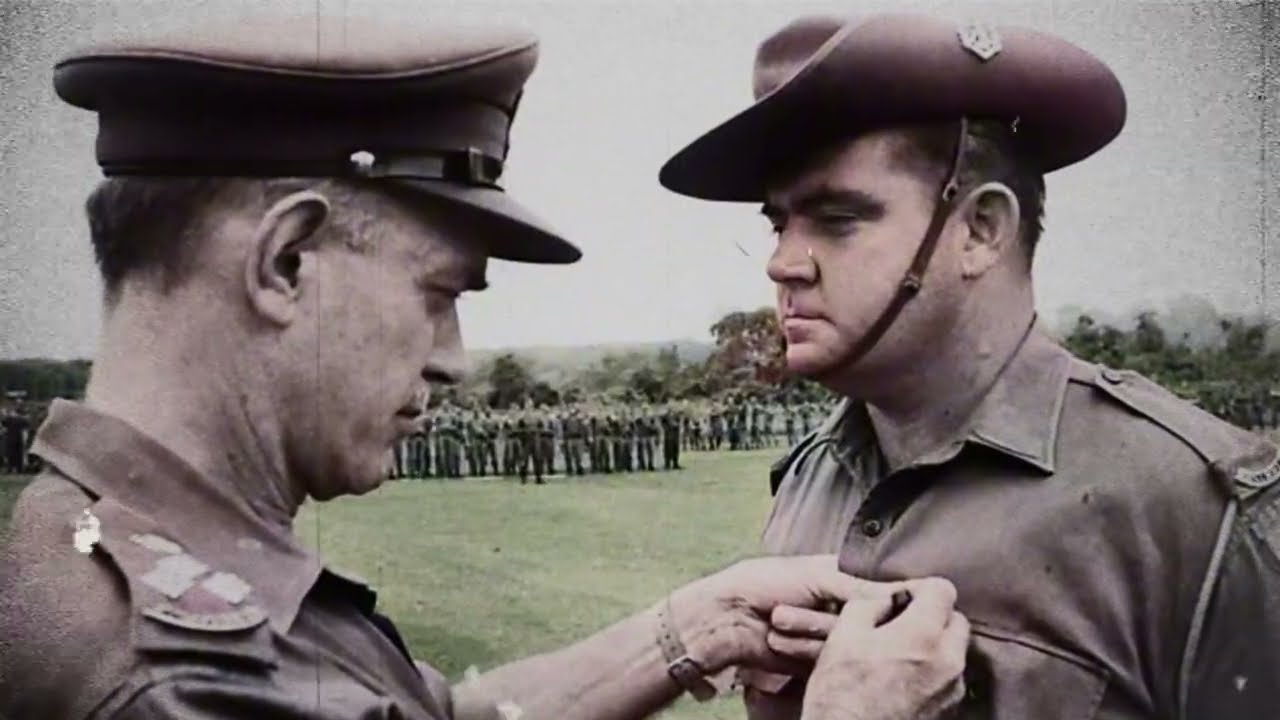
The Anzac SOF commander opened the planning folder on the table. He found the command authority section. The page that had been blank since the unit arrived, the section both Canberra and Wellington had left for later. He picked up a pen and wrote four words in the margin. We will sort this. The question mark on the Kuwait planning board had not out of nowhere.
It had been building for 30 years one jungle at a time. Borneo 1965, the Australian SAS soldier pressed himself flat against the wet ground and did not move. The jungle around him was so thick he could not see the man 2 m to his left but he could hear him breathing. He felt the heat coming down through the canopy and the mud soaking into his clothes and the weight of his gear pulling at his shoulders.
He was running a border patrol along the frontier between Malaysia and Indonesia. Part of a Commonwealth effort to stop Indonesian forces from tearing apart the new nation of Malaysia by force. The man breathing 2 m to his left was from the New Zealand SAS. They had been inserted together four nights ago. They had moved through every hour of darkness together since, slept in the same wet ground, eaten from the same rations, and held the same long silence that jungle work demanded.
Lying there in the mud, the Australian soldier could not have told you precisely where his patrol ended and the New Zealand soldier began. The jungle had made that question feel like paperwork from another world. Back at the patrol base that night, he made a note. The New Zealand trooper he had spent four days beside in the bush moved the same way he did.
Same instincts when something shifted wrong in the trees ahead. Same patience through the long waits. Same speed when a contact came. “If you had watched that patrol from a distance,” he wrote, “you would not have been able to tell which soldiers belonged to which country.” He did not think this was remarkable.
It was simply what was true. What he could not have known was that 30 years later, in a Kuwaiti briefing room, that truth would be the question nobody had filed an answer for yet. Three years after Borneo came Vietnam. The Kiwi trooper arrived in Phuoc Tuy province in 1968 as part of a New Zealand SAS troop placed directly inside the first Australian Task Force.
Not alongside the Australians. Not running parallel missions in the same province. Inside the structure, sharing the command, going on the same long patrols through the same heavy country, moving beside Australian SAS soldiers trained to the same standard who read danger the same way. On a patrol in early 1969, the team moved through the jungle for six days without speaking above a whisper.
Communication between the Australian and New Zealand men came down to hand signals and small movements both sides understood without needing to explain. Not because orders required it. Because two forces trained to the same level, put into the same terrain, stopped needing words to work together. On the seventh day, the patrol hit a Viet Cong unit, and the fight was over in under two minutes.
Pulling back through the bush afterward, the Kiwi trooper noticed he had not tracked during those seconds which of the men firing beside him were Australian and which were New Zealand. It had not been the question the jungle was asking. At the patrol base that night, he talked it over with the Australian soldier who had been on his left during the contact.
Both men had had the same thought somewhere in the middle of the patrol. They had just run a combined operation under a shared command line with no formal paper authorizing any of it, and it had worked, and nobody was going to write that down. They sat with that for a long time. Neither had a solution. They both understood the answer.
They had no idea yet what it would one day cost to put it on paper. Both units came home from Vietnam carrying that knowledge. Then, the years did what years do. Within two years, the Australian SAS and the New Zealand SAS were running separate gear cycles. The Australians moved toward American standard radios.
The New Zealanders maintained their British Commonwealth equipment. The Australian soldier attended a joint exercise in the mid-1970s and spent the first morning watching Australian and New Zealand signallers trying to patch two different encrypted systems into the same communications net. It took 90 minutes.
In the jungle, 90 minutes would have been the end of the patrol. He wrote it down in his training report. Nothing changed. The joint exercises continued. The trust stayed real. But the working knowledge of how to run a combined deployment, how to fold two separate national command lines into one force under real pressure, lived only in the heads of the men who had done it.
Nobody had written it down. There had never been a form that required them to. Then came 1997. The planning officer in Wellington read the American request and knew what it was asking. Iraq had expelled the United Nations weapons inspection team and the United States was assembling a coalition. They needed special forces that could run SAR missions into Iraqi territory going in fast to pull out downed pilots.
[music] The window was minutes. There was no room for error. Australia said yes, the SASR would go. Before the planning had properly started, Wellington called. New Zealand wanted to be part of the force. Not as a separate unit running alongside the Australians. Together, the way it had worked in Borneo and Vietnam.
The Australian side agreed before anyone had thought through what that agreement would require on paper. The planning officer sat at a table in Wellington in late 1997 and was handed a draft framework for the combined force. He found the command authority section. The heading was there. Below it, the page was empty.
He looked at the Australian liaison officer across the table. The Australian looked back. Neither man [music] spoke for a moment. Two nations had committed their best soldiers to a single force in a potential combat zone. And the section that was supposed to say who had the authority to send those soldiers into enemy territory had not been filled in yet.
The planning officer put his pen down flat on the blank page and left it there. The command problem looked simple from the outside. One force, two countries. The two countries would share authority. Simple. Except that US Central Command also held authority over every allied unit in the coalition.
And the moment the ANZAC SOF was handed to CENTCOM [music] for operational use, Canberra and Wellington were no longer the primary voice. Neither government would accept that. Australian forces deployed overseas remained under Australian national command. That position had held since Vietnam. New Zealand held the same position.
Both governments had sent their soldiers with the same understanding. The soldiers would work inside the coalition, but the authority to send them on a mission belonged to the national government, not to an American general in a Kuwait operations room. The Americans understood this in principle. In practice, it created a problem nobody had a solution for.
Ahmed Al Jaber Air Base, where the coalition staged its forces, sits 120 km south of the Iraqi border. A helicopter at combat speed takes under an hour just to reach that border before covering a single kilometer of Iraqi territory. A pilot going down anywhere inside Iraq adds to that distance. Every minute the SAR team waited for authorization was a minute the enemy used to close in on the crash site.
Canberra is 7 hours ahead of Kuwait. Wellington is 10 hours ahead. A phone call to the Australian duty officer, a separate call to Wellington, a conference between both governments, and a return authorization. That process ran to 40 minutes on a smooth day with both governments awake and ready. CSAR missions run in minutes, not 40 of them.
The two requirements, act fast and stay in control, pulled in opposite directions, and the ANZAC SOF was sitting between them. The ANZAC SOF commander spent the first 2 weeks in Kuwait working nothing but the communications problem. The SASR and NZSAS had come with different encrypted radio systems. Both worked. Both were secure.
The problem was they did not fully talk to each other. And in a coalition environment where allied aircraft needed to track friendly forces on the ground, that gap was dangerous. IFF, identification friend or foe, was the system that told a fast-moving aircraft whether the unit below it was friendly or enemy.
Running two different IFF systems inside the same force meant running two different signals. And a pilot moving at speed over the desert had fractions of a second to read that signal and decide. Not the mission rehearsals. Not the route planning. The communications problem first. Because if the signals did not work together, none of the rest of it mattered.
The coalition order of battle was updated daily, tracking every unit and its command chain. The ANZAC SOF appeared in it in three different forms, depending on who had done the filing. In some papers, the unit sat under Australian command. In others, it sat under New Zealand command. In one daily update, it appeared twice, once under each country, as though the operators had been split in two on paper.
The commander found the error on a Tuesday and fixed it. And by Thursday, a different version of the same mistake had turned up in a separate planning system. The unit kept slipping out of its slot because there was no slot that fit it. A unit that answered to two governments had no clean entry in a system built for units that answered to one.
Then came the 3 seconds that gave this story its name. In the third week of rehearsals, the ANZAC SOF commander watched two of his operators, one Australian and one New Zealand, freeze at a decision point during a SAR run-through. Not because they did not know what to do, because they both knew what to do, and neither was certain which country’s authority had given them the right to do it.
3 seconds. In a real mission, 3 seconds was the difference between a pilot coming home and a pilot not coming home. The commander called the run-through, stood the room down, and looked at his planning group. The command problem was not just a paperwork issue between governments. It had already shown up in the muscle memory of the people who would have to solve it in the dark at full speed.
The ANZAC SOF was confusing its own side. On the 14th day, the commander was moving through a briefing room when an American stopped him. He was from a Delta Force planning cell attached to the coalition command group. He spoke quietly and used as few words as the situation needed. He had worked with British SAS in the Balkans and German operators in the Gulf, and he had a way of reading an allied force in about 30 seconds.
The ANZAC SOF had not read cleanly. His SAR planning assumed the unit would slot into the coalition framework without friction. If the command question was not resolved, his plan had a gap in it, and gaps in SAR plans cost lives. He asked the ANZAC SOF commander directly, “Which country’s rules of engagement are you operating under right now?” The commander looked at him for a moment.
“Both.” he said. The American was quiet. “That is not a thing.” he said. The commander said, “It is now.” The American wrote it down as an unresolved planning issue and walked away. What he had not understood was that the commander had not been describing a problem. He had been describing a solution.
The Anzac SOF had already worked through the command question at the ground level without waiting for both governments to sort it out officially. The soldiers had moved faster than the system around them. The same way Australian and New Zealand soldiers had always moved faster than the paperwork in Borneo and Vietnam and every shared jungle before that.
The American saw confusion. What was actually there was a force that had already answered a question the rest of the coalition was still trying to name. But the answer had not been signed. The authority it described had not been ratified. Air strikes looked close. The force on the pad was ready. The radios had been sorted. The routes rehearsed.
The only missing piece was the paper that said who gave the order and both governments were still waiting for the other one to move first. The planning table had been covered in paper for two weeks. Draft frameworks, command authority proposals that went halfway down the page and stopped. Every time the planning group reached the command authority section, the conversation stalled at the same place.
Which government moved first? Which flag sat higher? The American side of the coalition was watching. The answer was not coming. The Anzac SOF commander looked at the pile of paper on the night of the 20th and made a decision that would not appear in any official record. He was not going to wait for Canberra.
He was not going to wait for Wellington. Both governments had sent their soldiers, agreed the force would operate as one unit, and left the command authority section blank because neither wanted to be the one to say the other country’s soldiers answered to them. That was a political problem. Political problems did not get solved by people waiting for other political problems to resolve first.
They got solved by people in a room with a pen. He called the planning group together at 10:00 that night when the base had gone quiet. The Australians came in from one end of the staging room. The New Zealanders came from the other. Someone had left a fan running in the corner and the draft pages lifted slightly every time it swung their way.
They spread the framework open between them. The command authority page sat in the middle blank below the heading the same way it had been blank for a fortnight. The overhead light was fluorescent and loud. Nobody had bothered to find a better room. The old warrant walked in last. He was older than everyone else at the table by a clear margin.
Decades inside the SASA in roles that never made it into public documents. Phu Oc Tai province was in his record somewhere in the sections that required clearance to read. Months from retirement. Everyone in the room knew it. He moved the way men move when they have spent too many years in places where noise was a mistake.
Carefully without anything wasted. His stake that night was precise. He was not going to end his career watching younger officers rebuild from scratch something that already existed. That was what he stood to lose if he stayed quiet. Not his life. Not a career that was almost finished. His record. The chance to hand something real to the people who would still be doing this after he was gone.
He looked at the blank command authority page. Then he looked around the table. “You are not the first Australians and New New to figure this out on the ground.” he said. You were just the first ones who have had to write it down. The room was quiet. He told them about Borneo in 1965. About moving through the jungle for 4 days with a New Zealand SAS soldier 2 m to his left, and how the question of which country held authority had never come up because the man beside you was the man beside you.
You trusted him. You moved. When something happened, you dealt with it, and nobody needed a signed page to authorize the dealing with it. He told them about Vietnam. About patrols in Phuoc Tuy province, where the same thing had happened the same way. Where working as one had functioned because the soldiers made it function, and the paperwork had always caught up afterward.
What was different now, he said, was not the soldiers. What was different was that coalition warfare in 1998 required a clean line of command on paper before the Americans would accept the ANZAC SOF as part of their operational planning. Both governments needed a formal answer before the on-ground commander had the authority to do his job.
The paperwork had to come first. But what the paperwork needed to say was not new. The soldiers had been living it for 30 years. They just needed to write it down. The ANZAC SOF commander picked up his pen. What they put together over the next 3 days was not complicated. Both national commands, Canberra and Wellington, would receive notice of any planned ANZAC SOF operation at the same time.
Both governments held authority, and both had to be contacted before a mission launched. But the on-ground commander held authority to act if contact to both capitals was lost, with full notification required the moment contact came back. This meant the force could move the moment it was needed. It meant neither government had given up command authority.
And it meant the American coalition planning could finally slot the ANZAC SOF into its framework with a single on-ground commander who had the authority to launch. The framework was three pages. The command authority section was half a page. Think about that. Three pages for a working model that would carry two countries special forces through the next two decades.
Half a page for the section that mattered most. It described something Australian and New Zealand soldiers had been living since 1965 without ever needing to put it in words. On February 23rd, 1998, United Nations Secretary General Kofi Annan flew to Baghdad and brokered an agreement between the UN and Saddam Hussein.
Iraq would allow the weapons inspectors to return. The air strikes were called off. The ANZAC SOF received its stand-down order the same afternoon. The old warrant walked back to the accommodation block in the early evening. The desert cooled fast after sunset and he could feel it on his forearms. He had spent six months moving toward a mission that had not come.
He had helped write a framework that no journalist would ever read and no ceremony would ever mark. He sat on the edge of his bunk. He did not find this disappointing. A force that was ready and was not needed had done its job exactly right. The mission would have been over in hours.
The three pages would still be in a filing system somewhere long after everyone in that room had retired. He took his boots off and slept. The stand-down order came through on the afternoon of February 23rd, 1998 and the staging area did not change. The generators kept running. The dust kept moving in low waves across the open ground between buildings.
The helicopters sat on the pad the same way they had sat on it for weeks, fueled [music] and ready for a mission that was no longer coming. The air smelled of jet fuel and dry heat. The agreement Kofi Annan had brokered was real, but fragile, and nobody with authority was prepared to stand the whole force down inside the first 48 hours.
The ANZAC SOF was told to stay at reduced readiness, not stand down. Reduced readiness. The difference was a matter of minutes on the launch timeline. The ANZAC SOF commander told his men that afternoon. The room was quiet when he finished, not relieved. Not disappointed. Quiet in the way that settles over men who have spent weeks building towards something that matters and are told it is no longer happening.
It was not the sound of men who had failed. The mission had not gone because the mission had not been needed. That was the point. A credible enough force assembled quickly enough might convince an adversary not to make the decision that would require the force to be used. The ANZAC SOF had been part of that credibility. They had done their job by being ready.
Knowing that did not change the weight of the silence in the room. They stayed in Kuwait until mid-June. Reduced readiness held through March. By April, the agreement was clearly holding and the coalition began drawing down. Equipment was packed, logged, and prepared for transport. Mission planning records were sealed and filed.
The three-page framework went into a classified file. The file went into a sealed bag. The sealed bag went through a process neither government would ever describe in public. The framework had no ceremony. It did not need one. It had already done what it was put together to do. If you have been watching this channel and you have not subscribed yet, now is the right time.
Stories like this one about what Australian and New Zealand soldiers put together in rooms nobody heard about are what this channel exists for. Hit subscribe and you will not miss what comes [music] next. The flight home was long. Men slept in their seats with their kit bags under their legs and their heads against the window or against the shoulder of the man beside them.
The Australian SAS flew back to Perth. The New Zealand SAS flew back to Auckland via a transit stop that added hours to an already long journey. No official reception at either end. Both governments issued brief statements confirming their forces had taken part in Operation Desert Thunder in a training and support role.
Neither the statement named the Anzac SOF. Neither mentioned the three pages. Neither said anything that would require a follow-up question. The Kiwi trooper landed at Auckland in the early morning. The terminal was quiet at that hour with the particular stillness of an airport before the day has properly started.
The air outside had that clean sharpness that hits you after months in the Gulf. He collected his kit bag from the baggage carousel and walked through the arrivals hall. A journalist was working the area, the kind of general assignment reporter who spent mornings at airports looking for stories in returning faces.
She stopped him because he was carrying military gear and moving with the kind of stillness that stood out in an early morning crowd. She asked what he had been doing in Kuwait. “Routine deployment, he said. Training rotation. He smiled politely and said nothing else. She wrote something in her notebook, thanked him, and moved to the next passenger.
The whole exchange took less than a minute. He picked up his kit bag and walked to the domestic terminal for his connecting flight. Inside the kit bag, beneath his personal gear, was a copy of the three-page framework. He had not been told to keep it. He had not been told not to. He had folded it into a document sleeve and packed it at the bottom of the bag 2 days before departure.
Not for any official reason. Because he had been part of writing it. And because things that mattered should be kept by the people who helped put them together. That framework was the answer to the question this story began with. Standing in a Kuwait briefing room in February 1998, staring at a question mark beside his unit’s command chain, the ANZAC SOF commander had no answer.
When two nations send their best soldiers to fight as one, who do those soldiers belong to the moment it gets real? The blank command authority page had held that question for weeks. The three pages that came home in a kit bag had the answer written in plain language halfway down the second page. The ANZAC SOF commander acts on behalf of both nations at the same time.
He is responsible to each. He is bound by neither exclusively. He holds authority to act when both capitals are unreachable. The soldiers belong to each other first. Everything else is the paperwork that follows. 18 months later, in September 1999, the SAS deployed to East Timor as the lead element of the international peacekeeping force.
The crisis was immediate and real. Militia forces had moved through East Timorese communities for weeks, and the force needed to be on the ground before the formal peacekeeping structure was fully in place. The SASR moved into Dili ahead of the main body. The command confidence that got them there fast, the willingness to put a small force forward before the larger structure arrived, had been tested in Kuwait the year before.
Someone else’s name was on the order. The work was the same. The SASR troopers who moved into Dili in September 1999 carried something the official orders did not list. The combined force approach from Kuwait had no official standing in Australian force structure at that point. It sat in a classified file. But the officers who had been in Kuwait knew it.
The senior soldiers who had been in Kuwait carried it in the way experience gets carried, not on paper, but in how decisions are made under pressure. When East Timor demanded speed and the formal planning process was not fast enough, the men who had rehearsed that speed in a Kuwaiti staging area already knew how to move. The framework said, “Act first, notify immediately, account for it after.
” When East Timor needed that, the answer came back clean. Two years later, the world the ANZAC SOF had been built for arrived all at once. The NET’s planning officer read the American request for special forces contributions to Operation Enduring Freedom and understood what it needed. The United States wanted allies who could operate inside an American special forces structure at the team level without becoming a problem to manage.
Not parallel operation where two national forces work beside each other under separate command lines. Genuine combined operation. A force that fit inside the American framework rather than running alongside it. New Zealand said yes. The NZSAS committed a troop to Afghanistan and deployed in late 2001. That decision was not simple.
New Zealand’s relationship with the United States had been under serious strain since 1986 when the United States suspended its ANZUS treaty obligations after New Zealand refused port access to nuclear armed ships. American military access to New Zealand had been restricted for 15 years. The trust required to place New Zealand special forces inside an American-led coalition could not be built quickly.
It had been built in a Kuwaiti staging area in 1998 across 6 months of shared rehearsals and a jointly written framework both governments had quietly accepted as the way their soldiers would work together. Without Kuwait, Afghanistan would have been harder. Not impossible. Harder the NZSAS and the SASR would have arrived in 2001 as forces that trusted each other from years of exercises.
Kuwait had added something exercises alone cannot produce. A written framework, a tested answer to the command authority question that American planners could slot into their structure without finding a question mark beside the command chain entry. Two kinds of coalition forces exist. One coordinates, the other genuinely combines.
A coordinating force has two separate command lines. Every movement needs agreement between two national commands. Before Kuwait, that was the ANZAC model in practice. Parallel, not combined. After Kuwait, it was not. American analysts reviewing coalition special forces performance in the early Afghanistan campaign placed the ANZAC framework in a category by itself.
According to accounts that have since circulated within Australian and New Zealand special forces planning communities. Of the allied contributions examined, the ANZAC model was described as the only one that had achieved true combined operation rather than coordinated parallel effort. The others, including forces with far larger budgets and far more personnel, were coordinating.
They were not combined. Iraqi intelligence had been watching the Desert Thunder build-up for months. The ANZAC SOF designation apparently appeared in their tracking without a clean answer. The unit showed up under two different national identifiers, depending on which communication system picked it up. Iraqi analysts noted the uncertainty, but could not work out whether ANZAC SOF represented one contributing nation or two.
Nobody had designed the ANZAC SOF to confuse hostile intelligence. But a unit that did not fit the standard national template was, by that fact alone, harder to assess and harder to plan against. The enemy found the same question mark the coalition planning staff had seen on the Kuwait whiteboard. They arrived at the same inability to fill it in.
Australia made it official in 2003 when it stood up Special Operations Command. The new structure brought together the SASR, the Commando Regiments, and the Special Operations Support Elements under a single headquarters designed to work inside coalition frameworks from day one of any deployment. Kuwait was not mentioned in the announcement. It never would be.
But the people who designed the new headquarters had either been in Kuwait or had studied what Kuwait produced and the architecture reflected the lesson. A combined force needs its paperwork written before it deploys. Not after. The question mark on the Kuwait planning board in February 1998 had started something neither government intended.
They had meant to provide a SAR capability for a coalition that resolved itself before anyone flew a mission. What they put together instead, without planning to, was the working model that two of the best special forces units in the world would use to operate together for the next two decades. No announcement.
No ceremony. A file in a classified system and the quiet weight of everything that followed from it. The old warrant retired from the Australian Army in late 1999. There was a small farewell at the base. A few dozen men in a room. Someone gave a speech about the years of service and the places that could not be named in a speech.
He shook hands around the room and drove home in his own car and that was the end of it. His service record, the portions accessible to anyone outside the relevant headquarters, contained nothing about Kuwait. Nothing about the ANZAC SOF. Nothing about the three pages written at a planning table in a staging area while the rest of the coalition waited for both governments to answer a question he had already answered for them.
He had spent the last year of his career helping put together something that would shape how Australian and New Zealand special forces operated for the next two decades and the public record of his service did not reflect that at all. He understood this. He had understood it going in. That was the nature of the work.
You put things together that mattered in rooms nobody heard about and the things went on without your name attached and that was correct. The Kiwi trooper was asked about the 1998 deployment in an interview years later. He was asked what it had felt like to stand in a Kuwaiti staging area beside Australian soldiers waiting for an airstrike campaign that might send him into Iraqi territory on a rescue mission at any hour.
He said the feeling was not complicated. The man beside you was the man beside you. You had trained with him. You had rehearsed every scenario until the scenarios felt less like rehearsals and more like memory. When you ran through the drills in your head at night before sleeping you did not picture an Australian and a New Zealander.
You pictured the team. The flag on the shoulder stopped registering after enough shared hours in a hot staging area with the same mission and the same level of preparation. He did not think this was remarkable. He thought it was simply what happened when you put two forces trained to the same standard into the same environment long enough.
The families had waited through six months with almost no information. Standard for the special forces world. The deployment had been acknowledged in a brief public statement. >> [music] >> Kuwait, training rotation. Standard deployment. The families had read the same two sentences the general public had read and learned nothing more.
When the soldiers came home there was no ceremony, no crowd, no formal reception. The SASR families waited at a Perth base and the men came back and that was the reunion. Quiet and private. No cameras and no announcement. The New Zealand families waited in Auckland and Papakura. The men arrived thinner >> [music] >> from the Gulf heat and quieter in ways that were familiar to people who had been waiting for them before.
The American from the Delta Force planning cell returned to his unit after Desert Thunder and filed his assessment. He wrote that the command authority question had been handled by an on-ground fix that neither government had formally signed off on before the force stood down. He filed it and moved on. Three years later, working joint planning for the early Afghanistan operation, he came across the ANZAC SOF framework in coalition [music] planning papers.
He read the command authority section. He recognized it from Kuwait. He told a junior officer that this was the model a New Zealand SAS soldier had described to him in a Kuwaiti briefing room in 1998, >> [music] >> a model he had told that man was not a thing, which had turned out to be the whole thing. The junior officer asked what had changed.
“Nothing had changed,” the American said. They had written it down. The Kiwi trooper deployed to Afghanistan in late 2001. He had trained with Australian SAS operators who had been in Kuwait. They knew his voice on a radio. They knew how he moved and what he meant when he said certain things in certain ways. That knowledge had not come from a briefing or a manual.
It had come from six months in a Kuwaiti staging area, running the same drills at the same hours toward the same mission. When he issued an instruction in the dark in Afghanistan, [music] the man beside him did not pause for a half beat of processing time. [music] That was what Kuwait had bought. Not a medal, not a public record, a voice on a radio that the man beside you already trusted.
The three-page framework had no title page, no cover sheet with official stamps, no binding, no index. Three pages typed in a staging area with a fan running in the corner and a fluorescent light overhead that was loud and not warm. It sat in a classified file inside a building most Australians did not know existed and it stayed there for years and the world it helped shape grew up around it without ever pointing back at it by name.
The ANZAC SOF designation did not disappear after Kuwait. It moved forward the way useful things always move. Not through announcement, but through use. Planning papers for later combined Australian and New Zealand deployments carried the command authority approach from Kuwait. Not always with that deployment named as the source.
Not always with the authors credited. But the shape was there in the language. In the lines about who held authority and when and under what conditions and the men who read it and worked from it were in some cases the same men who had typed it out by the light of that loud fluorescent lamp. There is no memorial to the ANZAC SOF’s Kuwait deployment.
No plaque at the SAS base in Perth. No dedicated wall at the Papakura Military Camp in New Zealand. The names of the men who served do not appear in any public listing because the deployment was never described in public terms that would require names to be attached. Training rotation. Standard deployment. Two sentences in an official statement that most people did not read and nobody remembered.
The question this story began with lived in that absence. When two nations send their best soldiers to fight as one, who do those soldiers belong to the moment it gets real? The blank command authority page had held that question for weeks in 1998. The three pages answered it in plain language halfway down the second page.
They belong to each other first. Everything else is the paperwork that follows. But the answer was bigger than the three pages. And the three pages were the small version of a truth Australian and New Zealand soldiers had been living in jungles since 1965. The Anzac bond is not a ceremony held once a year in April.
It is not a word on a memorial wall. It is a working relationship between two countries soldiers tested in enough real places over enough real years that it has become load-bearing. You can put weight on it. It holds. Ask what Anzac means and most people start at Gallipoli. They name a beach. They name a date.
They describe men going over a cliff into gunfire on an April morning with the whole century watching. That is a true story and it is right that we keep telling it. But Anzac has another shape that does not fit on a memorial wall. Two countries soldiers in a room in a desert in 1998 finishing a framework their governments had left blank because they had already worked out the answer in every jungle they had shared.
No ceremony required. No announcement expected. The old warrant was asked in his final years what he considered the most significant thing he had contributed in his career. He had served in Vietnam. He had run border patrols in Borneo. He had spent decades inside the SASR in roles that did not appear in any public paper.
He named the Kuwait framework. Not a battle, not a contact, not a moment of courage under fire. Three pages typed at a table in a staging area in February 1998 by a group of Australian and New Zealand officers who had decided not to wait for their governments to solve a problem the soldiers could solve themselves.
He said the framework had done what it was put together to do. He said that was enough. He is not listed on any memorial related to the Kuwait deployment because no such memorial exists. What he helped write is in the bones of how Australia and New Zealand run their combined forces today. Present the way foundations are always present.
The house stands. The foundation does not need a plaque.