The Man Who Made Janis Joplin Famous Died in 2005 — His Obituary Was Full of Her Name Not His
Most people have never heard his name, but without him there is no Janis Joplin, there is no Monterey, there is no Cheap Thrills, there is no Ball and Chain, there is no voice that stopped 7,000 people cold in a field in California and made Mama Cass drop her jaw. His name was Chet Helms. He made one phone call in 1966 and everything you know about Janis Joplin is the consequence of that call.
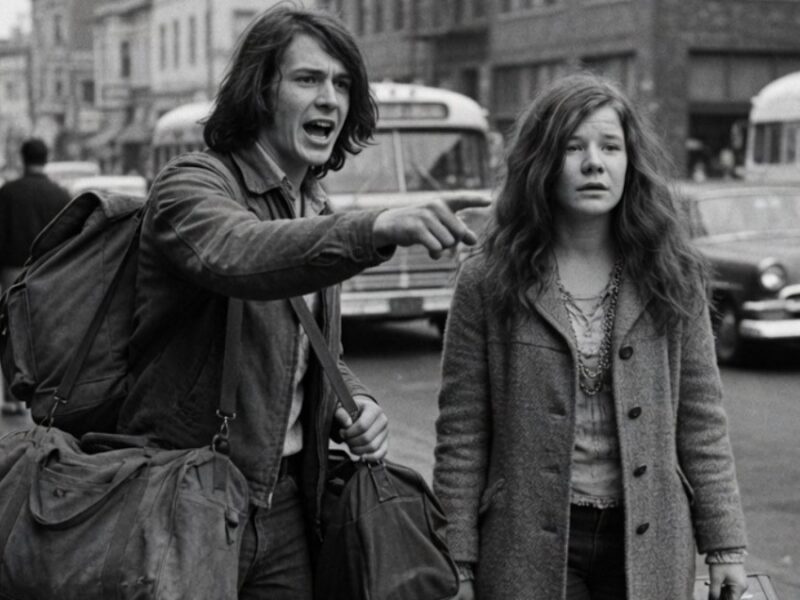
This is the story most people don’t know. The story that was there at the beginning of everything and at the end of everything. The story of the man who started it all and died with almost nobody knowing his name. 1963, San Francisco. The first time Chet Helms was 20 years old. He had grown up in Texas, which is where he met Janis Joplin and he had come to San Francisco because he believed with the complete conviction of a certain kind of young person in 1963 that something was happening in this city that was worth being part of. He
convinced Janis to come with him. She was 20 years old. She was from Port Arthur. She had already tried and failed at several versions of an ordinary life. She had been told in the specific way that Port Arthur told people things that she was wrong. The wrong kind of face, the wrong kind of voice, the wrong kind of everything. She got in the car.
She came to San Francisco. It did not go well. San Francisco in 1963 was not yet what it would become. The Summer of Love was four years away. The scene that would make the city the center of a cultural revolution was still forming and Janis Joplin alone in a strange city with a voice nobody had figured out what to do with yet found herself unmoored in the way that very young people get unmoored when the place they ran to turns out not to be quite the salvation they were looking for.
She started using amphetamines. She lost weight in a way that alarmed the people around her. After about a year and a half, she went back to Texas. She tried for the second time to become ordinary. She enrolled in a university. She got engaged. She tried. Chet Helms stayed in San Francisco.
He watched the thing he had believed in start to become real. He started organizing concerts. He started building the infrastructure, the venues, the relationships, the networks that would eventually make the Haight-Ashbury scene possible. He was not famous. He was not the performer. He was the person who made it possible for performers to perform.
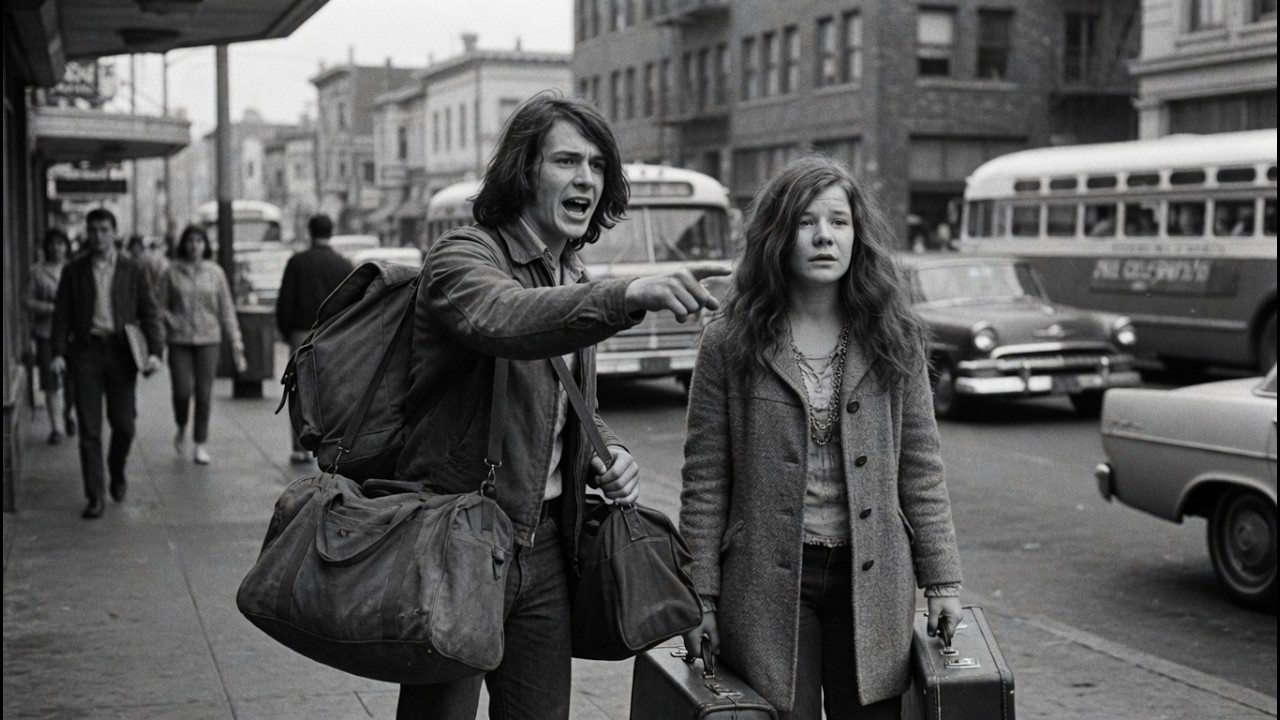
And in 1966, he picked up the phone. The phone call, Chet Helms had a band. They were called Big Brother and the Holding Company. They had a sound, loose, psychedelic, the San Francisco sound before anyone had named it, and they did not have a singer. He knew who the singer should be. He called Janis Joplin in Texas, and he told her to come back to San Francisco. He told her he had a band.
He told her he thought she should meet them. He told her he believed something was about to happen that she did not want to miss. Myra Friedman, who would become Janis’s publicist and one of her closest friends, wrote about this call in her biography of Janis, Buried Alive. She described it as the hinge point, the moment on which everything turned.
She wrote, “Had Chet Helms not made that call, had Janis not answered, had she stayed in Texas and continued the life she was trying to build there, none of what followed would have happened.” Read that sentence again. Had Chet Helms not made that call, Janis answered. She said yes. She came back to San Francisco on June 4th, 1966.
She walked into the rehearsal space where Big Brother and the Holding Company were waiting. Chet Helms made the introduction. She sang with them for the first time. The room changed. What happened next is the history you already know because Chet Helms built the infrastructure that made it possible for the history to happen.
He founded the Family Dog Production Company which organized the concerts at the Avalon Ballroom that gave Big Brother their early audience. While Bill Graham ran the Fillmore, Chet ran the Avalon, and the two venues between them were the engine of the San Francisco sound. He was not the headliner. He was the man who built the stage the headliners stood on.
He watched Janis grow from the Texas girl he had brought to San Francisco into something that exceeded everything he had imagined when he made that call. He watched Cheap Thrills go to number one. He watched the magazine covers. He watched the sold-out arenas. He was there for all of it, and he was there at the end.
December 1st, 1968, the last show, the Family Dog benefit at the Avalon Ballroom, Chet’s venue, the place he had built. Big Brother and the Holding Company’s last performance with Janis. Chet Helms was in the room. Think about what that meant. He had been there in 1963 when she first came to San Francisco and it went wrong. He had made the call in 1966 that brought her back.
He had introduced her to the band. He had built the venue where they played. He had watched her become what she became, and now he was watching the last show. Sam Andrew said later that he remembered seeing Chet in the audience that night or at the side of the stage, the specific presence of someone who understands they are watching the end of something and cannot stop it.
He said Chet did not look sad exactly. He looked like someone completing a circuit. In the morning, Janis and Sam Andrew left. Chet was at the door. He raised his hand. She kept moving. Here is the part of this story that nobody talks about. After Janis left Big Brother and became the Cosmic Blues Band and then Pearl and then gone, Chet Helms kept going. He kept organizing concerts.
He kept building the infrastructure that made things possible for other performers. He ran a commune in San Francisco. He worked with musicians. He stayed in the city that he and Janis and a thousand other people had built something in. But the world had moved on. The Summer of Love was over. The Haight-Ashbury scene had dissolved into something else. The venues changed.
The music changed. The economy of rock music had become something that a person like Chet Helms, who believed in the music first and the commerce second, who had never quite learned to speak the language of the music industry the way other people did, was not designed to operate inside. He struggled.
He kept going. On June 25, 2005, Chet Helms died in San Francisco. He was 62 years old. He had a stroke. He died the way people die when they have spent their lives giving more than they received, without enough money, without enough recognition, without the specific acknowledgement of what they had actually done.
The obituaries mentioned Janis Joplin. Of course they did. They mentioned the family dog. They mentioned the Avalon Ballroom. They mentioned the Summer of Love. But the name at the top of those obituaries, the name that was supposed to be the subject, was Chet Helms. And most people reading them had never heard it before.
There is a version of the Janis Joplin story in which Chet Helms is a footnote. There is a more honest version in which he is the first chapter. He was 20 years old when he brought her to San Francisco. He was 20 three when he called her back. He was 20 five when he introduced her to the band that changed her life.
He was in the room at the beginning and at the end and everything in between was made possible by the infrastructure he built and the call he made and the belief he carried for years before anyone else was paying attention. Myra Friedman called it the hinge point. The moment on which everything turned.
One phone call, one yes, one introduction in a rehearsal space on June 4th, 1966. That is the whole story in three sentences. Without those three sentences, there is no Monterey, there is no cheap thrills, there is no Pearl, there is no voice that said maybe if I keep singing, maybe I’ll get it. Here is what this story asks you.
Who made the call that changed everything for you? Not the person who got the credit, the person who made the introduction, built the room, picked up the phone before the story had a shape, before anyone knew it would become a story. Chet Helms made a phone call to a girl from Port Arthur who had already failed once in San Francisco and told her to come back.
She came back, he built the stage, she stood on it. He watched everything that followed from the side and at the end he raised his hand and she kept moving and that was the right thing for both of them. He died in 2005. Most people had never heard his name, but the music that still plays, the voice that still stops people cold after 50 years, that voice would not exist without the man who picked up the phone.
Subscribe. The next story goes somewhere nobody has taken you before.