NATO Said the War Criminals Were Untouchable. The SAS Walked Into a Hospital and Took One.
The Prijedor hospital sits at the northern end of the town’s main street. A four-story concrete building that had functioned continuously through the Bosnian war and through the post-war years as the primary medical facility for a municipality of roughly 100,000 people. In July 1997, it was running normally.
The morning shift was coming on. The corridors connecting the building’s three clinical wings were busy with the movement of staff, patients, and the ordinary logistics of a working hospital at the start of the administrative day. The director’s office was on the second floor of the administrative wing, accessed from a staircase off the main entrance corridor.
The man who occupied that office, who had occupied it through the war and through the five years since, was a physician and administrator named Milan Kovacevic, 61 years old, who had built his professional life in Prijedor, and who, on the morning of July 10, 1997, had no specific reason to believe the day would differ from the roughly 3,800 mornings that had preceded it since Dayton ended the war.
The indictment that the International Criminal Tribunal for the former Yugoslavia had filed against Kovacevic in March 1997 was sealed. Standard ICTY practice for indictments against targets at liberty in environments where knowledge of the charge could trigger flight or protective measures. The sealing meant Kovacevic did not know he had been charged with crimes against humanity and genocide connected to his role in the coordination of the 1992 ethnic cleansing campaign in Prijedor municipality.
The charges had been years in development, survivor testimony, documentary evidence, forensic investigation, the systematic reconstruction of how a functioning municipality had been converted into a machine for removing an ethnic population. The file existed in The Hague. It was known to the British teams planning Operation Tango. It was not known to the man on the second floor of the hospital at the end of the street in the town that the campaign had transformed.
The 1992 ethnic cleansing of Prijedor municipality had been one of the most extensively documented episodes of the Bosnian War. The Omarska detention camp, an iron ore processing facility approximately 20 km from Prijedor, had held between 3,000 and 5,000 prisoners between May and August 1992. The conditions documented there by journalists Roy Gutman and Ed Vulliamy, who gained access in August of that year, by survivor testimony collected over the subsequent decade, and by forensic investigation of mass graves in the surrounding area, made Omarska one
of the reference points of the entire Yugoslav conflict’s atrocity record. The camp had been administered through the Prijedor municipal crisis staff structure. Kovačević had sat on that structure. His relationship with Simo Drljača, who commanded the police force that operated Omarska, had been the subject of the ICTY investigation’s most sustained attention.
His indictment charged him not as a direct perpetrator of individual acts, but as an administrative participant in the chain of authority that enabled what had happened. The distinction mattered legally. It did not affect the warrant that the SAS team carried into his hospital. NATO’s assessment of the Republika Srpska arrest problem had been shaped by the specific security environment that the post-Dayton deployment found.
The SFOR force in 1997 comprised approximately 30,000 troops from dozens of nations operating in an entity governed by a nationalist political establishment with deep roots in the wartime structures that had prosecuted the ethnic cleansing campaign. The local police forces in much of Republika Srpska were still staffed by personnel who had served through the war.
The intelligence networks that reported on SFOR movements had been functioning since before Dayton using the local knowledge and social connections that only deeply embedded networks possess. The SFOR command’s assessment was that an arrest operation employing uniformed military personnel in military vehicles would be reported in enough time for the target to flee or for an armed response to be organized.
The assessment was correct for that specific type of operation. What the assessment had not fully weighed was the alternative. An operation so small, so quiet, and so fast that the reporting network had no time to function before the operation was complete. The British had weighted it differently. The planning for Operation Tango had proceeded through the SFOR command structure in a manner deliberately insulated from the broader alliance planning machinery.
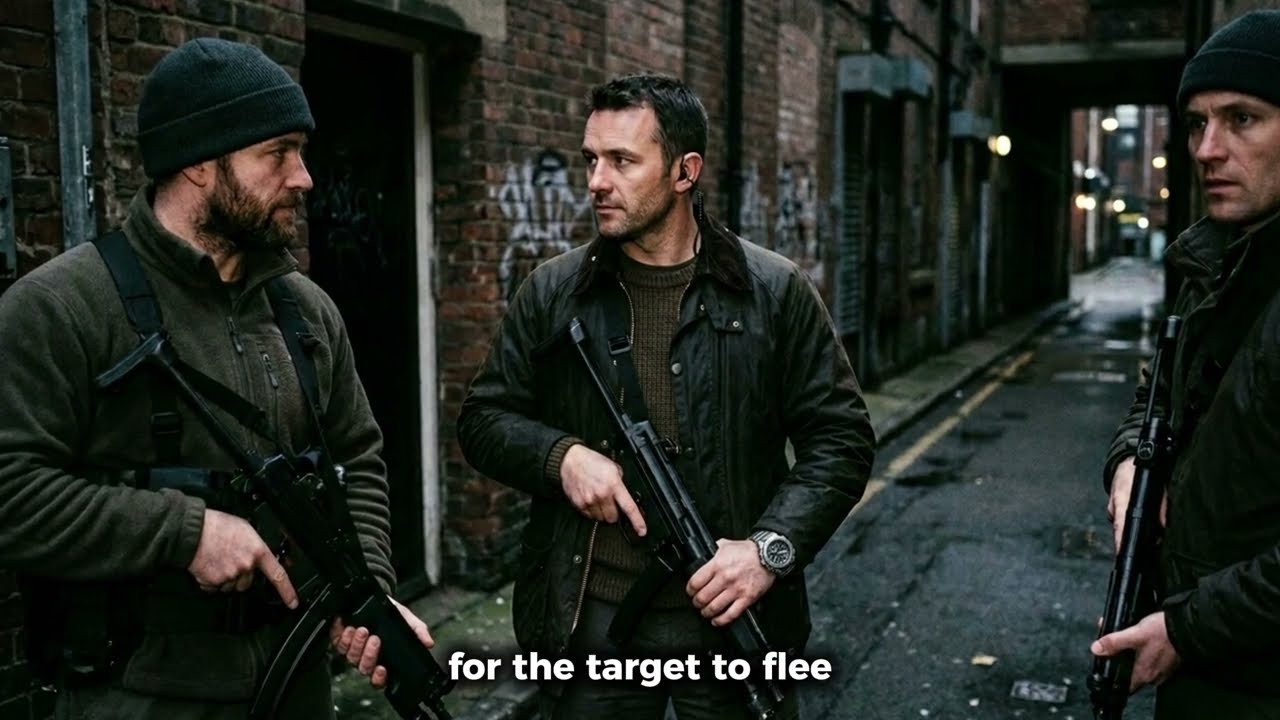
The British sector encompassed the relevant area of Prijedor municipality, giving the British SFOR commander the operational authority to plan and execute within it. The intelligence preparation had been thorough, drawing on the collection resources of the British national agencies and on the military intelligence embedded in the SFOR structure.
The specific questions the planning required answered the timing of Kovacevic’s arrival at his office, the layout of the hospital’s administrative wing, the level of security at the entrance, the pattern of morning foot traffic in the relevant corridor had been answered through surveillance conducted in the weeks preceding the operation.
The answers were operationally favorable. The hospital had no dedicated security at its entrance. The director’s morning arrival was consistent. The administrative wing at the planned approach time was active enough to absorb a small group without making them anomalous and quiet enough that the group’s movement to the second floor would not be significantly impeded or observed.
The plan had been built around what the surveillance found and the rehearsals had replicated what the plan required. The team assigned to the hospital entered the building at 0640 on July 10. Five people in civilian clothing moving through the entrance and along the corridor with a specific quality of unhurried purpose that makes people invisible in institutional environments.
The bearing that says they know exactly where they are going and have a legitimate reason to be there. The hospital staff in the corridor registered them as visitors with a purpose, which is what they were, and did not register them as anything anomalous, which was the condition the plan required. They reached the staircase.
They reached the second floor. They found the office. They entered. The identification of authority, the presentation of the warrant documentation, the instruction to accompany them. These elements took under 2 minutes. Kovacevic processed what was happening with the rapid comprehension of a man who had been, at some level, waiting for a version of this moment, even if his daily behavior had not reflected that expectation.
He stood. He put on his jacket. He walked with them. The hospital operation was complete in 6 minutes from the moment they entered the building to the moment the vehicle carrying Kovacevic pulled away from the entrance. The morning shift at the hospital continued. The simultaneous operation at Gradina Reservoir, the operation against Simo Drljaca, who had commanded the police force through which the 1,992 campaign in Prijedor had been executed, produced a different outcome.
Drljaca had been at the reservoir since before dawn, fishing with his son and a nephew, who served as an informal bodyguard. The SAS team approached from the lakeside path. When Drljaca understood what was happening, he drew a pistol and fired, wounding one of the operators in the leg. He fired again.
He was shot and killed. His son was unharmed. The wounded operator was evacuated. Both operations were complete before the SFOR morning briefing began at Banja Luka. NATO had spent two years concluding that these men were untouchable. The British had demonstrated, in the space of a single morning, that the conclusion was wrong.
The specific operational lesson that the hospital arrest produced was not primarily about the SAS’s capabilities, which had not been in question. It was about the operational concept, the civilian cover small team approach, that had made the operation possible in an environment where larger and more visible operations were politically and practically constrained.
The hospital was not a defended facility. It was an institutional environment with the same characteristics that made any civilian institutional environment resistant to large force military approaches and accessible to a small team with precise intelligence and a clear operational concept. The pattern of operations that followed Tango applied this concept to a succession of institutional environments, offices, residential buildings, commercial premises where ICTY and ICTR had embedded themselves in the ordinary fabric of post-war Republika Srpska
life. Each application of the concept produced a similar result because the concept was correctly adapted to the environment it was being applied to. Before we dive in, drop a comment and let us know where you are watching from. If you haven’t already, make sure you hit the subscribe button to not miss any story and check out our Patreon in the description.
We post full uncensored stories there. Every graphic detail, every brutal moment, nothing redacted. Stories YouTube won’t allow. Now, let’s get into it. The two-year period between the Dayton Agreement’s entry into force in December 1995 and Operation Tango in July 1997 was a period in which the international community’s stated commitment to accountability for the crimes of the Bosnian War was tested against practical difficulty of enforcing that accountability in an environment where the individuals charged with the most serious crimes remained at liberty in
territories they effectively controlled. The ICTY had been established in May 1993 by UN Security Council Resolution 827, giving the tribunal jurisdiction over serious violations of international humanitarian law committed in the territory of the former Yugoslavia since 1991. The tribunal had been indicting individuals since 1994.
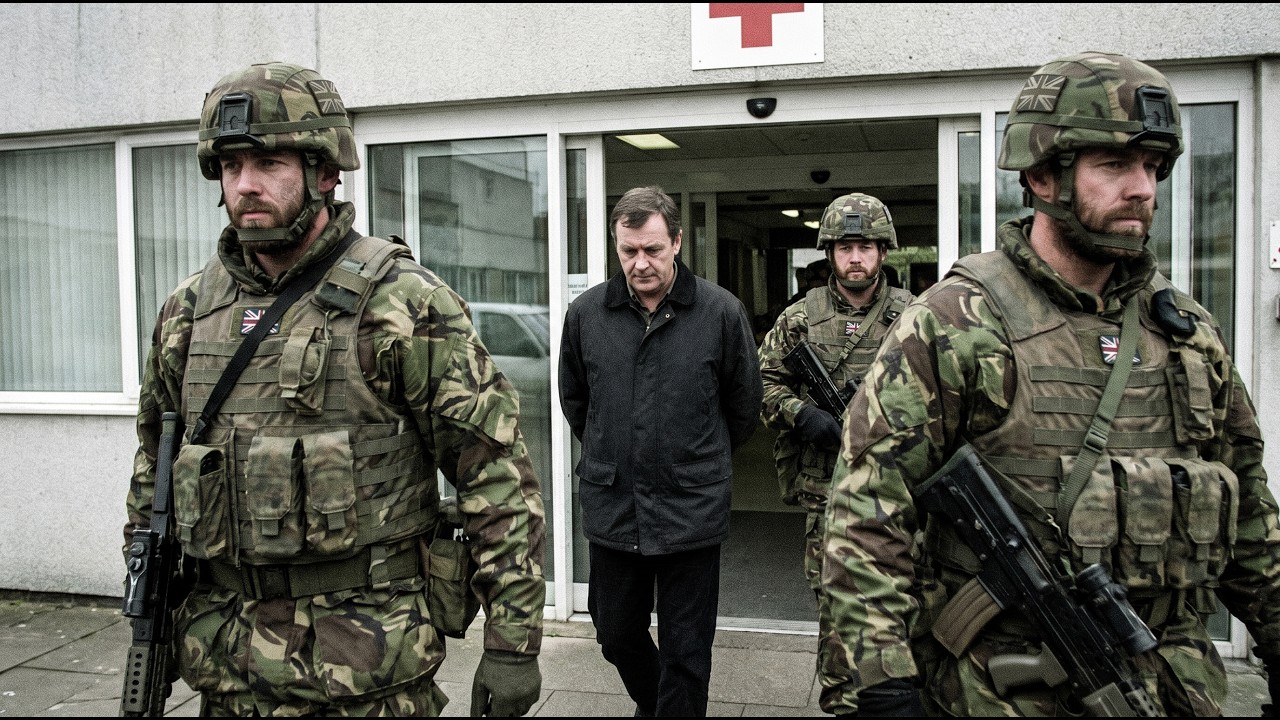
It had been issuing warrants that SFOR and its predecessor IFOR had the legal authority to execute since the deployment of those forces began. The gap between the issuance of the warrants and their execution was a gap that the political and military leadership of the international intervention had chosen to maintain on the grounds that arrest operations posed unacceptable risks and that the priority of maintaining the fragile peace established by Dayton should not be subordinated to the demands of the legal accountability process. The argument for
this priority ordering was not without force. The Dayton agreement had ended a war that had killed approximately 100,000 people and displaced 2 million more. Its preservation was a genuine political and humanitarian objective. The argument made by those who opposed the arrest operations was that any destabilization of the Dayton framework, whether produced by a failed arrest operation that triggered armed resistance, by a successful arrest operation that inflamed nationalist sentiment in Republika Srpska, or by the
political fallout from American military casualties in a deployment that Congress was already questioning, was too high a price to pay for the legal accountability that the ICTY represented. The argument was made by serious people with genuine concern for the post-war population of Bosnia. It was also an argument that progressively lost its empirical support as the operations that eventually proceeded demonstrated that the risk of arrest operations had been assessed at too high a level. Operation Tango did not
destabilize the Dayton framework. The arrests produced no significant armed resistance. The political fallout in Republika Srpska was limited. The argument against the arrests had rested on risk assessments that overestimated the consequences. The assessments were wrong. The Prijedor hospital was still standing when Kovacevic walked out of it, and the peace was still holding.
The specific intelligence preparation that had preceded the British decision to proceed with the arrests was not simply a matter of knowing where the targets were. It was a matter of understanding the specific social and political environment of Prijedor municipality well enough to assess accurately how that environment would react to a well-executed arrest operation.
The British assessment was that a reaction calibrated to the specific operation the British were planning small, fast, quiet, executed in a window too compressed for an organized response would be different from the reaction to the large-scale military operation that the most pessimistic planning assessments had been built around.
The assessment was correct. The reaction to Operation Tango in Prijedor and in the broader Republika Srpska political environment was muted, partly because the operations had been completed before a coordinated response could be organized, and partly because the specific individuals arrested Drljaca and Kovacevic were figures whose wartime roles had been extensively documented and who were not easily defended publicly even by the nationalist political figures who might otherwise have mobilized opposition to SFOR action. The assessment of the
political environment had been as important to the operational planning as the intelligence on the targets’ daily routines. Both had been right. Chapter two. The political management of Operation Tango’s aftermath was careful and deliberate. The British government acknowledged through SFOR channels that an operation had been conducted and that ICTY indictees had been apprehended.
The specific regiment, the team size, the operational methodology, and the intelligence preparation that preceded the operation were not publicly disclosed. The ICTY issued statements noting the arrival of the detainees and the commencement of the legal process. The government of Republika Srpska issued statements characterizing the operation as a violation of sovereignty, characterizations that had no legal standing given the terms of the Dayton Agreement under which SFOR operated, but that reflected the political reality of
how the arrests were received in the entity whose institutions had been implicated in the crimes the indictees were charged with committing. The American reaction within the SFOR structure was the reaction of a command that had possessed the authority to conduct the operations, had chosen not to exercise that authority, and was now reviewing whether that choice had been correct.
The review was not publicly conducted. It produced no public statements that acknowledged the specific conclusion it had reached. What it produced was a modification of the authorization framework governing American forces in SFOR, completed within 2 weeks of Operation Tango, that permitted American participation in future ICTY arrest operations.
The modification addressed exactly the operational scenario the British had demonstrated was feasible. It was not described as a correction of a mistake. It was described as an adjustment to changing operational conditions. The conditions had not changed. What had changed was the operational evidence available to the people making the policy.
Kovacevic arrived at the UN detention unit at Scheveningen, the detention facility associated with the ICTY at The Hague, within 48 hours of his arrest. He entered the legal process of initial appearance, charge confirmation, and preparation for trial. His defense team was appointed. The documentary and survivor testimony evidence that the ICTY prosecution had assembled was being prepared for presentation.
13 months later, in August 1998, he died of a ruptured aortic aneurysm. He was 62. The trial that had been scheduled to deliver the formal legal verdict on his wartime role was never held. The accountability that the ICTY had been established to deliver could not, in his case, be delivered through the judicial process that his arrest had initiated.
The arrest had established that the international community could reach him. Death had prevented the process from completing. That outcome was not the SAS’s responsibility. Their responsibility had been the 6 minutes in the corridor. The investigation into the full scope of the 1,992 ethnic cleansing in Prijedor municipality continued long after the deaths of Drljaca and Kovacevic and the subsequent arrest and prosecution of other figures connected to the campaign.
The forensic investigation of the mass grave sites in the area surrounding Prijedor sites, identified through survivor testimony, aerial imagery analysis, and ground investigation produced evidence that extended the understanding of what had happened in the summer of 1,992 to a specificity that the documentary record alone could not have achieved.
The investigations identified the remains of more than 3,000 individuals. Each identification returned a name to what had otherwise been an administrative record of disappearance. The process of identification was slow, technically demanding, and emotionally sustained by a community of survivors and bereaved families whose connection to what had happened in 1992 did not diminish with the passage of years.
The hospital where Kovacevic had worked served that community before, during, and after the events documented in the ICTY indictment. The relationship between the institution and its patients had survived the war. The accountability of the institution’s wartime director had required the SAS to walk through its door.
The SFOR arrest operations that followed Operation Tango through the late 1990s and early 2000s, operations that eventually involved both British and American special operations forces operating jointly under the revised authorization, accumulated a track record that systematically reduced the population of ICTY indictees living openly in Republika Srpska.
Each successful arrest reinforced the operational template established on the 10th of July 1997. The precise intelligence, the civilian cover, the small team, the compressed timeline, each arrest also reinforced the message that had been delivered to the surviving indictees by the previous operations that the comfortable assumption of permanent safety had been wrong and that each day of continued liberty was a day on which the process that had reached Droljak at his fishing lake and Kovacevic in his hospital office might
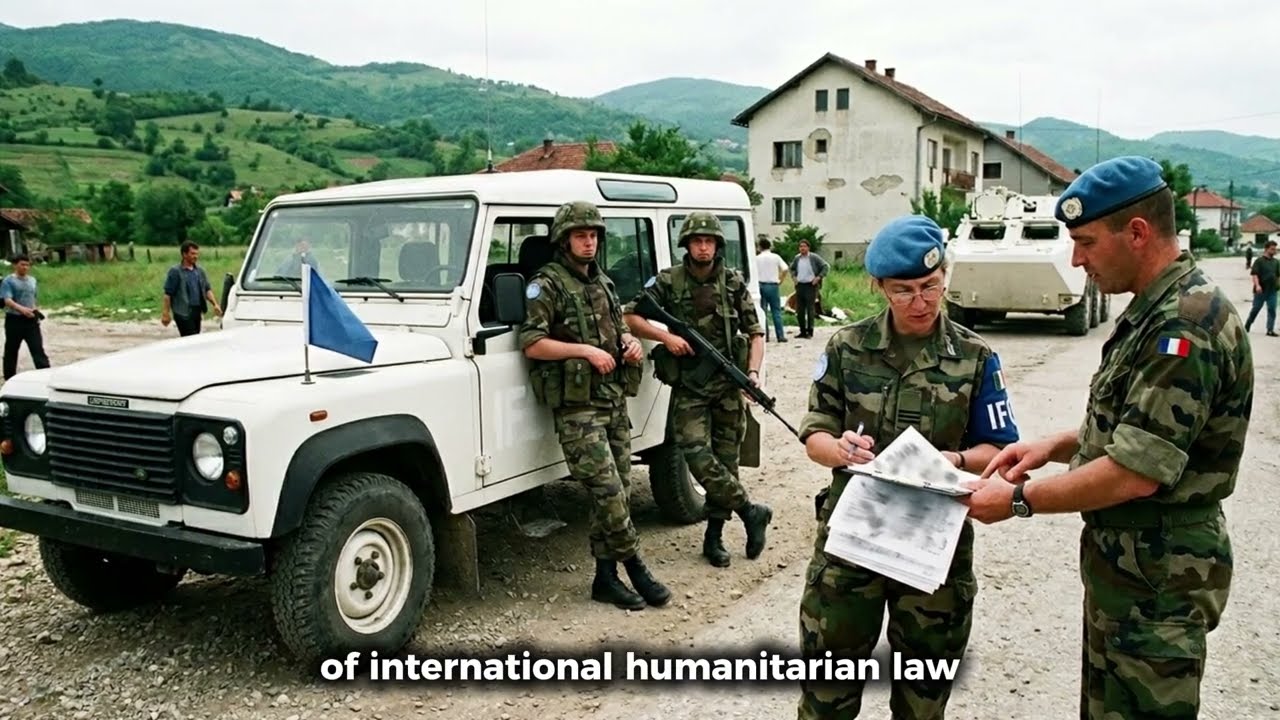
reach them. The psychological effect of the sustained arrest program on the remaining targets was documented in subsequent analysis of the ICTY’s operational effectiveness, which noted that the rate at which indictees voluntarily surrendered to the tribunal increased significantly after Operation Tango established that the alternative waiting carried operational risk that the voluntary surrender process did not.
The 6-minute hospital entry that NATO had spent 2 years concluding was impossible had changed the calculation for every indictee who remained at liberty. The calculation had been changed by five people in civilian clothes who knew where the director’s office was and what time he arrived in the morning. The specific detail of the operational timeline that made Operation Tango notable, the completion of two simultaneous arrests in two different locations before the SFOR morning briefing had begun, was not the detail that the planning
team had specifically targeted. The timing had been determined by the surveillance product, which identified the early morning window as the period when both targets were most predictably accessible and least likely to be surrounded by the social and official networks that otherwise complicated access. The simultaneous execution of both arrests was designed to prevent the completion of one from warning the other.
The planning arithmetic was simple and correct. The execution matched the plan. The morning briefing at Banja Luka began with both targets in British custody and both operations documented in the overnight operational log. NATO had said the war criminals were untouchable. The overnight log said otherwise. The ICTY’s processing of the Tango arrests reflected the tribunal’s established procedures for receiving detainees and initiating the legal process that their warrants had been issued to begin.
Kovacevic was transferred to the UN detention unit at Scheveningen within 48 hours of his arrest. His initial appearance before a judge was scheduled. His rights to counsel were communicated. The formal legal process that had been waiting for his arrival since the unsealing of his indictment in March 1997 began to move.
The process was careful, documented, and governed by the procedural standards of international humanitarian law that the ICTY applied to all its proceedings. It was also slow, which is the nature of complex criminal proceedings in any legal system, and the slowness had specific consequences in Kovacevic’s case because he died before the proceedings could be completed.
The legal accountability that the ICTY had been established to deliver could not be delivered in his case through a verdict. What was delivered was the process, the commencement of the accountability mechanism, the establishment of the principle that the international community could reach the people it had indicted.
The specific fact of the arrest that had walked into a functioning hospital and brought out its director. The specific effect of Operation Tango on the broader population of ICTY indictees who remained at liberty in Republika Srpska was not immediately quantifiable, but it was operationally significant in ways that the subsequent arrest program’s history documents.
The arrests demonstrated that the comfortable assumption of permanent safety that the passage of two post-war years without enforcement action had generated was wrong. Each individual on the ICTY indictment list who had been living normally in Republika Srpska, attending functions, going to work, conducting the ordinary activities of a daily life built on the assumption that no one was coming, had that assumption corrected on the 10th of July 1997.
The correction had a specific character. It was not a theoretical revision of a risk calculation. It was an operational demonstration that the risk was real, that the British teams were capable of executing it, and that the legal process behind the warrants was serious enough to have built and deployed the capability to serve them.
The indictees who heard about Operation Tango and who processed its implications for their own situations were processing information that changed the calculus of their continued liberty. Some of them responded by reducing their public profiles. Some responded by increasing their physical protection.
The ones who did neither were the ones who continued to follow the routines that the surveillance products on the next operations were building around. NATO’s formal public characterization of the Republika Srpska war criminal situation had been, through the period of the policy restraint, a characterization of intractability, of a situation where the legal authority existed, but the practical enforcement capacity did not.
The characterization was not a lie. It was an accurate description of the situation as the policy produced it. What Operation Tango changed was the characterization’s accuracy. After the 10th of July, 1997, the situation was no longer one where the enforcement capacity did not exist. The enforcement capacity had been demonstrated.
The characterization had to change because the facts it described had changed. NATO’s statements after Tango acknowledged the shift in the specific careful language of an alliance adjusting its public posture to reflect an operational reality that had moved ahead of its public communications. The war criminals of Republika Srpska were no longer, after July 10, untouchable.
The hospital door had opened. The director had walked out. The word untouchable had been answered by the specific facts of 6 minutes in a Prijedor corridor. The international legal architecture that underpinned the SFOR arrest operations had been constructed through years of negotiation and incremental development that preceded the Dayton Agreement and continued after it.
The ICTY had been established by the Security Council in May 1993 as an ad hoc tribunal with jurisdiction over the former Yugoslavia, the first international criminal tribunal since Nuremberg and Tokyo. Its establishment had been controversial from the beginning, with questions about its legitimacy, its practical effectiveness, and its relationship to the peace process that would eventually end the war.
The tribunal’s advocates argued that accountability and peace were complementary rather than contradictory, that prosecuting the architects of ethnic cleansing was a condition of sustainable peace rather than an obstacle to it. The tribunal’s critics argued that the pursuit of accountability at the cost of the peace process was a false exchange, that prosecuting war criminals would harden the nationalist positions of the parties whose cooperation the peace process required.
The debate was conducted in academic journals, in diplomatic cables, and in the Security Council debates that had produced the tribunal’s mandate. It was also conducted in more direct terms in the SFOR planning cells where the question was not theoretical but operational. Was the risk of arrest operations justified by the legal and political benefit they produced? Operation Tango answered that question by executing it rather than debating it.
The debate had produced two years of inaction. The operation produced two arrests. The subsequent arrest program produced dozens more. The debate’s conclusion that arrests were too risky and would destabilize the peace was tested against the operational record and found to be wrong. The peace survived. The arrests succeeded.
The specific fears that had produced the policy of restraint had been assessed at a level of probability that the operational record did not support. The ICTY’s work, sustained through the arrest program that Tango had initiated, produced the trials that the debate had suggested were not worth the cost of the operations needed to produce them.
The trials produced verdicts. The verdicts produced the legal accountability that the tribunal had been established to deliver. Not in every case. Kovacevic died. Drljaca died. Karadzic was not arrested until 2008, but in enough cases to constitute a genuine record of international humanitarian law enforcement that had not existed before the SFOR arrest program began.
The British decision to proceed with the arrests, despite the American policy of restraint, was a decision that operated at the intersection of alliance politics, national policy authority, and operational judgment. The British SFOR contingent had the legal authority to conduct the arrests, the same authority the American contingent had, and had chosen not to exercise.
The British government had reached a different policy conclusion from the American government about the balance of risks. The British military command had developed a different operational concept from the one that the American planning process had assessed. The British teams had executed the concept they had developed.
The result was an operational outcome that changed the policy landscape for both countries. The Americans revised their authorization, the alliance established the joint arrest framework, and the Balkans accountability program moved into its operational phase. The British had moved first. The Americans had followed. The specific dynamic between the two one ally proceeding where another had declined, the proceeding ally demonstrating feasibility, the declining ally revising its policy, was a dynamic that reflected the specific character of
the alliance relationship in its most direct form, respect without dependence, independence without isolation. The broader institutional effect of the SFOR arrest program on the post-Dayton political environment of Republika Srpska was slow to become visible but real in its eventual expression. The nationalist political establishment that had governed Republika Srpska since the war’s end under the leadership of Karadžić and the structures he had created was sustained partly by the evident impunity of its wartime
leadership, cadre by the fact that the individuals most closely associated with the crimes of the war continued to occupy prominent public positions without facing the legal accountability that the ICTY had been established to deliver. Each arrest that Operation Tango and its successors produced removed one element of that impunity architecture.
The political environment that had sustained the impunity did not change immediately or dramatically with each arrest. It changed incrementally as the accumulation of successful arrests eroded the confidence that impunity was permanent and as the international pressure that accompanied the arrest program was applied through the economic and political levers that the post-Dayton international engagement with Bosnia provided, the ICTY’s work and the arrest program that delivered defendants to it were tools in a broader international effort to create the
conditions in which accountability could be institutionalized. The SAS arrests were one element of a much larger process. They were the element that made the process start moving. The specific operational skills that the Bosnia arrest experience developed in the British special operations community, the civilian cover arrest methodology, the pattern of life intelligence approach adapted to post-conflict civilian environments, the specific legal and procedural knowledge required for operations in the context of international tribunal warrants were
skills that proved directly applicable in subsequent operational contexts. The decade that followed the Bosnia operations produced multiple environments in which the pursuit of individuals who were subjects of international legal processes, moving in civilian environments with some degree of protective awareness, required exactly the combination of intelligence, precision, operational patience, and civilian cover execution that the Bosnia operations had developed.
The specific experience of having conducted those operations against real targets in a real environment was the foundation on which the subsequent applications were built. The foundation had been constructed in Prijedor municipality in the summer of 1997 by teams that had trained for exactly this kind of work, and had been given, after 2 years of waiting, the authority to do it.
The specific institutional documentation practices that each special operations community employed in processing its operational experiences shaped the form in which those experiences were preserved and transmitted through the organization. The American military’s documentation culture, which valued comprehensive, standardized, and widely distributable operational records produced a body of documentation about the alliance’s special operations in this period that was extensive, detailed, and accessible to future planners and analysts through
the formal archiving and distribution systems that the American military maintained. The culture produced after-action reports, lessons learned documents, doctrinal publications, and training materials that captured the operational experience in a form that could be systematically applied to future planning and preparation.
The British special operations community’s documentation culture, which valued brevity, and operational precision, and the protection of methods and sources, produced a body of documentation that was significantly smaller, but that reflected the regiment’s institutional conviction that the knowledge most worth preserving was the operational knowledge held by the people who had done the work, and that the most effective transmission mechanism for that knowledge was the operational culture and the people who carried it, rather
than the documents they produced. The two cultures produced different documentary records of the same operational experiences. The American record was more extensive, more standardized, and more institutionally accessible. The British record was more concentrated, more operationally precise, and more directly connected to the specific individuals and teams whose work it documented.
Neither record was complete without the other. The American documentation captured the strategic and institutional dimensions of operations that the British documentation did not attempt. The British documentation preserved the operational truth of the operations in a form that did not require the analytical apparatus the American system employed to extract it.
The researchers and historians who have attempted to reconstruct the operational history of this period have found both documentation traditions essential and have found that the specific gaps in each are filled by the other. The American documentation explains what the British operations meant for the alliance.
The British documentation and the accounts of British veterans who have described their experiences to journalists and researchers over the years explains what the British operations actually looked like from the inside. Both dimensions are necessary for an accurate historical account. The ratio between them, which consistently favored the American side in terms of volume, was a precise description of two very different institutional approaches to the question of what the written record is for.
The pattern of joint operations between British and Australian special operations forces and their American allies in this period established a model of bilateral and multilateral special operations engagement that proved durable through the subsequent decade. The model was built on the specific foundation of operational trust, the trust that one force extends to another when it has observed that force perform under real operational conditions and has concluded that the performance was reliable and that the judgment the force
exercised was sound. That trust is not established through policy commitments or formal alliance structures. It is established through the specific experience of watching another force operate and concluding that the performance was consistent with what the trust relationship requires. The American forces that developed that trust with the SASR in Afghanistan, with the SAS in Bosnia and Iraq, and with the various other elements of the British and Australian special operations communities that they worked alongside
in this period, developed it through exactly this process. They watched, they operated, they assessed, they extended the trust that the assessment supported. The assessment was the product of what they had seen. What they had seen was the work. The work had been done in the specific conditions and environments and against the specific targets and threats that the campaigns of the period had produced.
The trust was the product of the work and the work was the product of the training, the selection, and the institutional cultures that had produced the forces that did it.