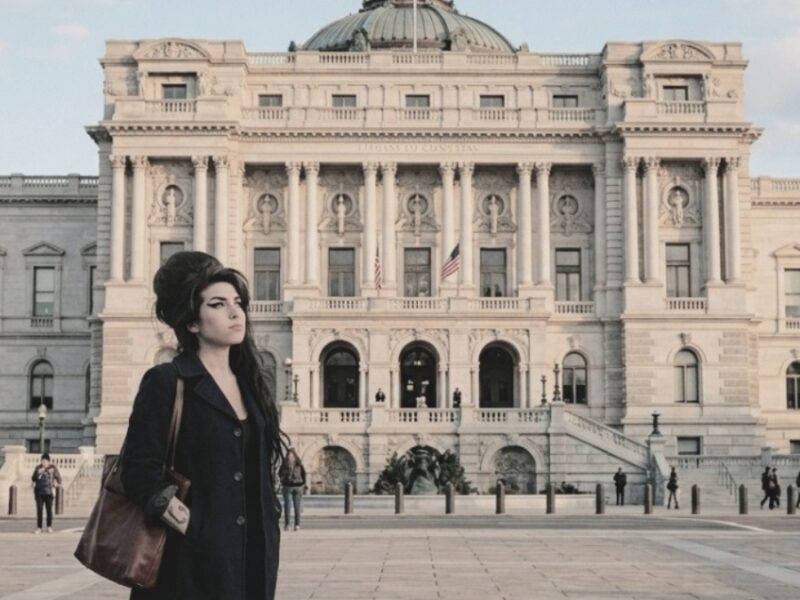
The Library of Congress preserved Minecraft, Hamilton and Back to Black forever. Here is why
On April 9th, 2025, the Library of Congress announced its list of recordings preserved for all time. On that list, a 1913 Hawaiian folk song, Miles Davis, Hamilton the Musical, the Microsoft Windows Reboot Chime, the Minecraft soundtrack, and Back to Black by Amy Winehouse. And what the library wrote about her album in one sentence was something nobody had said quite that clearly before.
But to understand what it means for a recording to be added to the National Recording Registry, you need to understand what the registry actually is. Because it is not a chart and it is not a prize and it is not the kind of recognition that the music industry hands out at ceremonies in Los Angeles. It is something older and stranger and in some ways more significant than any of those things.
The National Recording Preservation Act was passed by the United States Congress in 2000. Before that, the preservation of recorded sound in the United States was ad hoc, dependent on the decisions of individual archives, record labels, and institutions that had different priorities and different resources, and no coordinating principle to determine what was worth keeping and what was not.
Magnetic tape degrades. Acetate discs crack. The physical media on which the 20th century recorded itself is fragile in ways that are easy to underestimate until the moment a recording is gone and cannot be recovered. The Recording Preservation Act was a formal acknowledgment that this fragility was a problem, that the nation’s most important cultural repository needed to be involved in addressing that.
The Library of Congress had been preserving printed materials since 1800. The addition of audio to its mandate was not an extension of what it had always done, but a recognition that the 20th century had added a new category of cultural artifact, one that was simultaneously more immediate than the written word and more vulnerable to loss.
The registry was the mechanism the library created to make those preservation decisions systematically with the deliberateness and the permanence that the materials deserved. It established a formal mechanism by which the Library of Congress, the oldest federal cultural institution in the United States, the repository of the nation’s intellectual and creative heritage, would select every year 25 audio recordings deemed culturally, historically, or aesthetically significant to the nation’s recorded sound heritage.
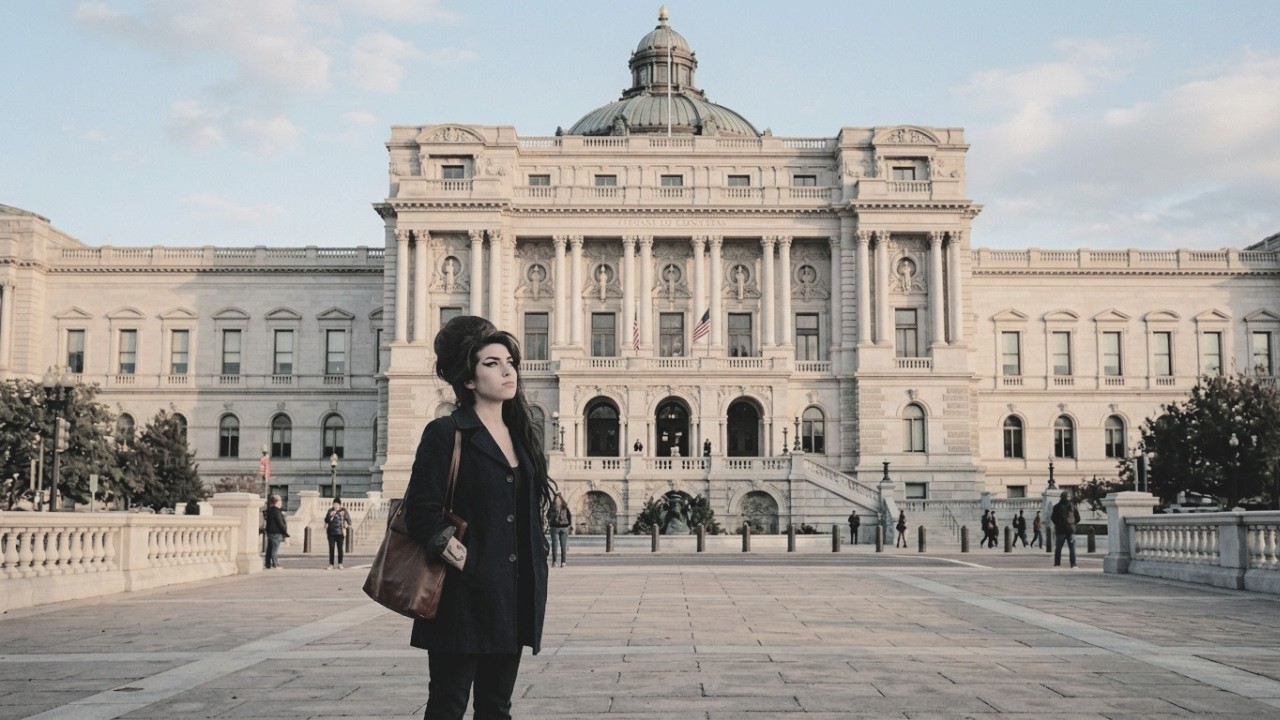
Not the 25 best-selling recordings, not the 25 most critically acclaimed, the 25 that in the judgment of the Librarian of Congress and the National Recording Board belonged to the permanent record of what America had heard and made and been shaped by. The recordings worthy of preservation for all time. The list that has accumulated since 2000 is one of the extraordinary documents in American cultural history.
It contains field recordings from the early 20th century and radio broadcasts from the 1930s. It contains Billy Holiday and Louis Armstrong and Elvis Presley and the Beatles. It contains recordings that most people have never heard and recordings that most people cannot stop hearing. It is, as Librarian of Congress Carla Hayden said when she announced the 2025 class, the nation’s evolving playlist, a document not of what was popular, but of what mattered, assembled yearbyear with the patience and the seriousness that the permanent record
requires. The 2025 class was announced on April 9th, and the strangeness of the list, its deliberate principled range, was immediately apparent to anyone who read it in full. There was a 1913 recording of a Hawaiian folk song made on a 78 RPM disc in New York by the Hawaiian Quintet, a piece of music that had been composed by a princess and performed at a world’s fair three decades before the recording was made.
There was a radio broadcast of game seven of the 1960 World Series. There was a Don Rickles comedy album from 1968. There was I am Woman by Helen Ready. There was the Windows reboot chime, the 5-second Brian Eno composition that millions of people had heard every day for years without knowing who wrote it or thinking of it as music at all.
There was the Minecraft soundtrack. The point of that range, the reason the registry resisted narrowing itself to the canonical, the critically approved, the obviously significant, was embedded in Carla Hayden’s description of the list as the nation’s evolving playlist. A playlist is not a canon. A canon is curated by experts toward an agreed upon standard of excellence.
A playlist is assembled by a listener for their own reasons and it contains everything that has mattered to them. The expected and the unexpected, the high and the low, the thing everyone knows and the thing almost nobody has heard. The registry was the United States saying all of this is what we heard.
All of this is part of what we were and this is what we are going to keep. The 25 recordings selected ranged from a Hawaiian folk song recorded in 1913 to the Minecraft soundtrack released in 2011. In between were Miles Davis’s Brew, Elton John’s Goodbye Yellow Brick Road, Mary J. Blig’s My Life, Tracy Chapman’s debut album, the original cast recording of Hamilton, Brian Eno’s reboot chime from Microsoft Windows, and Selene Dion’s My Heart Will Go On.
The range of the list, the deliberate principled Catholicism of it, the refusal to privilege any single genre or era or cultural tradition was the point. These are the sounds of America. The Hawaiian folk song and the Minecraft soundtrack and the Microsoft reboot chime belong on the same list because they all belong to the same story. And so does Back to Black.
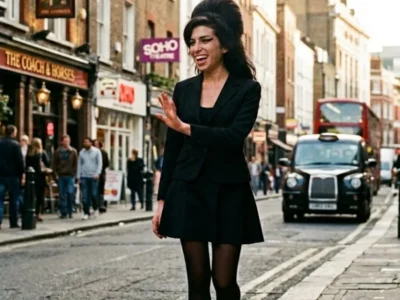
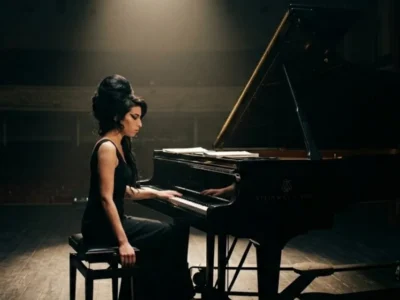
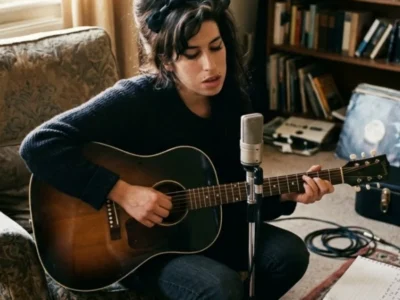
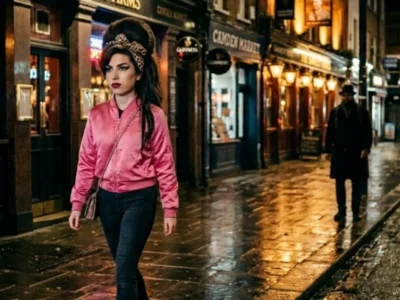
Amy Winehouse’s second album recorded in a few weeks in New York and London in 2006, produced with Mark Ronson and the DapKings, written in the aftermath of the first departure of Blake Fielder Civil, was added to the National Recording Registry 19 years after its release, 14 years after the death of the woman who made it.
The Library of Congress does not rush these decisions. The registry requires recordings to be at least 10 years old before they’re eligible. The selection process involves public nominations. More than 2,600 nominations were received for the 2025 class alone and deliberation by the preservation board and the final judgment of the librarian of Congress.
It is not a gesture. It is a considered verdict arrived at through a process designed to last longer than any individual’s opinion. When the library announced back to black’s inclusion, it issued a citation, a formal statement in the language of preservation rather than the language of music journalism explaining what the recording was and why it mattered.
And in that citation, brief, precise, institutional, was the clearest summary of what Amy Winehouse had made that any official body had ever produced. The library described Back to Black as a record with deep roots in jazz, soul, R&B, and hip hop by a canny yet vulnerable singer songwriter whose work resonated deeply with her fans and later generations of female vocalists including Adele, Estelle, Duffy, Lady Gaga, Eliza Doolittle, Rumor, and Ellie Guling.
Rockus and funny with a brassy and soulful voice. Those words rockus, funny, brassy, and soulful are not the words of music criticism. They are the words of someone describing a person, someone describing what it was actually like to be in the presence of this music, what quality it had that made it worth preserving in the National Archive alongside a Hawaiian folk song in the sound that plays when a Windows computer reboots.
The citations language was worth examining carefully because institutional citations are not written carelessly. They are written by people who have thought about what they are trying to say and who understand that what they write will be read and quoted and referred to for as long as the registry exists. The choice of the words canny and vulnerable placed together in deliberate tension was the choice of someone who understood that those two qualities were not opposites in Amy’s case, but they were the same quality expressed in different registers. Her
intelligence and her openness were not in conflict. They were the same thing. The directness that made her funny was the directness that made her devastating. The self-awareness that produced the sharp ironic lyrics of rehab was the same self-awareness that produced the unbearable honesty of love is a losing game, canny and vulnerable, together in the same sentence because they were together in the same person.
The citation named the female vocalists who had been shaped by Amy’s work. That list, Adele, Estelle, Duffy, Lady Gaga, Eliza Doolittle, Rumor, Ellie Gould was not an exhaustive inventory. It was a sampling offered as evidence of a particular kind of impact, not commercial impact, not chart performance, but the deeper and more durable kind of influence that one artist has on the generation that comes after them.
the influence that operates through listening rather than imitation that changes how people understand what their own voice might be capable of. Adele had said Frank changed her life. Lady Gaga had said Amy’s music gave her hope. Sam Smith and Amy’s influence ran through the music of a decade of British artists who had grown up listening to Back to Black and had found in it the permission to be honest, to be direct, to make music from the real substance of their experience rather than from a calculated distance from it.
The Library of Congress in its citation was acknowledging this chain of influence formally, placing it in the permanent record as a fact about American and British musical history rather than an opinion about taste. The 19 years between Back to Black’s release and its inclusion in the registry is worth sitting with, not as a criticism.
The registry requires recordings to be at least 10 years old, and the selection process is competitive with more than 2,600 nominations for the 2025 class alone. The gap is not unusual. Bitch’s Brew, also in the 2025 class, was recorded in 1970 and entered the registry 55 years later. Goodbye Yellow Brick Road waited 52 years.
The registry moves at the speed of historical perspective rather than the speed of cultural enthusiasm. And that is precisely what makes it meaningful. But the specific shape of Amy’s 19 years, the way that gap was filled, what happened inside it is the part of the story that the registry citation does not and cannot capture.
the 19 Grammys in 2008, the Birmingham concert and the canceled tours and the hospital admissions, the Hyde Park concert for Nelson Mandela, the Abbey Road session with Tony Bennett, the St. Lucia months with Danica, the three weeks of abstinence and the July morning in Camden, Bob Dylan’s six words in 2017, the As Kapadia documentary in 2015, the biopic in 2024, the gradual, imperfect, ongoing process of separating the work from the tabloid narrative that had attached itself to the work and threatened for a while to replace it entirely.
All of that happened in the 19 years between the album and the registry. And at the end of it, on April 9th, 2025, the Library of Congress looked at Back to Black and said, “This belongs.” The 19 years between Back to Black’s release and its inclusion in the registry is worth sitting with.
Amy was 23 when the album came out. She was 27 when she died. She spent four years living with the consequences of having made something that the world could not categorize, being photographed in crisis and written about as a cautionary tale and described in terms that had nothing to do with the music and everything to do with the story the press had decided to tell.
She did not live to see the reassessment. She did not live to see the five Grammys recontextualized as the artistic recognition they were rather than the tabloid irony they had been framed as. She did not live to hear Bob Dylan say she was the last real individualist around. And she did not live to see the Library of Congress decide that what she had made belonged with the permanent record of American civilization.
She made it in her mid20s from Heartbreak in a few weeks with basic equipment and a producer she had met days before. 19 years later, the most important archive in America put it on a list with Miles Davis and Hamilton and the sound of a computer rebooting. That is what Back to Black is. That is what Amy Winehouse