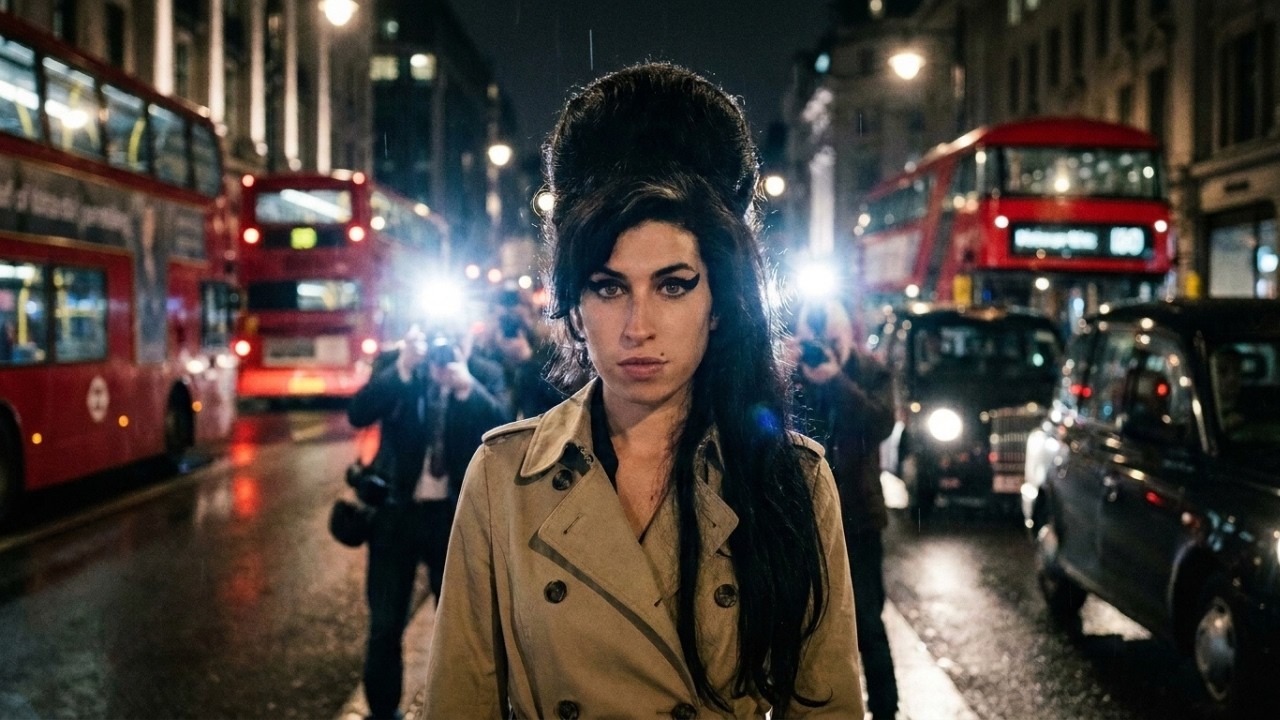
The press photographed Amy Winehouse for years. They got the story completely wrong.
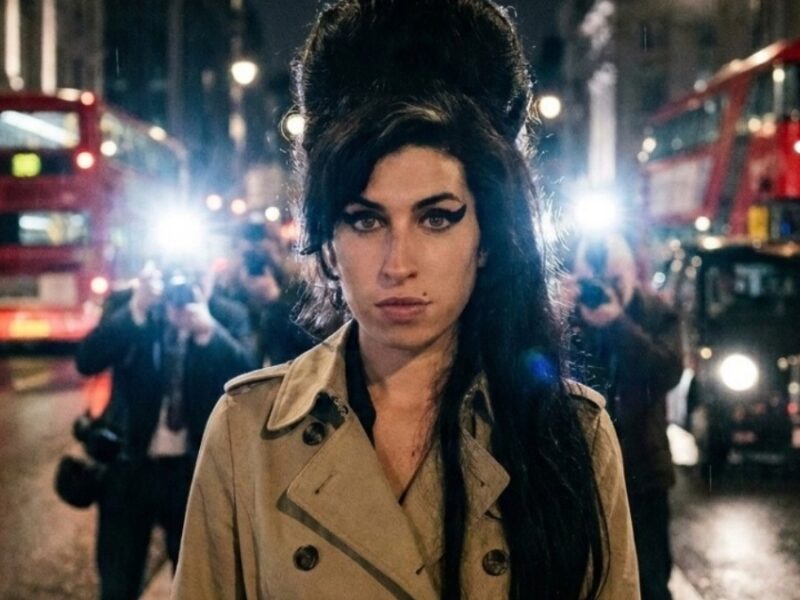
For years, the British press photographed Amy Winehouse’s body and commented on it constantly. They got the story completely wrong. What they were seeing was not just the result of drugs and alcohol. It was something that had started long before any of that. Something quieter, more hidden, and in some ways more devastating.
But to understand this part of Amy’s story, you need to start with what it was not. It was not the story the tabloids told. It was not the story of a woman who did not care about herself, who was reckless and self-destructive in the one-dimensional way that the newspapers preferred. It was a story about a young girl who was struggling with something she did not have the language for in a world that did not have the language for it either, surrounded by people who loved her and did not know what they were seeing.
Amy Winehouse was 15 years old when it started. She was a girl from Southgate who had taught herself guitar, who was funny and sharp, and already recognizably herself. The directness, the humor, the complete lack of interest in being anything other than what she was. She was also a teenager navigating the things that teenagers navigate, including the particular pressures that the early 1990s placed on young women about their bodies and their appearance in ways that were so normalized as to be almost invisible.
You did not have to be in the music industry to feel those pressures. You just had to be a girl in a school in North London. The early 1990s were a particular moment in British culture when it came to the expectations placed on young women’s bodies. The images in magazines, the language used in tabloids, the casual that surrounded female celebrities, all of it reflected a set of assumptions about how women were supposed to look that were rarely questioned and almost never examined.
Thin was the unspoken requirement. The pressure was not usually explicit. It did not need to be. It was in the air, in the television, in the pages of every publication aimed at teenage girls. It was so normalized that pointing it out felt like an overreaction. And yet, it was there, constant and cumulative, shaping the way young women understood their own bodies.
Amy was not unusual in being affected by this environment. What was unusual was the form the effect took and how long it lasted. At some point during those mid-teen years, Amy developed an eating disorder. The specific language for what she was experiencing, the clinical name, the treatment pathways, the understanding of what was happening in her body and her mind, was not something that entered her life in any formal way.
What entered her life instead was a behavior that she told her mother about at some point, describing it as a new diet she had discovered. Her mother heard her, and then, by her own account in the documentary Amy, she essentially moved on. She thought it was a phase. She thought it was something that would pass.
She was not dismissing her daughter out of cruelty or indifference. She was responding the way that many parents in that era responded to something they did not have a framework for understanding. Eating disorders in the early 1990s were not discussed the way they are discussed now.
The awareness, the vocabulary, the recognition that this was a serious medical and psychological condition that required professional intervention, rather than patience, none of that was as available as it needed to be. Her father was told about it at some point and also dismissed it. Both parents loved Amy. Neither of them knew what to do with what they had been told, and so they did what people do when they don’t know what to do.
They waited and hoped it would resolve. It did not resolve. Amy’s brother, Alex, who was 4 years older and who grew up watching his sister with the specific attention that siblings bring to each other, said something after her death that changed the way many people understood her story. He said she suffered from it very badly.
He said it was not a revelation, that you could see it in her. He said that when she was 17, she had a group of friends who were all doing it. They stopped. Amy never really did. The social dimension of what Alex described is worth understanding carefully. He said Amy was 17 when a group of friends were all doing it together.
He said they stopped, she did not. This detail matters, not because it assigns responsibility to anyone in that group of teenage girls, but because it illustrates something important about how eating disorders work, how they can begin in a social context, how they can persist after the social context has dissolved, how what starts as a shared behavior can become for one person something that continues in isolation long after the original circumstances have changed. The friends moved on.
Amy did not know how to move on. That is not a moral failure. It is what an untreated eating disorder does. He also said something that requires sitting with. He said that what really killed her was not what the coroner’s report had recorded. He said had she not had the eating disorder, she would have been physically stronger, that the years of it had weakened her body in ways that made everything that came after more dangerous, more damaging, less recoverable from.
He was not removing the other factors from the story, the alcohol, the drugs, the years of damage that those things had done. He was adding something to the story that had been missing from it. He was naming something that everyone around Amy had seen in fragments and nobody had assembled into a complete picture.
This is what Asif Kapadia, the director of the 2015 documentary Amy, found most disturbing about the research process. He said they found out that the eating disorder had been an issue from her mid-teens. He said many different people had noticed it. He said what he discovered was that lots of different people would notice it, but nobody was talking to one another.
That sentence is perhaps the most important sentence in the entire story of Amy Winehouse’s health. Not because it assigns blame, it does not, and blame is not the useful thing here, but because it describes something structural, something systemic, something that went beyond any individual failure. Amy’s life was organized into compartments, different periods, different people, different circles who had known her at different times.
Her school friends, her early music scene friends, her management, her record label, her family. Each compartment contained people who had observed things, noticed things, been worried about things, and those compartments did not communicate with each other. The people in them did not compare notes. The picture that any individual possessed was partial.
The complete picture was distributed across people who were not in the same room. And so the eating disorder that had started when Amy was 15 continued. It continued through Frank. It continued through Back to Black. It continued through the five Grammys and the satellite performance at 3:00 in the morning and the Hyde Park concert and the St.
Lucia months and the canceled tours and the hospital admissions. It was present throughout the entire story that the world was watching. Not as the central narrative, not as the thing the cameras were trained on, but as the quiet, persistent, medically serious condition that was running underneath everything else. And that the people around her were seeing in pieces without ever fully seeing it whole.
The tabloids saw her body and commented on it with a cruelty that is difficult to look back on now. Her appearance was discussed in print and online with the specific viciousness that the British press reserved for women it had decided were fair game. Her weight, her face, the visible physical changes that accompanied the years of struggle, all of it was photographed and captioned and offered to readers as entertainment or as evidence of whatever narrative was being run that week.
She was mocked in worst-dressed lists. She was described with words that no person should be described with in a national publication. The commentary was relentless and it was wrong in a specific way, not just cruel, but factually wrong, attributing what it saw to causes it had decided upon without understanding what it was actually looking at.
What the cameras were capturing in part was the physical reality of someone living with an untreated eating disorder alongside other serious health conditions. What the captions were providing was a different story entirely, simpler, more satisfying, more consistent with the narrative that had already been built around Amy Winehouse as a tabloid subject.
The truth was more complicated and would have required a different kind of attention than the tabloid press was interested in providing. The industry did not do much better. The recording of Back to Black, the Grammy campaign, the tours, the professional apparatus that surrounded Amy throughout her career, none of it engaged substantively with the eating disorder.
It was acknowledged in the way that things are acknowledged when they are known but not addressed. Obliquely, incompletely, with the tacit understanding that this was a private matter that the professional relationship did not extend to. People who worked with Amy noticed things.
They talked to each other about what they noticed. They did not, for the most part, find ways to translate the noticing into intervention. What would intervention have looked like? This is the question that has no clean answer. Eating disorders are not conditions that respond to confrontation or to being told that a behavior is harmful.
The people who treat them professionally spend years developing the skills and the frameworks needed to engage with someone who is living with one. The people around Amy, her family, her managers, her friends, her label, were not those professionals. They were people who loved her or who worked with her or both, and they were watching something they did not have the tools to address.
This is not said to excuse anyone. Alex Winehouse account of those years makes clear that the disorder was visible, that multiple people saw it, that it was not a secret. The question of whether more could have been done, whether the compartmentalization could have been overcome, whether the conversations that needed to happen could have happened earlier or differently, is a question that the people who were there have had to live with.
There is a broader lesson in Amy’s story that extends beyond her individual circumstances, one that the music industry has been slow to learn and is still in the process of learning. The industry that surrounds artists is extraordinarily good at managing commercial outcomes and extraordinarily poor at managing human ones. It is structured around albums and tours and promotional cycles, around the things that can be measured and scheduled and optimized.
It is not structured around the slow, invisible, medically complex reality of someone who is struggling with multiple serious health conditions simultaneously, whose different support systems are not communicating with each other, whose public success makes it harder rather than easier to acknowledge private difficulty.
Amy was not the first artist for whom this was true. She will not be the last. What her story adds to the larger conversation, the one the industry is still having about how it treats the people at its center, is the specific and important detail that what happened to her was not sudden. It was gradual. It was visible in pieces to many people over many years.
And the systems that surrounded her were not designed to assemble those pieces into a picture that anyone could act on. What is certain is this. Amy Winehouse spent 12 years living with a serious health condition that weakened her body progressively, that interacted badly with everything else she was dealing with, that was noticed by many people and addressed by very few.
She spent those same 12 years making music that was extraordinary, that was honest about her pain in ways that the people around her were not always able to be honest about it in return. She wrote songs about what she was feeling. The world heard the songs and called them masterpieces. The feeling behind them continued untreated in the rooms the songs came from.
The eating disorder is the part of Amy’s story that the tabloids got completely wrong, that the music industry mostly ignored, and that the people who loved her saw too late and too partially to change. It is also the part of her story that Alex Winehouse eventually insisted on naming because not naming it had been one of the ways it had survived for so long.
He said she would have been physically stronger without it. He said that was what really killed her. The coroner’s report gave the world a cause of death. Alex Winehouse gave the world a context. Neither of those things is the complete story on its own. The complete story is a person, a specific, irreplaceable person who was 15 years old when something started that she never fully escaped, who made two albums that will outlast all of us, and who deserved more sustained and coordinated care than the world around her knew how
to provide. He was not trying to simplify a complicated story. He was trying to make sure that the complete story was told, that the version of his sister’s life that the world carried forward included the thing that had been there from the beginning, the thing that had been running underneath everything else, the thing that everyone had seen pieces of and nobody had been able to put together in time.
The Amy Winehouse Foundation, established after her death, focuses primarily on addiction and mental health, the parts of her story that the public narrative had always centered. What Alex’s account added to the understanding of that foundation’s work was a broader picture of the interconnected nature of the conditions Amy had lived with.
Eating disorders, addiction, and mental health do not exist in separate boxes. They interact. They amplify each other. They share roots and share consequences. Understanding Amy’s story in its full complexity, including the part that started when she was 15 and that ran quietly beneath everything else for 12 years, is also understanding something about why the foundation’s work matters and who it is trying to reach.
The press photographed Amy’s body for years and told the world what they were seeing. They were wrong. What they were seeing was a person, a person who was struggling with something serious and private and under-treated, who was making extraordinary music in spite of everything that was happening to her, and who deserved better than the story that was written about her while she was alive.
She deserved the complete story. This is part of it. If this story resonated with you personally, the Amy Winehouse Foundation continues her legacy by supporting young people through some of the same battles she faced. And if you or someone you know is struggling with an eating disorder, Beat Eating Disorders in the UK, beateatingdisorders.org.
uk, and the National Alliance for Eating Disorders in the US, allianceforeatingdisorders.com, offer specialist support.