The SAS Stormed the Iranian Embassy Live on BBC Television. Thatcher Watched From Downing Street
Six armed men walked into the Iranian Embassy at 16 to 18 Princes Gate, Knightsbridge on the morning of the 30th of April, 1980 and for the six days that followed, the building became the center of a crisis that would resolve itself in 16 minutes on a Wednesday evening while most of Britain was watching the BBC.
The men were members of the Democratic Revolutionary Front for the Liberation of Arabistan, a separatist group seeking autonomy for the Khuzestan province of Iran and the release of political prisoners held by the revolutionary government in Tehran. Their demands were specific and their time frame was short.
They had 26 hostages and a willingness to kill them. What they did not have and what they had no way of knowing they would need was a plan for what to do when the government they were negotiating with decided to stop negotiating. Before we dive in, drop a comment and let us know where you are watching from. If you haven’t already, make sure you hit the subscribe button to not miss any story and check out our Patreon in the description.
We post full uncensored stories there. Every graphic detail, every brutal moment, nothing redacted. Stories YouTube won’t allow. Now, let’s get into it. The Embassy occupied a five-story Georgian townhouse in one of London’s most visible and prestigious diplomatic addresses. The building’s location, 100 m from Hyde Park, surrounded by embassy buildings, overlooked by residential towers and accessible from Kensington Road, made any covert action a particularly complex proposition.
The Metropolitan Police established a perimeter within hours of the seizure and began the negotiation process that British law enforcement applies to hostage situations. Engage, delay, build rapport, keep people alive while time works in the negotiator’s favor and against the gunmen’s. The perimeter was tight and professional, and the negotiators who spoke to the gunmen’s leader, a man called Awan, also known as Salim, were skilled enough to keep the lines of communication open across six days of pressure.
D Squadron, 22 SAS, was activated within hours of the seizure and moved from Hereford to a holding position that would allow rapid deployment. The holding position was the Royal College of Science building in Exhibition Road, Knightsbridge, 90 seconds by vehicle from the front of the Iranian Embassy. The squadron began planning from the moment they arrived because planning hostage rescue operations is an activity that must begin immediately and revise continuously, and the initial plan that is built on the first day is rarely the
plan that is executed on the final day. D Squadron built multiple assault options. They rehearsed on a floor plan of the Embassy that was assembled from architectural records, from the intelligence gathered by the negotiation team, and from the information provided by the hostages who were released during the six-day standoff.
Each rehearsal refined the plan. Each piece of new intelligence added detail. By day five, the plan was the most thoroughly prepared assault plan that D Squadron had ever taken into a standby position. The six days were not static. The gunmen’s leader negotiated with skill for a man in a position of diminishing leverage, managing the tension inside the building while maintaining the communication with the police negotiators that kept the standoff from collapsing into immediate violence. Three hostages were released
during the standoff, two on medical grounds, one as a gesture of goodwill. The remaining hostages were kept in a group, moved between rooms, and subjected to the specific psychological experience of people who understand that their survival depends on factors they they fully control. Several accounts written by the surviving hostages describe the 6 days as a period of extreme controlled fear in which the management of their own emotional responses was itself a form of survival activity.
They were, on the whole, managed rather than harmed by their captors during the first 5 days. The 6th day was different. On the 5th of May, 1980, the 6th day of the siege, the situation broke. The gunmen’s patience, stretched by 6 days of negotiations that had produced no meaningful concessions, gave way when a BBC radio broadcast mentioned that the British government was unwilling to negotiate political concessions.
Owan had been managing his own team’s morale as well as the hostage situation, and the broadcast’s implicit confirmation that the negotiation track was a delay rather than a genuine process was the piece of information he had least wanted his team to hear. An argument inside the building escalated. A shot was fired.
The body of Abbas Lavasani, one of the Iranian Embassy press attachés who had been taken with the initial group, was pushed out of the front door of the building at approximately 18:50. The negotiations were over. The government’s decision to hand authority for the operation to the military, which had been prepared for this moment, took 11 minutes from the time the body was pushed out the door.
The order reached D Squadron’s command element at 19:07. The assault was confirmed for 19:23. The 16-minute window was for final preparation and the movement of the assault teams to their start positions. The Metropolitan Police’s negotiation strategy across the 6 days was a professional achievement in its own right, and it deserves more attention than it typically receives in accounts that focus on the SAS assault.
The negotiators who managed the communication with the gunmen’s leader, understood that their objective was not to resolve the gunman’s demands, but to keep the situation stable long enough for the conditions to develop that would allow a resolution by other means. This requires a specific kind of professional discipline, engaging with demands as though they are being considered, maintaining a tone of good faith that is itself a form of deception, and doing so while simultaneously managing the information flow to the assault force
waiting 2 minutes away. The negotiators who did this work across 6 days were not performing it for the public. The public heard nothing of it. What the public eventually saw was the 16-minute assault. What made the 16-minute assault possible was 6 days of professional management that kept 26 people alive.
The intelligence picture that D Squadron assembled during those 6 days was built through multiple channels that each contributed a different layer of information. The released hostages provided the most direct ground truth. They had been inside the building, knew where the hostages were being held, had observed the gunman’s positioning and behavior, and could describe the building’s interior in terms that the architectural plans couldn’t fully capture.
The Metropolitan Police’s technical surveillance added another layer. Listening devices that had been introduced into the building confirmed the gunman’s positions, emotional states, and internal discussions at intervals that allowed the planning team to update their understanding of the situation without relying entirely on what the negotiators were being told directly.
The SAS’s own forward reconnaissance contributed a third layer. Operators who had been placed in adjacent buildings and on the embassy’s roof assessed the entry points, confirmed the window configurations, and observed the building’s exterior pattern in a way that added specific detail to the assault planning.
The assault planning went through three major versions across the six days. The first version, built on the initial intelligence picture, was a reasonable response to the information available on day one. The second version, built after the first batch of released hostages had been debriefed and the technical surveillance had been established, was substantially more specific.
It knew where the hostages were concentrated, had a better picture of the gunmen’s distribution, and had identified the optimal breach timing relative to the embassy’s internal security routine. The third version, which was the plan that was executed, incorporated the intelligence from the fifth day’s events and reflected the specific tactical adjustments that the assault team had refined through repeated rehearsal on the floor plan mock-up they had built in the Royal College of Science building.
The floor plan mock-up was not a perfect replica of the embassy’s interior, the building’s specific features, its furniture, its doors, and their resistance characteristics, but it was close enough to give the assault teams a genuine spatial familiarity with the rooms they would be moving through. The government’s decision framework across the six days reflected the specific tension that all governments face in hostage situations between the imperative to keep people alive and the imperative not to reward hostage taking
with political concessions that would encourage its repetition. The Thatcher government’s position that there would be no negotiation of substance, that the gunmen’s political demands would not be met, and that the operation’s objective was the safe release of the hostages rather than the satisfaction of the gunmen’s agenda, was stated clearly from the first day and maintained consistently across the six days.
This consistency was the negotiation strategy’s foundation. The gunmen could be told repeatedly and truthfully that the political demands were not going to be met, which removed the false hope of political concession as a factor that might extend the standoff indefinitely. The consistency also meant that when the situation broke, when the gunmen’s patience finally gave out and the killing began, the government’s response was not a departure from established position.
It was the activation of a plan that had been prepared and refined across six days for exactly this moment. The BBC’s outside broadcast position had been established during the early days of the siege as part of the standard media management that a major public incident in central London generates. The corporation had a camera unit positioned to cover the police perimeter, the negotiation activity visible from the street, and the general atmosphere of a diplomatic crisis in progress.
The BBC was not the only broadcaster with cameras in the area, but the BBC’s specific camera angle, which gave a clear view of the embassy’s front facade and the approach corridor from the roof, was the angle that captured the abseilers when they appeared. The footage that resulted, and its live transmission to a national audience during peak evening viewing hours, was one of those coincidences of timing that produces historical images.
A military operation and a broadcast event overlapping at a moment that neither planned and both contributed to in ways that couldn’t have been anticipated. The cultural weight of the Iranian Embassy siege in Britain’s understanding of the SAS was specific and lasting. Before the 5th of May 1980, the regiment was known to military professionals, to intelligence community members, and to anyone who had followed the specific stories that had emerged from Oman, from the German hostage rescue at Mogadishu that D Squadron had observed in 1977 and
from the regiment’s history in Borneo and Aden. To the general public, it was largely invisible. After the 5th of May, 1980, it was one of the most recognizable military units in the country. Not because the regiment had sought this recognition, but because the cameras had been there and the footage had been extraordinary and the public imagination had done with it what public imaginations do with extraordinary footage.
It had incorporated the images into a permanent understanding of what certain kinds of excellence look like when they are applied under pressure in public. The six days of the siege had established a dynamic between the police negotiators and the hostage takers that the police negotiators were managing with considerable professional skill.
The negotiation team had correctly identified the primary psychological pressure within the hostage-taking group, the tension between the leader’s stated commitment to his political objectives and the growing recognition among the group’s members that the conditions under which those objectives might be achievable were not developing.
The negotiators had been deliberately feeding that tension, providing just enough apparent progress on the political demands to sustain the group’s hope while ensuring that no actual commitment was made that would foreclose the military option. This is one of the most technically demanding tasks in hostage negotiation, maintaining the appearance of progress without generating actual commitments while also preventing the frustration of apparent non-progress from triggering violence against the hostages.
The negotiation team executed it with a professional consistency that the SAS command, monitoring the negotiation in real time from their staging position, assessed as genuinely impressive. The decision to transition from negotiation to assault was not made by the SAS. It was made by the government, specifically by the committee chaired by William Whitelaw, and it was made on the basis of the intelligence assessment that the hostage-takers had reached a point at which further negotiation would produce violence rather than prevent it.
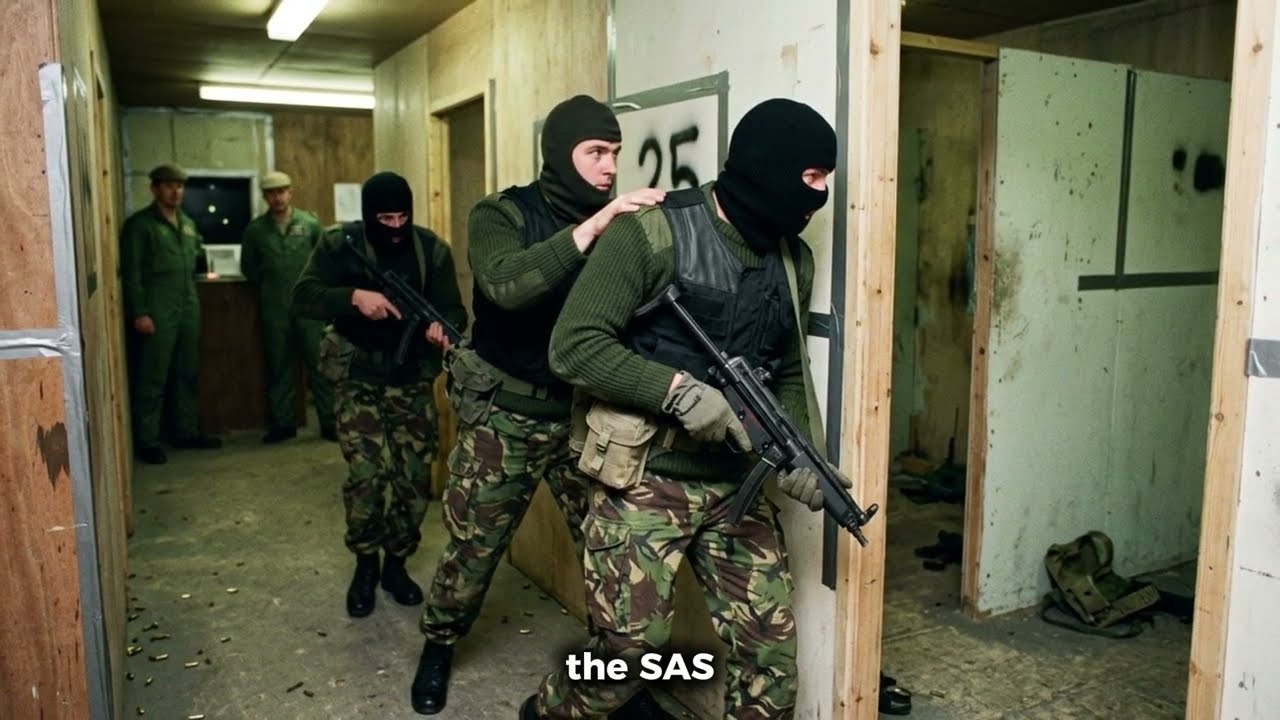
The indicator that triggered the assessment was the sound of a single gunshot from within the embassy followed by the appearance of a body at the window. The negotiation, which had been the primary tool for resolving the crisis without loss of hostage life, had failed at its primary objective at the moment the first hostage was killed.
The question had become not whether to preserve the negotiated option, but whether the assault option could preserve the remaining hostages’ lives before further violence occurred. The SAS’s answer to that question, the answer they had been preparing for 6 days, was ready. The physical preparation of the assault team during the 6 days had produced a level of target familiarization that went substantially beyond what a comparable period of preparation typically generates.
The team had studied the building’s plans, the photographic and video intelligence of its interior, and the information provided by former employees and previous visitors about the layout of each floor and the relationship between the building’s visible exterior and its internal spatial organization. The study had been supplemented by physical rehearsal in a facility that approximated the critical features of the building with sufficient fidelity to give every member of the assault team a spatial map of the target that was as
close to the real thing as preparation could produce without actually entering the building. The rehearsal had been run many times. The team had reached the point where the building was, in the operational sense, known terrain, terrain they had navigated enough times in simulation that their movement through it would draw on physical memory rather than conscious spatial processing.
That shift from conscious to physical memory is the transition that intensive rehearsal is designed to produce, and the 6 days had produced it. The communications architecture for the operation had to operate within the constraint that the building was surrounded by media with the ability to transmit live. Any communications that could be detected and decoded by the media would compromise the operation.
The SAS’s communications during the assault operated on frequencies and with encryption standards that the media equipment present could not access. But the visual and acoustic signature of the assault itself was fully visible to anyone watching the back of the building with a television camera, which is exactly what the BBC camera crew who captured the iconic footage was doing.
The SAS command was aware that the assault would be conducted in public in a way that no previous SAS operation had been. And the awareness influenced the operational planning in a specific way. The assault was planned around speed and violence of action to the degree that the presence of hostages permitted because the speed that would minimize the assault’s duration was also the speed that would minimize the time during which the media coverage could interfere with the operation’s conduct.
The role of the television coverage in the subsequent analysis of the operation has been the subject of considerable debate. On one side is the argument that the live broadcasting of the assault was a serious operational security problem. That it provided information about the assault’s progress to any hostile party monitoring the coverage, and that it created a public record of SAS tactics and methods that should have remained classified.
On the other side is the argument that the television coverage produced a political effect that was operationally valuable. That the public visibility of the SAS’s capability and professionalism sent a message to every other hostage-taking organization that the British government had a credible military option against hostage-taking that it was willing to use.
The deterrent effect of the coverage was unplanned. Its existence was real. The debate about whether its benefit outweighed its cost in operational security terms continues in the professional literature without having produced a consensus conclusion. Chapter two. At 19:23, abseilers from D Squadron’s blue team dropped from the embassy roof simultaneously with the red team’s breach through the ground-floor windows at the rear.
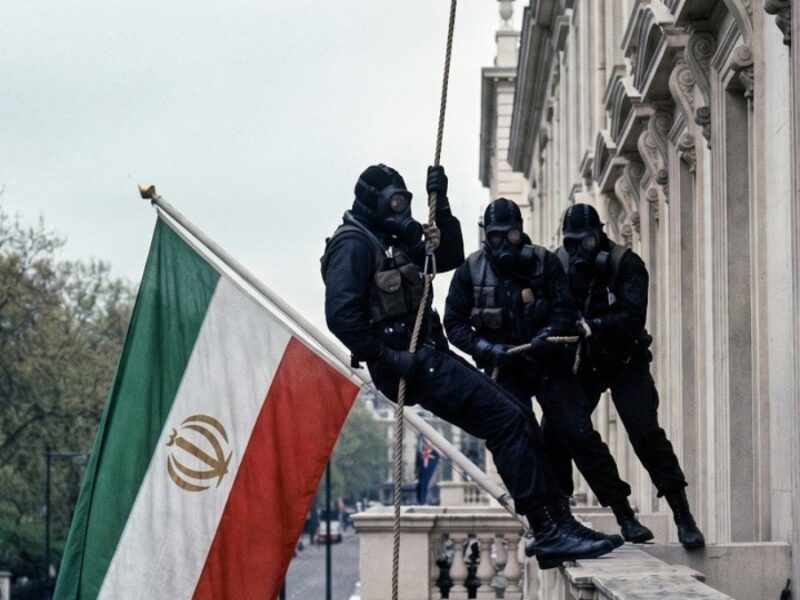
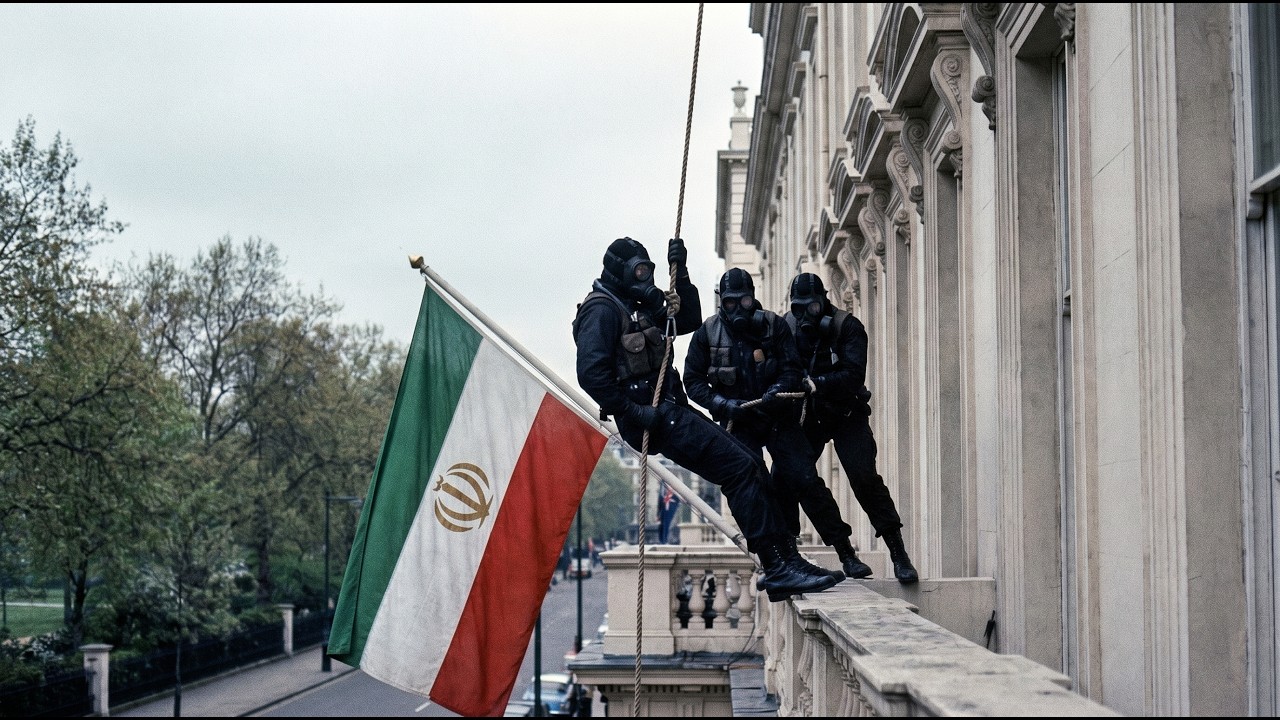
The BBC outside broadcast unit that had been positioned across the road from the embassy covering the siege as a live news event captured the abseilers on camera the moment they appeared at the rooftop edge. The footage, black-clad figures in respirators descending ropes, stun grenades beginning to detonate against the building’s exterior, was transmitting live to a nation that had been watching the siege unfold for six days and was now watching its resolution in real time.
The BBC’s cameras had not been told the assault was imminent. Neither had the public. Neither, as it turned out, had the gunmen. The assault’s timing had been coordinated to take advantage of the live broadcast in a way that was specific and deliberate. The SAS command knew the cameras were there, and the cameras’ presence was one of the reasons the assault simultaneity was so important.
If any element of the assault was delayed, if the roof team was seen before the ground team was in position, or vice versa, the gunmen inside would have a warning window. The simultaneity denied that window. All entry points were breached within seconds of each other. Stun grenades were deployed through multiple windows simultaneously, and the assault teams were inside the building before the gunmen had processed the transition from the world outside the building being normal to the world outside the building having stopped.
The stun grenades, more formally called flashbang devices, producing a blinding flash of light and a disorienting concussive report that temporarily incapacitates without physically injuring, had been selected for this operation in part because of the live camera presence outside. The operational concern was not aesthetic, it was practical.
A visible detonation outside the building would signal to the gunmen that something had changed before the assault teams were inside. And a gunman with a hostage and 3 seconds of warning is a gunman who can produce a fatality that a gunman with no warning cannot. The stun grenades deployed through the windows preceded the assault teams through those windows by the minimum interval the operational plan allowed, which was calibrated to maximize the devices incapacitating effect on anyone in the relevant rooms while minimizing the window of warning.
One of the absailers on the blue team’s rope became tangled against the building’s exterior during the descent. The rope snagged against a window ledge in a way the rehearsals hadn’t replicated, and the operator was unable to free himself while maintaining the descent. He was caught against the exterior wall as the devices below him began to detonate, visible to the cameras and to the police and public watching from the perimeter, in a position that generated specific concern in the command element because a man
tangled on a rope above a burning building is a man whose operational contribution to the assault he was supposed to be executing has stopped. His teammates on the roof assessed the situation and cut the rope. He swung free, continued the descent, entered the building from the first floor, and rejoined his element.
The entanglement cost him approximately 40 seconds. The assault did not wait for him. He caught up. Inside the building, the assault proceeded through a structure that D Squadron had rehearsed on a floor plan until the plan was as familiar as any physical space they had trained in. The hostages had been consolidated on the second floor.
Information that the released hostages had confirmed in their debriefs with the intelligence staff. And the assault team’s priority, after the initial stun deployment and the breach, was to reach the second floor and establish control of the room where the hostages were being held before any of the gunmen could act against them with the warning time the breach had denied them.
The second floor was reached in under 2 minutes. The fire that broke out during the assault, ignited by the combination of stun grenades in the building’s interior furnishings, created an additional variable the plan had to accommodate. The assault teams continued clearing while the fire developed, accelerating the evacuation timetable for the hostages on the second floor because a building on fire has its own time constraint that operates independently of the assault sequence.
The hostages were evacuated from the second floor through a window and down a garden wall, guided by SAS operators, while other elements of the assault continued clearing the floors above and below. One hostage was killed during the evacuation, not by SAS fire, but by a gunman who shot him in the confusion of the assault’s initial phase.
Five of the six gunmen were killed. The sixth, who had been positioned among the hostages in a way that made him initially indistinguishable from them, was identified by other hostages in the garden as one of the gunmen. He was detained. Margaret Thatcher was watching the BBC footage from the cabinet room in Downing Street when the assault began.
She had chosen to be there rather than in the operations command element, which was the operationally appropriate decision. The Prime Minister’s presence in a tactical command environment creates a dynamic that most military commanders prefer to avoid, and Thatcher understood this. She watched the assault on live television as it happened, the same feed available to every other viewer in Britain without any additional information from the command element until the operation was concluded.
Her military aid was with her. The cabinet secretary was with her. She did not speak during the assault. When the news reached her that all surviving hostages were out of the building and the assault was complete, she asked to be taken to the SAS holding position in the Royal College of Science building.
She arrived within an hour. She walked through the room where the squadron was standing down, shaking hands, saying very little. A photograph taken during the visit shows her in the midst of the black-clad operators still in their assault kit, and her expression, focused, direct, satisfied in a way that is distinct from happiness, is the expression of a person who has just seen something they completely approve of done exactly as well as it can be done.
She called them marvelous. She meant it as precisely as she meant anything. The 16-minute assault became, in the weeks and months that followed, the most analyzed special operations in British military history. It was analyzed by the SAS themselves, by the Metropolitan Police, who had managed the six-day siege, by the government, by military professionals from allied countries who were running their own hostage rescue programs, and in the specific way that public events attract analysis, by a media and academic community that had the rare
advantage of live footage to work from. The footage was the thing that made Operation Nimrod different from any previous special operations action. It had happened on television. The men in black, the ropes, the stun grenades, the fire, the hostages stumbling out of the garden in shock.
All of it was on film in real time, and the film was being watched by millions of people who had not known it was going to happen. The assault had been a military operation and a broadcast event simultaneously, and its success on both dimensions, the hostages were alive, the footage was extraordinary, produced a specific cultural moment that the SAS had not sought and did not control.
The regiment’s institutional response to this moment was characteristic. They said nothing. The operators who had conducted the assault were not available for interview, did not write accounts for publication, did not appear on television. The SAS maintained the position on disclosure that it had always maintained, which was that operational detail was not for public discussion, and that the men who had the operation had no interest in discussing it in any forum that wasn’t operationally necessary. The public fascination with
the assault, the footage, and the specific details of what had happened inside the building was, from the regiment’s perspective, someone else’s business. They had done the job. The job was done. The next task was already being considered. The analysis of Operation Nimrod that was conducted within the international special operations community in the years following the assault was less about the tactics of the assault itself, which were sound and which the assault team’s thorough preparation had executed well,
and more about the specific conditions that had made a successful assault possible. The six-day negotiation period had served not just the hostage welfare objective, but the operational preparation objective. Each day had produced more intelligence, more rehearsal, and a better refined plan. The gunmen’s decision to kill a hostage on day six was, from a purely tactical perspective, the worst decision they could have made because it removed the government’s political constraint on the assault option without providing the
gunmen with any tactical advantage. The killing gave the government the justification for authorizing the assault. It did not give the gunmen additional weapons, better positions, or more time. It gave them nothing except the certainty that the assault was now coming. The specific tactical analyses that circulated through Allied special operations communities in the months after Nimrod addressed several aspects of the assault’s execution that were considered relevant to hostage rescue doctrine more broadly.
The simultaneous entry through multiple points was noted as the key tactical feature. The embassy had four assault entry points, all engaged within seconds of each other, which denied the gunmen the ability to respond effectively to any single breach because responding to one breach required ignoring the others.
The simultaneous deployment of stun grenades through the breached windows was noted as the primary mechanism for the initial incapacitation of the gunmen in the rooms where the grenades detonated. The disorientation created by the flash bang effect bought the assault teams the seconds they needed to reach the rooms while the occupants’ senses were still recovering.
The speed of the second floor reach, under two minutes from first breach, was noted as the feature that most directly protected the hostage concentration from the gunmen’s capacity to act against it. The fire that developed during the assault was the element that most challenged the assault team’s planning and execution.
The SAS’s rehearsals had included fire scenarios because the combination of stun grenades and interior furnishings in a building that was not designed with fire safety as a primary concern was a predictable risk factor that the planners had incorporated. What the rehearsals had calibrated was the team’s response to fire, the acceleration of the hostage evacuation timeline, and the continuation of the clearing operations despite the developing fire, rather than an attempt to prevent it.
The fire management strategy was to move through it faster than it could develop to a level that threatened the operation’s execution, and this is what the teams did. The roof that was burning when the last hostages were evacuated from the second floor window had not been burning when the assault began. The 16 minutes had been enough.
The operators who conducted the assault returned to Hereford within days of the operation’s conclusion, resuming the training and operational cycle that a Special Air Service Squadron maintains regardless of what has just occurred. The assault had been remarkable in the public context and in the specific historical context of live broadcast military operations.
In the operational context of D Squadron’s experience, it was an operation that had been planned carefully, rehearsed thoroughly, and executed well. Better than some previous operations, differently from others, but within the range of what the regiment considered a completed task. The operators who were asked in later years what they remembered most specifically about the 16 minutes generally pointed to the specific moments of their own execution rather than the broader picture that the television cameras had
captured. Each man had a specific set of rooms, a specific set of tasks, a specific sequence of actions that his training had prepared him for, and his execution had followed. The broader picture, the BBC footage, the Thatcher visit, the historical significance, was someone else’s experience of something they had been doing their job inside.
The public response to Operation Nimrod was immediate and sustained. The footage, replayed extensively in the days and weeks that followed, made the assault simultaneously an event that had been witnessed and an event that most people could not fully process because what they had seen was so outside their normal framework of reference.
Black-clad figures abseiling from rooftops, buildings on fire in the middle of London, hostages stumbling into gardens while cameras rolled, the visual grammar of what the BBC had broadcast was without precedent in the experience of the British viewing public, and the effort to assimilate it produced the kind of public attention that significant and visually dramatic events generate.
The SAS, which had been a largely unknown element of the British military establishment to most of the public, became overnight the most visible and most discussed special operations force in the world. The regiment’s response to this was to decline all interview requests, issue no statements, and continue doing what it had been doing before the cameras arrived.
The public attention was the consequence of the work, not the purpose of it. The purpose had been the 26 people who were alive when the 16 minutes ended. Margaret Thatcher’s presence at Downing Street during the assault, and her decision to watch the television coverage rather than rely solely on the formal intelligence reporting from the operation, reflects a dimension of her political character that was consistent with her approach to decision-making throughout her tenure.
She had authorized the assault. She was responsible for the consequences of that authorization. Watching the coverage was, in her frame, the appropriate response to having taken a decision that other people were now executing at personal risk, a form of engaged attention rather than the distanced delegation that the formal structures of government would have permitted.
The decision to watch was not a decision to manage the operation. It was a decision not to look away from something she had put in motion. The professional assessment that the SAS made of their own performance on the day was contained in the after-action review that followed the operation. The review identified the individual elements of the operation where the execution had matched the rehearsed plan and the elements where it had not.
The elements that had not matched the plan were analyzed for the reasons they had diverged, whether the divergence had been produced by a difference between the rehearsed environment and the real environment, by a decision made under operational pressure that the rehearsal had not anticipated, or by an equipment or technical failure.
The analysis was used to modify the rehearsal standards and the contingency planning for future operations. The operation’s overall outcome, 19 of the 26 hostages rescued, one hostage killed, five of the six hostage-takers killed or captured, was assessed against the plan’s projected outcomes and against the casualties that alternative courses of action would have produced.
The assessment confirmed that the assault had achieved the best achievable outcome given the operational conditions. The review noted several modifications that would have improved specific elements of the execution. It was completed and filed. The effect of the Iranian Embassy operation on British special operations capability was most visible in the resources allocated to the SAS in the years following it.
The government that had authorized the assault had observed its execution. The observation had produced a level of political confidence in the capability that is difficult to generate through briefings and exercises alone because the evidence of a successful live operation is more compelling than any amount of simulated performance.
The increased resource allocation that followed was not simply a reward for good performance. It was an investment in a capability that had been demonstrated to be genuinely available, not as a theoretical option in the planning matrix, but as a real operational tool that worked in the most demanding possible conditions with the eyes of the nation on it.
The hostages who were rescued from the Iranian embassy carried the experience with them in different ways. Some spoke about it publicly in the years that followed and contributed to the popular understanding of the event. Others did not speak about it publicly. All of them had experienced in the 20 minutes of the assault the specific reality of being in a building where an armed force was clearing rooms toward you with a controlled violence that was entirely on your behalf and that you could not assist or avoid. The psychological
weight of that experience is not something that can be fully conveyed in the after-action vocabulary of tactical assessment. The testimonies of the surviving hostages taken in the immediate aftermath and over the longer term formed a part of the record of the operation that the SAS’s formal documentation did not capture and that the BBC footage, graphic, visceral, and available to anyone, made impossible to suppress.