The Untold Story of the 1970 Rock & Roll Train (Janis Joplin, The Grateful Dead, The Band
They were traveling across Canada to perform for thousands, but the real concert happened in a private rail car at 2:00 a.m. with no audience at all. It was the summer of 1970, and nobody who was on that train ever forgot what happened. The year was 1970, and the music business had a problem it did not know how to solve.
Woodstock had happened the summer before. Half a million people in a field. Mud and rain and 3 days of music that changed everything. But Woodstock was not a memory for the musicians who played it. It was a transaction. Show up, play the set, get on the plane, go home. Nobody talked to each other.
Nobody sat down together. Nobody heard what the other musicians were doing from the side of the stage. They arrived as strangers. They left as strangers. And something about that bothered a Canadian promoter named Ken Walker. Walker had a different idea. He had been watching the festival circuit.
He had seen what happened when musicians were put on a stage together. But he wanted to know what happened when they were put in a room together for 5 days with nowhere to go. The plan was called the Festival Express. A chartered Canadian National Railways train. 14 cars, two engines, five sleepers, two lounge car, a dining car, and a sound system wired through the whole thing so that anyone who picked up an instrument could plug in.
The train would leave Toronto on June 29th, 1970. It would stop in Winnipeg, then Saskatoon, then Calgary, playing concerts in each city. And in between the concerts, the musicians would be on the train together. No hotels, no airports, no separate dressing rooms, just the train moving across the Canadian prairie.
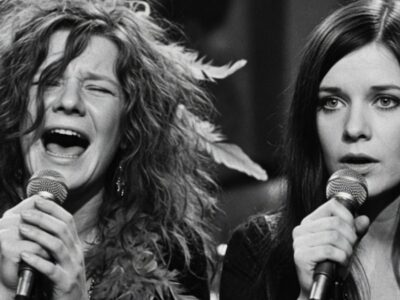
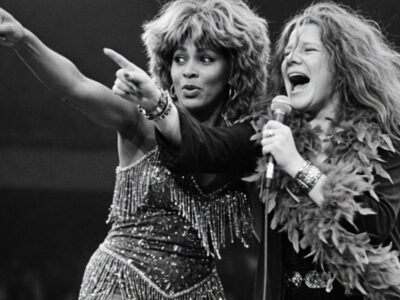
And the people who agreed to get on it were not ordinary people. Janis Joplin was there with her new band, the Full Tilt Boogie Band. Jerry Garcia was there with the Grateful Dead. The Band was there, Rick Danko and the others who had just come off recording what many people consider the greatest rock album ever made.
Buddy Guy was there, Delaney and Bonnie were there, the Flying Burrito Brothers were there. 140 musicians and crew members, all of them on the same train, all of them with nowhere else to be. The train left Toronto on a warm summer morning, and within the first few hours something happened that nobody had planned.
The bar ran out of alcohol. This was not a small problem. The musicians passed a hat around, everyone threw in whatever cash they had, and the train made an unscheduled stop in a small town called Capreol, Ontario. The musicians climbed off the train, walked into the local variety store, and bought most of what was on the shelves.
The store owner reportedly stood behind his counter in complete silence as Jerry Garcia and Janis Joplin carried armloads of bottles back to the platform. Nobody in Capreol had expected this to happen on a Tuesday, but the train rolled on, and the real story was not about the alcohol. It was about what happened when the alcohol ran out and the music started because the lounge cars had been set up for exactly this moment.
Amplifiers along the walls, cables running across the floor, microphones set up near the windows. And sometime after midnight on the first night, the musicians started finding their way to the lounge cars. Not because anyone asked them to, not because it was scheduled, but because there was nowhere else to go. And music was the only language they all spoke.
Garcia described it later in a single sentence. He said it was the best time he had ever had in rock and roll. And then he said four more words that explained everything. He said there were no straight people. What he meant was that everyone on that train was a musician, not a promoter, not a journalist, not a fan, just musicians playing for each other.
With no cameras rolling and no tickets sold, Janis called the train mother. She said it was the best time she had had since leaving Port Arthur, and anyone who knew what Port Arthur meant to Janis understood what she was saying. Port Arthur was where she grew up. Port Arthur was where she was bullied. Port Arthur was where she first understood that she did not belong.
And what she was saying about the train was that she finally felt like she belonged somewhere again. There is one moment that everyone who was there talks about. It was somewhere west of Lake Superior. The train was moving through the darkness. And in one of the lounge cars, Janis and Garcia and Rick Danko and several others had been playing for hours.
They had worked through blues songs and folk songs and country songs, songs they all knew from different directions, coming to them from different traditions. And at some point they landed on an old song called Ain’t No More Cane. Nobody had planned it. Nobody had suggested it. It just happened the way music sometimes happens between people who are listening to each other.
Rick Danko was somewhere between awake and not. His eyes were half closed. His bass was in his hands. And at one point Janis leaned over and asked him if he was all right. When Janis Joplin was the one asking if you were all right, it meant something. But Danko kept playing. And Janis kept singing. And Garcia sat across from her with his guitar in his lap.
And the three of them played that song in the dark while the Canadian prairie moved past the windows. No audience, no recording, no performance, just the music. Hunter and Garcia later wrote a song about the train ride. It was called Might As Well. And the chorus described exactly what the train had felt like from the inside. A rolling party that nobody wanted to end.
But the train had to stop. It always had to stop. Because there were concerts to play. And the concerts were not going as planned. The first show in Toronto had started with a crisis. 2,500 protesters had gathered outside the CNE Grandstand. They were angry about the ticket prices. $14 a ticket in 1970 was not a small amount.
And the protesters were organized. They were chanting. They were trying to scale the fences. And the police were there. and the situation was getting dangerous. Ken Walker was standing backstage trying to figure out what to do, and Garcia walked up to him and said he had an idea. Garcia went out to Coronation Park nearby.
He climbed up onto a flatbed truck, and he started playing for free, just playing. And word spread through the crowd outside the stadium that there was a free concert in the park, and 6,000 people walked away from the gates and went to the park instead. And Garcia played until 4:00 in the morning, and the crisis passed.
Because Garcia understood something about music that most people never learn, that it is not a product, it is a conversation, and you cannot charge admission to a conversation. The tour moved west, and with each city Janis got better. She had been tired in Toronto. She had been carrying something heavy, but by the time the train reached Winnipeg, she was beginning to shake it off, and by Calgary, she was something else entirely.
She stood on the stage and looked out at the crowd and said something that became one of the most remembered things she ever said on stage. She said she did not know where they had been for the last 2 days, but she had been at a party, and then she launched into Tell Mama. And the people who were there said it was one of the greatest performances they ever saw, because it was not a performance at all.
It was the overflow of 5 days on a train with people she loved coming out through her voice in front of thousands of strangers who could feel every bit of it. The tour ended in Calgary on July 4th, 1970. The musicians got off the train and most of them never saw each other again. Not like that. Not in that particular combination.
Not on that particular train moving through that particular darkness. Garcia said it was the best time he had ever had. And then he spent the rest of his life doing everything else. Janis went back to California. She had work to do. She was finishing an album called Pearl. She had a new band she believed in.
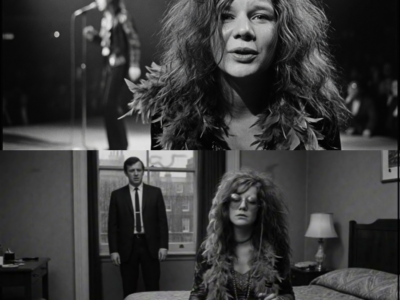
She had a fiance she was planning to marry. She had a future she was actually thinking about. For maybe the first time. Three months after the train pulled into Calgary on October 4th, 1970, she was gone. The film footage from the tour sat in boxes for almost 30 years. Some of it ended up in a garage in Canada used as gold posts for hockey.
And when a filmmaker finally found it and watched it, he said watching Janis on that train was the most vivid evidence of her presence ever committed to film. Not the concerts, not the interviews. The train. Because on the train she was not performing. She was just there. Playing music in the dark with people who loved what she loved.
Going somewhere. Mickey Hart of the Grateful Dead put it simply. He said Woodstock was a treat for the audience. But the train was a treat for the performers. And Janis knew that, too. She called it mother. And she meant it. Because what that train gave her in those five days moving across Canada was something she had been looking for her whole life.
A place where she was not too much. A place where her voice fit exactly. A place where nobody needed her to be anything other than what she already was. The train is gone now. The tracks are still there. Crossing the prairie between Winnipeg and Calgary, flat and wide and going on forever. And somewhere along those tracks in the summer of 1970, Janis Joplin sang Ain’t No More Cane in the Dark.
With no audience, no cameras, no tickets. Just the music and the night outside the window and the sound of the train moving forward. If this story stayed with you, tell us in the comments what you think that train must have felt like from the inside and subscribe. Because we find these stories every week and some of them you will not believe.