”They’re Not Human” — Why the SAS Were Feared More Than Any Army in Northern Ireland
In the winter of 1987, an internal IRA briefing circulated through the provisional movement warning volunteers in rural units across the border counties that the British had deployed something into South Armagh and East Tyrone that did not operate like a normal army. The briefing did not name the regiment. It did not need to.
By then, everyone in the Republican movement understood what was waiting for them in the hedgerows and the farmland and the quiet lanes of County Armagh. And the understanding had changed the way they moved, the way they spoke on the telephone, the way they looked at the men sitting beside them in their own organization.
The question was no longer whether the British could find them. The question was whether they already had. That fear did not arrive overnight, and it did not come from a single ambush. It was built across years, across multiple operations, across a pattern of engagements that all ended the same way. IRA volunteers walking into positions the British had chosen for them, dying in kill zones that had been prepared days or weeks before they arrived, carrying weapons the security forces already knew about, following plans the security forces had already read. The
SAS in Northern Ireland became something more dangerous than an elite fighting unit. They became a presence that the IRA could feel but could not see, could not predict, and could not protect itself against. And the fear of that presence did more to reshape the Republican movement than any political argument ever managed on its own.
To understand why that fear took root so deeply, you have to go back to January 1976, to a roadside near Whitecross in South Armagh. On the 5th of January, 10 Protestant workmen were stopped by armed men, forced out of their minibus, and asked to identify their religion. The single Catholic among them was told to run.
He ran. The [clears throat] 10 Protestants were lined up and shot dead at the roadside. The Kingsmill massacre was one of the worst single atrocities of the Troubles, and the political response came within 48 hours. Prime Minister Harold Wilson, a Labour Prime Minister, stood before the press and announced that the Special Air Service would be formally deployed to South Armagh.
Two days later, Hansard recorded his parliamentary statement, volume 903. A Labour Prime Minister deploying special forces to British home territory was an act with constitutional weight that nobody in Westminster took lightly. What arrived was a 12-man troop of D Squadron quartered at Bessbrook Mill in County Armagh.
Bessbrook was a Victorian linen mill the British Army had requisitioned early in Operation Banner and converted into the principal forward operating base for the South Armagh area. Roads around it had been comprehensively mined and covered by IRA snipers. Vehicle movement for security forces along key approach routes had become genuinely lethal.
Everything that mattered moved by helicopter, and by the height of the Troubles, the landing pad at Bessbrook had become the busiest helipad in Europe. The official mandate described the SAS role as surveillance and intelligence gathering. That description was accurate and incomplete. British state papers declassified after the fact revealed that SAS personnel had been operating in Northern Ireland in various forms before 1976, training, advising, and conducting operations under other institutional covers.
What January ’76 did was formalize what was already happening and attach the parliamentary acknowledgement and legal accountability that came with it. Squadrons A, B, D, and G would rotate through on 4-to-6-month cycles, formally subordinate to the Royal Ulster Constabulary through the doctrine of police primacy.
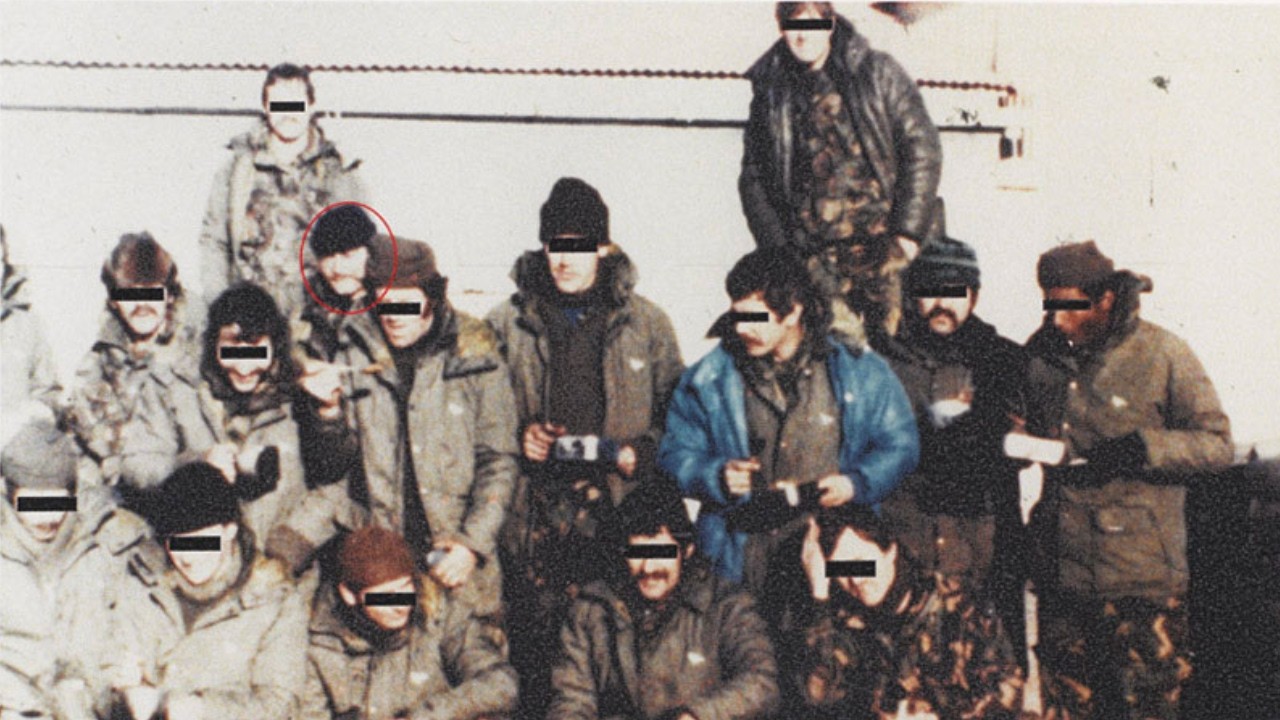
But the SAS did not arrive as a strike force parachuted into a finished intelligence structure. They arrived and began building that structure around themselves, one rotation at a time, and the architecture they constructed is what made them feared. At the center of it was 14 Intelligence Company, universally called the Det.
The Det was established in 1972 to replace the Military Reaction Force, which had been disbanded after its own operational failures were exposed. The MRF had been a crude instrument, roughly 40 soldiers in plain clothes running surveillance operations with minimal training, no formalized procedures, and no adequate oversight. When IRA counterintelligence penetrated the unit and identified its cover operations, including a laundry van and a massage parlor front in West Belfast, the entire network was dismantled in a single morning of coordinated attacks.
The lesson was plain. If covert surveillance in Northern Ireland was going to work, the unit doing it would need to be built to a categorically different standard. Half of B Squadron, 22 SAS, was tasked with building what came next. The Det was designed from the ground up as a correction to everything the MRF had done wrong.
Operators underwent a 6-month training course and then deployed on 18-month rotations in the province, long enough to develop genuine local knowledge of terrain, faces, vehicle registration plates, and daily patterns that 4-month conventional rotations simply could not accumulate. They were trained by the SAS, the Special Boat Service, and the Intelligence Corps.
Both male and female operators deployed in the field, which opened surveillance options that all-male units could not manage without drawing attention in small rural communities where everyone knew everyone, and strangers were noticed within minutes. The selection process was severe. One published figure for the full pipeline from initial expression of interest to operational deployment records 17 from 1,000 making it to the field.
The course emphasized observation and memory retention under sustained sleep deprivation, navigation, and covert radio communication, and the capacity to think coherently when schedules were deliberately erratic and no information was given about what came next. Beneath all of these tests sat a requirement that could not easily be taught. The ability to be completely forgettable, to sit in a pub in South Armagh for 3 hours, drink at the right pace, make the right amount of eye contact, and generate no reason for the man two tables away who had been
watching for exactly this kind of thing for 15 years to look twice. What the debt did in practice was watch. Static observation posts were the unit’s most demanding tool. Two operators would be inserted into a prepared position, a hide constructed in undergrowth, a concealed space in a derelict building, an attic above a property, and remain there for days.
They called it hard routine. No cooking because the smell of food travels 50 m on a still evening and carries further in damp air. No visible light. Human waste was managed in sealed containers, carried in and carried out on extraction. Sleeping was done in rotation. One operator always watching through whatever optic the mission required.
Every vehicle that arrived at a target property or left it was logged. Registration number, time, duration of visit, description of occupants. Every pattern over days became a targeting product. When the house was occupied, when it was empty, which vehicle was associated with which individual, what a normal week looked like, and therefore when something abnormal had occurred.
Mobile surveillance was conducted in unmarked civilian vehicles, the operators called Q cars. From outside, a Vauxhall Cavalier or a Ford Sierra in a color nobody would remember. Inside, extensively modified with Kevlar armor built into the bodywork, covert cameras and microphones, brake lights that could be disabled by a dashboard switch for silent night pickups, and electronic tamper detection systems that warned if someone had placed a device on the underframe.
Alongside the Det, sat the Force Research Unit, the FRU, which ran agents inside the IRA itself. And above all of them sat the tasking and coordination groups, the TCGs, established in 1979 to take intelligence from multiple sources across RUC Special Branch, military intelligence, and the Security Service, and converted into operational direction for forces in the field.
TCG South operated from Gough Barracks in Armagh and was commanded in 1987 by Detective Superintendent Ronnie Flanagan, who would later serve as RUC Chief Constable. This was the machinery. The Det watched, the FRU ran agents, the TCGs coordinated the picture, and the SAS waited at the end of the chain for the moment when the intelligence was complete and the authorization came down.
That architecture is what produced the single most devastating blow the Provisional IRA suffered between partition and the Good Friday Agreement. By the mid-1980s, the East Tyrone Brigade of the Provisional IRA had become arguably the most capable armed unit the movement had ever fielded. Its commander was Patrick Kelly, born March 19th, 1957, who had taken charge of the brigade in 1985 at 28 years old.
Alongside him was Jim Lynagh, a sitting Sinn Féin councilor from Monaghan, who had studied Mao Zedong during his years in the Maze prison, and developed a doctrine of systematically destroying isolated RUC stations to deny the British ground, and Pádraig McKearney, who had walked out of the Maze in the famous mass breakout of September 1983, and gone straight back to active service.
Together, they had built a methodology that worked. On the 7th of December 1985, they attacked the RUC barracks at Ballygawley, killing Reserve Constable William Clements and Constable George Gillerland. On the 11th of August 1986, they struck the RUC station at The Birches in County Armagh, driving a stolen JCB digger loaded with a 200-lb bomb through the perimeter fence, while gunmen raked the building with automatic fire.
The station was unmanned. No one died. But the tactic was proven, and the brigade knew it worked. A bomb in a digger bucket delivered through a fence. Two attacks, two successful outcomes, zero casualties to the unit. The playbook was perfect. Loughgall was next on the list. A part-time RUC station in a small North Armagh village, staffed by three local officers, open only from 9:00 to 11:00 in the morning and 5:00 to 7:00 in the evening.
Minimal presence, minimal resistance, and a well-established blueprint for how to destroy it. What the East Tyrone Brigade did not know was that British security forces had detailed intelligence of the planned attack weeks in advance, and had identified the specific target at least 10 days before the operation. The RUC’s covert intelligence unit had been monitoring IRA members transporting explosives to a disused barn in the area.
A JCB digger was discovered parked at a farm 16 km from Loughgall. 14 intelligence company operators drove the back roads into the village, maintaining covert observation on the operation as it assembled. When the covert observation post monitoring the digger reported it was being moved on the evening of the 8th of May 1987. The SAS was already positioned and waiting.
Six SAS soldiers in plain clothes occupied the interior of the station. 18 more in uniform were concealed in five separate locations in the wooded areas surrounding the building. They carried M-16 rifles, Heckler & Koch G3 rifles, and at least two general-purpose machine guns. The station ran its normal schedule that day.
Nothing visible had changed. No one in the village had been warned. The eight-man IRA unit arrived shortly after 7:00 in the evening. They made two slow passes of the station. Some of them sensed something was wrong. There was a debate. They went ahead. The digger crashed through the perimeter fence with 300 to 400 lb of explosive in an oil drum in the front bucket.
Fuses lit. Patrick Kelly jumped from the van and opened fire on the building. The SAS opened fire from inside and from all five surrounding concealed positions simultaneously. 600 spent British cartridge cases were recovered from the scene. The IRA had fired 78 rounds. All eight members of the East Tyrone Brigade were killed.
Patrick Kelly was 30 years old. Seamus Donaghy was 19. An innocent civilian named Anthony Hughes, driving home with his brother Oliver after repairing a lorry, came along the road in a white Citroen behind the IRA van and drove straight into the kill zone. Oliver was wearing blue coveralls, the same shade as the IRA’s boiler suits.
Soldiers opened fire on the car. Anthony was killed at the wheel, his seatbelt still buckled. Oliver was shot 14 times and survived. No one in the village had been warned because warning them would have compromised the operation. In March 2014, the Ministry of Defense issued a formal apology to the Hughes family, acknowledging that both brothers were wholly innocent of any wrongdoing.
The weapons recovered from the eight dead IRA men were linked by ballistic testing to between 40 and 50 killings, including every IRA attributed security force fatality in counties Fermanagh and Tyrone in 1987 before that Friday evening. The Ruger revolver found at the scene had been taken from the body of Reserve Constable William Clements at Ballygawley 18 months earlier.
The most capable armed unit the IRA had built and the accumulated arsenal of their entire recent campaign were gone in a single evening. The funerals drew thousands, the largest Republican funerals in Northern Ireland since the hunger strikers of 1981. Gerry Adams delivered the graveside oration, but the East Tyrone Brigade was not done.
The Brigade fought on and what followed only deepened the fear because the pattern repeated. On the 6th of March, 1988, less than 10 months after Loughgall, three IRA members were shot dead on the streets of Gibraltar in Operation Flavius. Daniel McCann, Mairéad Farrell, and Sean Savage had been planning a car bomb attack on a British military parade.
British intelligence had been running surveillance on the active service unit for weeks, tracking their movements across Spain and into Gibraltar, building the picture of who they were, what they drove, and when they would move. On the afternoon of the 6th, SAS soldiers shot all three dead on Winston Churchill Avenue and Smith-Dorrien Avenue.
McCann was shot five times, Farrell was shot eight times, Savage was shot between 16 and 18 times. All three were found to be unarmed. No bomb was found anywhere on the rock. 64 kg of Semtex were later recovered by Spanish police from a car in Marbella, 74 km away. The European Court of Human Rights Grand Chamber delivered its judgment in McCann and others versus the United Kingdom on the 27th of September 1995, voting 10 to 9, the closest possible margin, finding a violation of Article 2. The violation was located in the
planning and command decisions above the individual soldiers, the errors in the intelligence briefing, the dismissal of the blocking car possibility, the erroneous assessment about a remote detonation device. The individual soldiers’ conduct at the moment of the shootings was not found to constitute a violation.
Gibraltar was devastating for the IRA, but it was also devastating for the British government, and the political fallout was enormous. Thames Television’s documentary Death on the Rock challenged the official version of events, and Margaret Thatcher tried to prevent the broadcast. The documentary was vindicated by an independent review and won two major awards.
Then came Coagh. On the 3rd of June, 1991, three IRA members were driving through the village of Coagh in County Tyrone when SAS soldiers opened fire on their car. All three were killed. The ambush bore the same hallmarks as Loughgall. Intelligence had identified the targets in advance. The SAS had been positioned and waiting.
The IRA unit drove into a kill zone that had been prepared for them. A Court of Appeal ruling in 2024 found that an SAS soldier was justified in shooting an unarmed IRA driver at Coagh, with Lady Chief Justice Keegan noting that the soldier had responded to a collective threat. Nine months later, in February 1992, four more IRA members were killed in another SAS ambush at Clonoe in County Tyrone after they had attacked the RUC station at Coalisland.
Once again, the security forces had known. Once again, the security forces had known. Once again, the RSAS was waiting. A separate inquest examining the Clonoe operation found that the use of lethal force by the RSAS soldiers was not justified or reasonable. The numbers tell the story of what this pattern meant for the East Tyrone Brigade specifically.
Ed Moloney, in a secret history of the IRA, recorded that the brigade lost 28 members killed between 1987 and 1992. 28 dead in 5 years, the highest casualty rate of any rural IRA unit in that period. The rural station attack doctrine that Kelly and Leaner had developed, the specific methodology that had worked twice, the digger bomb delivered through a fence, was never used again after Loughgall.
The doctrine had been watched, preempted, and destroyed with the men who devised it. But the numbers alone do not capture what the SAS did to the Republican movement from the inside. The fear that settled over the IRA after Loughgall was not the fear of dying in a firefight. Volunteers had always known they might be killed.
The fear was something far more corrosive. It was the fear of being known, of being watched by people you could not see, of operating inside an organization that had been penetrated so deeply that the enemy knew your plans before you executed them, knew your route, knew your weapons, knew the farm where you had parked the digger, knew the barn where you had stored the explosives, and had been sitting in the hedgerow with a machine gun for 3 days waiting for you to arrive.
After Loughgall, the IRA launched an internal search for the informer it believed had compromised the operation. The search was never definitively resolved. Some within the movement concluded that the informant, if one had existed inside the operational team, had been killed in the ambush itself. Others believed the intelligence came from surveillance or intercepts at a higher level.
The uncertainty served British intelligence purposes perfectly. An unresolved informer question divides and demoralizes an organization in ways that a confirmed betrayal does not. Every volunteer began looking at the men around them differently. Every failed operation, every close call, every rumor of a security forces vehicle seen in the wrong place at the wrong time, fed the paranoia.
The IRA’s own counterintelligence apparatus, the internal security unit known colloquially as the Nutting Squad, intensified its interrogations of suspected informers, and the brutality of those interrogations produced its own cycle of fear and mistrust within the movement. The Force Research Unit had agents inside the IRA at senior levels.
The full extent of that penetration is still being investigated through Operation Kenova, which has been working through intelligence files numbering in the millions. The UK government was still actively withholding related material as recently as September 2024. What is clear from the available record is that the IRA’s fear of informers was not paranoia.
It was an accurate reading of a genuine threat. The SAS and the intelligence apparatus surrounding them had built a system that could reach inside the Republican movement and pull information out of it, and the IRA could not work out how to stop it. That inability changed the strategic calculus of the entire armed campaign. The back channel conversations that would eventually lead to the peace process began by 1989, within 2 years of Loughgall.
Father Alec Reid, the Redemptorist priest who served as the key intermediary and contacts between the IRA leadership, the SDLP, and eventually the British government was carrying messages between the parties while the East Tyrone Brigade was still burying its dead. The relationship between military attrition and political calculation is not linear and serious analysis does not flatten it into a clean narrative of one causing the other.
The turn toward politics through the Armalite and ballot box strategy had been underway before May 1987. But the loss of eight experienced, irreplaceable operators in a single engagement, men whose weapons were linked to every IRA fatality in Fermanagh and Tyrone in the months preceding the ambush, reinforced what Martin McGuinness and others around Sinn Féin had been arguing, that the British state was not going to be driven out by military pressure alone, and that political movement was the only path that could work.
Loughgall did not create that argument. It hardened it. And every subsequent ambush, Coa, Clonoe, Gibraltar, the steady attrition of the East Tyrone Brigade’s ranks, reinforced the same lesson. The armed campaign could still kill soldiers and police officers, but it could not defeat a state that knew what you were planning before you did it.
The SAS had not beaten the IRA on the battlefield in any conventional sense. They had done something more fundamental. They had made the IRA doubt its own ability to operate, and that doubt carried through the movement at every level, contributed to the political shift that produced the ceasefire in 1997 and the Good Friday Agreement in April 1998.
Every operation the SAS conducted in Northern Ireland existed inside a legal framework that had no equivalent in any British military deployment since 1945. Every use of lethal force triggered a coroner’s inquest, a review by the director of public prosecutions, and potentially proceedings before the European Court of Human Rights.
The Kelly and others versus the United Kingdom judgment on Loughgall found a procedural violation of Article 2, that the investigation had not been independent and transparent, while a separate Historical Enquiries Team review in 2011 found that the IRA fired first, and the Army was justified in opening fire. The McCann judgment on Gibraltar found a substantive violation.
The Coa ruling 2024 found the shooting justified. The Clonoe inquest found it was not. The legal consequences of these operations are still being resolved in courts nearly four decades later. The PSNI has been required to examine nearly 10 million intelligence records for disclosure in proceedings related to Loughgall alone, and the full operational record of 21 years in Northern Ireland remains substantially classified.
What those 21 years produced was a counterterrorism doctrine that ran entirely contrary to the public image of the regiment. The public image is kinetic. Ambushes in country lanes, dead IRA men in boiler suits, the SAS as an instrument of controlled lethality. Measured by hours spent, the reality was different by an order of magnitude.
Operators in static hides for days on end, surveillance teams building pattern of life records across months, intelligence analysts correlating vehicle movements and telephone intercepts, and the reported appearance of a digger parked 16 km from an RUC station in rural Armagh. For every operation that ended with shots fired, there were dozens that ended with an arrest, a weapons find, or an intelligence product that fed into another cycle.
The shooting was the last thing that happened, and in the majority of cases it never happened at all. The legal framework forced that patience. The requirement that every use of lethal force on British soil would face a coroner’s court shaped every stage of planning from the beginning. The intelligence had to be specific enough to survive subsequent legal scrutiny.
The observation post logs, the surveillance records, the movement patterns assembled over weeks, these were simultaneously operational intelligence and the evidentiary foundation of the legal case that would follow. The courtroom was inside the operation from the first day, whether anyone acknowledged it explicitly or not. In 2005, 14 Intelligence Company was formally reconstituted as the Special Reconnaissance Regiment, a permanent element of the UK Special Forces structure based at Stirling Lines in Hereford alongside 22 SAS.
The surveillance methodology built across 33 years of Operation Banner became an institutional capability deployable anywhere. SAS squadrons worked directly under General Stanley McChrystal’s Joint Special Operations Command in Iraq from 2003 onward. And the targeting cycle that McChrystal later codified in his book Team of Teams maps structurally onto the Northern Ireland methodology.
The patience, the surveillance discipline, the foundational instinct that the intelligence comes first and the shooting comes last. The doctrine moved through people rather than documents. Operators who had served in the province went to the Gulf War in 1991, to Bosnia, to Iraq, to Afghanistan carrying two decades of learned behavior into every new theater.
The IRA announced its ceasefire on the 20th of July 1997. Operation Banner formally ended in July 2007. The men who walked into Bessbrook Mill in January 1976 and began the long patient work of building an intelligence architecture capable of seeing inside the Republican movement did not know what it would become.
They could not have known that the doctrine they forged in the hedgerows and static hides of South Armagh would outlast the conflict by decades and travel to theaters they had never imagined. They knew only that the problem in front of them required something other than speed and firepower, that the enemy in front of them was capable, disciplined, and embedded in a civilian population that largely supported it.
And that the only way to defeat that enemy was to know what he was doing before he did it and to be there waiting when he arrived. Thank you for listening. Thank That is what the SAS built in Northern Ireland. And that is what made them feared more than any conventional army the IRA ever faced. The fear was not of their firepower, though that was formidable.
The fear was of their patience and their knowledge, the suspicion that they were already watching, already waiting, already there. That suspicion changed the way the IRA operated, changed the way it thought about its own security, changed the way its leadership calculated the future of the armed campaign, and contributed, alongside political arguments and diplomatic pressure and the sheer exhaustion of 30 years of conflict, to the decision that ended the war.
The SAS left Northern Ireland in 1997. The methods stayed. The men who developed them are still alive. Most have never spoken publicly and probably never will. The operations remain classified, the soldiers remain anonymous, and the families on both sides of the Troubles are still waiting for a full accounting that may never come.
If this stayed with you, send it to someone who grew up during the Troubles and never heard this side of the story. I will put all the details and links in the description.