Tyler James sent a tape to get himself discovered. They called back about the girl on the tape.
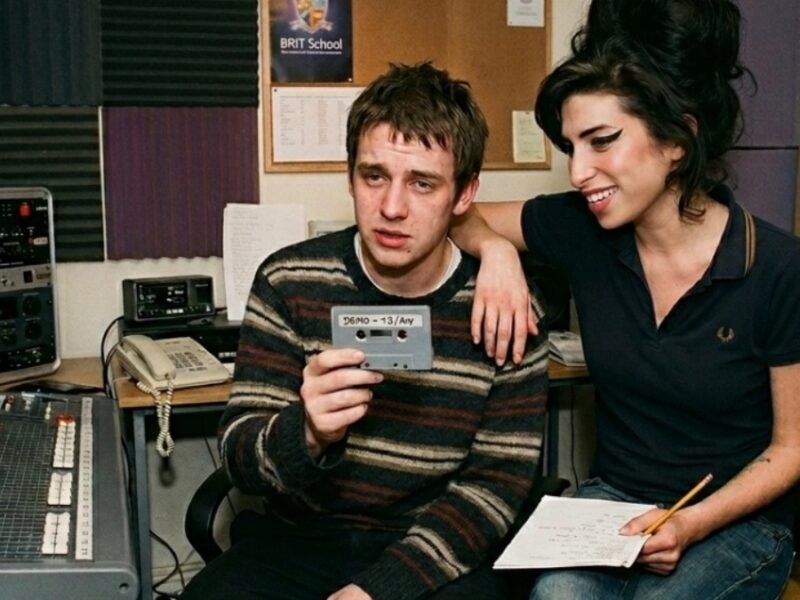
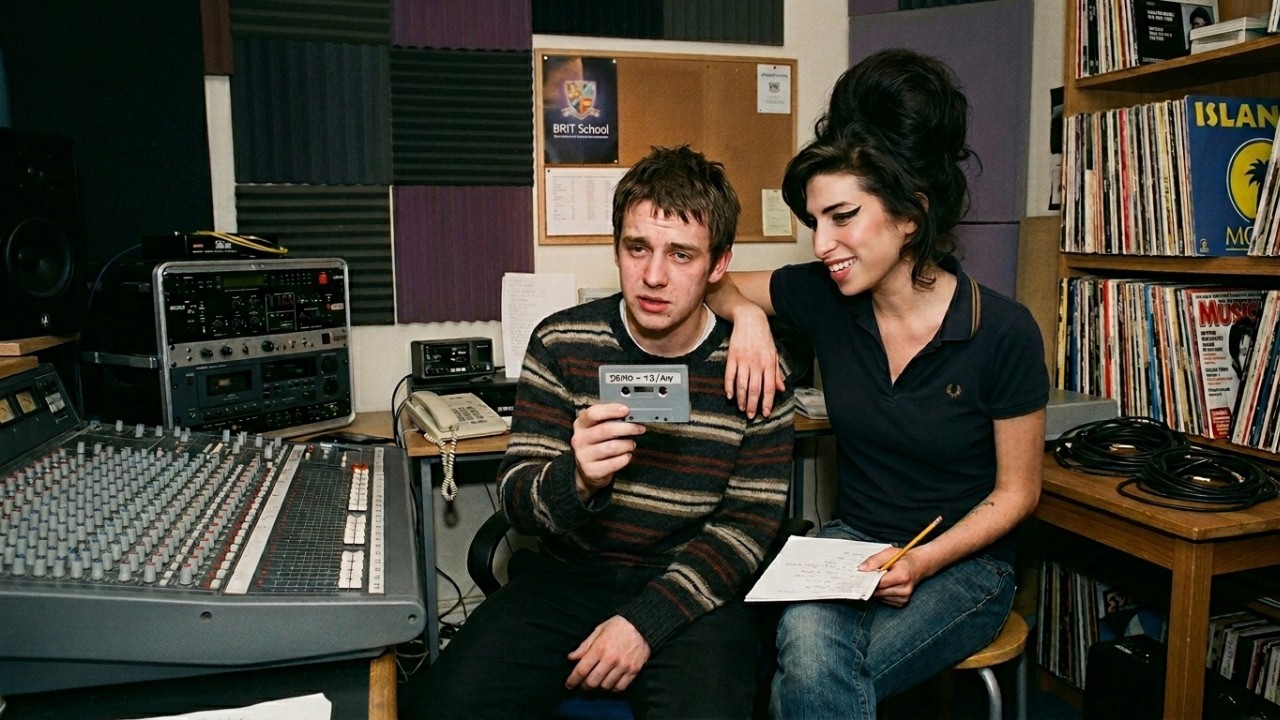
Tyler James sent a demo tape to a music manager without telling Amy. He was trying to get himself a deal. The manager listened, called back, and said he was not interested in Tyler. He was interested in the girl on the tape, the girl Tyler had recorded as a backing vocalist. That phone call was the beginning of Amy Winehouse’s career.
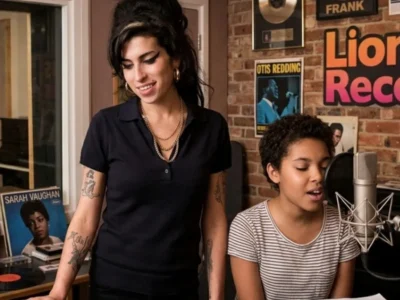
And Tyler has carried what came after it for the rest of his life. But to understand the full weight of what Tyler James has been carrying, you need to understand who he was before any of it, and who Amy was to him before she was Amy Winehouse. They met at the Sylvia Young Theatre School in North London when Tyler was 14 and Amy was 13.
The Sylvia Young School was a performing arts institution that produced over the decades an extraordinary number of people who went on to become significant in British entertainment. It was a school for children who were already more than ordinarily committed to music and performance, who had been pushed by talent or by ambition or by both into a world of training and auditions and the particular social atmosphere of a place where everyone was trying to become something.
Most of the students were there because they wanted to be seen. Tyler and Amy were there because they were the ones who did not quite fit anywhere else. He heard her sing before he heard her speak. That is not a line from a song. That is what Tyler wrote in his memoir, My Amy, published for the 10th anniversary of her death.
He said it was love at first listen, then love at first sight. He said, “There you are. Where have you been?” They were 13 and 14 years old, and they recognized each other with the completeness that sometimes happens between people who are sufficiently alike in the things that matter, in the seriousness about music, in the humor, in the quality of being slightly outside the mainstream of wherever they happen to be, that the recognition is immediate and permanent.
The Sylvia Young School was a particular kind of pressure cooker. The children who attended it were not ordinary children. They were children who had already been identified as exceptional, or who had identified themselves as exceptional, and who had been placed in an environment where everyone around them was equally committed to the idea of performance and success.
The social dynamics of such a place are not always kind. The competition is constant. The comparison is unavoidable. And the children who do not fit the prevailing mold, the ones who are too odd, or too raw, or too genuinely themselves to be comfortable inside the school’s particular definition of talent, tend to find each other.
Tyler and Amy found each other. They were both, in his description, on the fringes of the school. Both obsessed with music in a way that was more serious than the school’s general orientation toward performance and polish. Both slightly outside the mainstream of what the institution was producing.
Both recognizable to each other in ways that they were not recognizable to the students who fit more easily. The friendship that formed in that context was not the friendship of convenience or proximity. It was the friendship of recognition. Two people who had found in each other the specific understanding that they had not found anywhere else.
They became best friends. They became in Tyler’s own description soulmates, not romantically, but in the older and more exact sense of the word. Two people who had found in each other the person who understood them most completely. They moved together through the Sylvia Young years and the years that followed through the music scene and the late nights and the gradual understanding that what Amy was capable of was something genuinely different from what anyone else around them was capable of.
Tyler was musical. Tyler was talented, but he knew with the honesty of someone who had been in the room with Amy when she sang that what she had was in a different category from what he had. He knew it early. He never pretended otherwise. >> In 2002, Tyler James was trying to build his own career.
He had been working on demo recordings and was looking for someone who could help him get heard by the right people. He knew a teenager named Nick Shimansky who was working as a music scout. One of the people whose job it was to find new talent and bring it to the attention of management companies and record labels. Tyler sent Shimansky a demo tape.
On the tape, alongside Tyler’s own performances, was Amy. She had agreed to sing backing vocals. She was not the point of the tape. She was there to support her best friend’s bid to be discovered. Shimansky listened. He called back. He said he was not interested in Tyler. He was interested in the girl on the tape.
Tyler said, yes, of course. He gave Shimansky Amy’s number. He did what anyone who loved someone and had just heard that they were extraordinary would do. He said, here, this is how you find her.” He did not think twice about it. He did not weigh the implications or calculate what it would mean for his own career trajectory.
He simply gave his best friend the opportunity that had accidentally arrived in his hands. What followed for Tyler was something more complicated than a simple act of generosity. He had given away what might have been his own opportunity, or at least he had been the instrument through which that opportunity found someone else. His own career did not disappear immediately.
He signed to Island Records in 2003, the same label as Amy, the same label that had been so electrified by her audition. He released music, he toured. He was, by any reasonable measure, a working musician with genuine talent and genuine prospects. But, he was also Amy Winehouse’s best friend, and Amy Winehouse was becoming something that had not existed before.
The closer you were to that, the harder it was to maintain a separate trajectory. Not because Amy took anything from Tyler. She did not, and the suggestion would have horrified both of them. But, because the gravitational pull of what she was doing, and the demands that it placed on everyone around her, left very little space for anything else.
Tyler’s career moved forward in the years of Back to Black and the Grammys and the tabloid crisis and the canceled tours. It just did not move forward in a way that matched what he had hoped when he was a teenager at stage school who had found his soulmate and believed, with the confidence of someone who had not yet learned what careers actually cost, that both of them were going to make it.
>> What followed was the development of Amy Winehouse as a recording artist, the deal with 19 Management, the Miami sessions with Salaam Remi, the Island Records audition where a 20-year-old girl sat in a chair and sang one song and stopped a room full of music industry professionals. Tyler was there for all of it.
He was not managing Amy’s career or producing her music or making decisions about her professional life. He was doing what he had always done, being present, being her friend, being the person who had been there since they were 13 and 14 years old at stage school and who would still be there when everything else had changed.
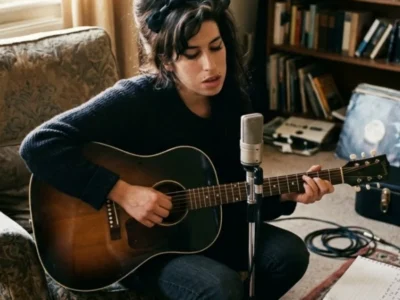
Back to Black was written on Tyler’s kitchen floor. He said this in My Amy as a matter of fact rather than as a dramatic revelation, simply as a description of where they were and what was happening. >> [snorts] >> Amy had a flat, but she was at Tyler’s as she often was in those years and the songs were coming and she was working through them and Tyler was nearby.
He made tea. He stayed quiet. He let her write. The album that would go on to sell 30 million copies and win five Grammys and be preserved in the Library of Congress was written in significant part on his kitchen floor while he sat nearby and did not interrupt. He has lived with that knowledge for 20 years.
It is the good part of what he carries. The rest of what he carries is harder. When Blake Fielder-Civil arrived in Amy’s life, Tyler saw immediately what it was going to mean. He had known Amy for years by then, had known her long enough to understand that when she loved something or someone, she loved it completely, without reservation, in the way that her music was honest and that her friendships were loyal.
He had also known her long enough to understand that this quality, which was the source of everything extraordinary about her, was also the quality that made her most vulnerable to the kind of damage that Blake would bring. He said so, not once, repeatedly over years, through the versions of the same conversation that friends have with each other when one of them is in a situation that the other can see clearly and cannot make them leave.
He was not self-righteous about it. He was not distant or punitive. He stayed. He was still there in Amy’s life, in her flat, in her kitchen, through the marriage and the prison visits and the canceled tours and the hospitalizations and the St. Lucia months and all the other chapters of a story that he had been present for from the beginning.
He developed his own serious addiction during those years. He has written about this directly and without self-pity. The way that being around someone who is struggling with addiction, combined with his own vulnerabilities and the particular pressures of a music career that was not going the way he had hoped, had led him somewhere he had not intended to go.
By 2009, he had overcome it. He had done the work. He had come out the other side and then he had gone back to being Amy’s person, steady, present, the one who stayed. He had a mantra. He said it to her every time she relapsed, every time the drinking came back or the drugs came back or the thing that she kept trying to leave kept pulling her back.
He said, “It is better to live being Amy than to die being Amy Winehouse.” He meant the distinction between the person and the persona, between the woman he had known since she was 13, the one who made tea and wrote songs on kitchen floors and was wickedly funny and wanted to be a good wife and mother more than anything, and the icon that the industry had constructed, and the tabloids had photographed, and the world had decided it knew.
He was telling her to choose the person over the persona, to choose life over the role. She always gave him the same answer. She said, “T, I’m not going anywhere.” He believed her. He had to believe her because the alternative was not something he could live inside and still be the person she needed him to be.
So, he believed her, and he kept saying the mantra, and she kept saying she was not going anywhere, and they kept living together because they were still living together right up until the end, Tyler in the same building where Amy was. And the years passed in the way that the years passed for Amy in that period, in cycles of better and worse, a longer stretches of something that resembled stability, and shorter stretches of crisis.
On July 23rd, 2011, Tyler James was in the building when Amy Winehouse died. He was the only person there who had known her since she was 13 years old. >> [snorts] >> He did not write about the specific details of that morning in My Amy. He wrote around it with the care of someone who has decided that certain things do not need to be given to the public, that certain moments belong to the people who lived them and to no one else.
What he wrote was about the years before it, about the friendship and the kitchen floor and the demo tape and the mantra and the answer she always gave, about the Amy he had known, the real one, not the tabloid one, not the Grammy Amy, not the cautionary tale Amy, the Amy who had written songs on his kitchen floor and called him T and said she was not going anywhere.
That Amy had belonged in some essential way to the people who had actually known her. And Tyler was writing to give her back to herself, or at least to give the world a clearer picture of who she had actually been. He was also, though he would not have said it this way, writing to give himself somewhere to put 14 years of carrying.
The book was an act of love and an act of witness, and perhaps an act of the kind of processing that grief sometimes requires. The need to say what happened, to name it, to place it in a form that exists outside of your own head and can therefore in some measure be set down. He said in interviews that he hoped people would show him the Amy he had known.
He said he wanted to correct the record. He said he was the only person who could tell this specific story from this specific position, with this specific combination of love and proximity and loss. My Amy was published in July 2021, exactly 10 years after her death. Tyler was living on a farm in Ireland by then, raising sheep.
He had swapped gigging for lambing, his own phrase offered with the self-deprecating humor that had always characterized him, and that had perhaps been one of the things that had drawn Amy to him in the first place, at a stage school in North London when they were 13 and 14 years old. He said he wrote the book because she could not, because the story that the world had been telling about Amy Winehouse was incomplete, and the incompleteness was a kind of injustice, and he was one of the few people with the knowledge and the proximity to do
something about it. He was not trying to establish his own place in the story. He was trying to give Amy her place in it, the Amy he had known, the one who had written Back to Black on his kitchen floor and said “T, I’m not going anywhere” and had meant it with every part of herself that was capable of meaning things.
The demo tape he sent without telling her started everything. He has spent 20 years thinking about what he started. He would do it again. He said so. He would give her number to Nick Shimansky again. He would let her be discovered again. He would sit on his kitchen floor again and make tea and stay quiet and let her write.
He just wishes the rest of it had gone differently.