What Australian Diggers Did When US MPs Tried To Humiliate Them In Brisbane
November 26th, 1942. In the middle of a war against Japan, an Australian soldier was shot dead on an Australian street. Not by the enemy, but by an American military policeman, and both governments immediately buried it. The diggers who were there had already survived Tbrook and Kakota, and they did not go quietly.
So, what exactly did they do when US MPs tried to humiliate them in their own city? And why was the truth hidden for 40 years? Brisbane, Queensland, a Wednesday night. The air is thick and warm, the way it always gets in a Queensland summer. The kind of heat that sits on your skin and does not move. The streets are packed with men in uniform.
Some are laughing. Some are drunk. Some are just walking, trying to feel normal for a few hours before the war pulls them back. But something is wrong tonight. Something has been wrong for months. Building the way a storm builds slow and quiet and then all at once. And before the sun comes up, a young Australian soldier will be dead, shot on his own country’s soil, and two governments will shake hands and agree to pretend it never happened.
His name was Norbert Grant. He was 20 years old. He did not die on the Kakakota track. He did not die on the beaches of a Pacific island with a Japanese rifle pointed at him. He died on a street corner in Brisbane. In the city the diggers were supposed to be protecting, killed by the weapon of an ally.
And if you had opened a newspaper the next morning, you would not have found a single word about it. The men in charge made sure of that. The speed with which they moved to bury it tells you everything about how this alliance really worked. To understand why it happened, you have to understand what Brisbane looked like.
In late 1942, the city had been turned inside out by the war. More than 100,000 American servicemen were now stationed across Australia. They arrived after Japan bombed Darwin in February of that year, a strike bigger than Pearl Harbor. And Australia had welcomed them because Australia was frightened. Japan had taken Singapore.
Japan had pushed within miles of Port Moresby. The threat was real and the Americans came with ships and planes and supplies and the promise that Australia would not stand alone. But they also came with something else. They came with money. An American private earned the rough equivalent of 34 shillings a day. An Australian private earned six.
That is not a small gap. That is the difference between buying a round of drinks for everyone at the bar and standing at the edge of the room with empty pockets. Night after night in every pub and street in Brisbane, Australian men watched American soldiers buy things they could not afford. Chocolates, cigarettes, nylon stockings for women being pursued with a kind of enthusiasm that the diggers noticed and did not forget.
And then there were the stores. The Americans had set up post exchange shops called PX stores right in the middle of Australian cities. These shops were full of goods that ordinary Australians could not buy because of wartime rationing. The shelves were stocked and Australian soldiers were not allowed inside.
They could walk past. They could look through the window, but the door was not for them. An American MP in a white helmet would make sure of that. That is not just an inconvenience. When you have buried mates in the desert and dragged wounded men through jungle to defend the country you are standing in, being shoved away from a shop door in your own city by a foreign policeman is humiliation.
And the men doing the shoving did not seem to understand or care who they were pushing back against or what those men had already survived to get to that street corner. The Australian soldiers who stood outside those stores were not soft men. The ones in Brisbane in November 1942 had already been through things that most people cannot imagine.
They had fought RML in the deserts of North Africa. They had marched the Cocoda track through jungle so thick and wet and steep that men died from the conditions before they ever saw a Japanese soldier. They had come home to their own country to find that they were somehow worth less than the men who had arrived to help them.
Six shillings against 34 kept out of the shop, pushed back at the door. Complaints had been made. Reports had been written. Men up the chain knew this was building. Brisbane was not the first city where Australians and Americans had come to blows. There had been trouble in Sydney. There had been trouble in Townsville. Everyone could see what was coming and nobody stopped it.
On the corner of Adelaide and Creek Streets, a crowd of Australian soldiers moved toward the entrance of the PX store. What they intended exactly depends on who you ask. But what happened next does not depend on who you ask because the result was the same in every account. An American MP raised a weapon, a shot was fired, and a 20-year-old Australian soldier fell.
What the men on those streets did in the hours that followed would force two governments to make a decision they would spend the next four decades hiding. By morning, the riots would spread across several city blocks. Hundreds of men would be caught up in it. More Australians would be hurt. And then the orders would come down from the very top from both sides swift and clear.
No newspapers, no records, no names. The war was too important. The arrangement was too valuable. Norbert Grant was not important enough. Not officially, not then. But the diggers who were there remembered, and some of them waited a very long time to say so. To understand what broke open on that Brisbane street corner, you have to go back further.
You have to go back to the moment Australia realized it was almost alone. On the morning of February 19th, 1942, Japanese aircraft appeared over Darwin in the Northern Territory. There were 188 of them. They came in two waves, and they did not stop until they had sunk eight ships in the harbor, destroyed more than 30 aircraft, and killed at least 235 people.
The attack was larger in scale than the one that had hit Pearl Harbor just 10 weeks earlier. It was followed by dozens more raids on Australian soil over the coming months. For the first time in its history, Australia felt the war not as something happening somewhere far away, but as something that could reach through the window and pull you out of bed.
That fear is exactly what made what happened in Brisbane possible. Desperate countries make desperate deals, and desperate deals always have a price. Singapore had already fallen by then. On February 15th, 1942, the British fortress that was supposed to be unbreakable surrendered to Japan. More than 15,000 Australian soldiers were taken prisoner that day.
Many of them would not not survive the war. The fall of Singapore was the single greatest shock Australia had ever felt, and it came with a brutal message. Britain could not protect Australia anymore. The old guarantees were gone. Australia was on its own in a way it had never been before.
Into that fear stepped General Douglas MacArthur. He arrived in Melbourne on March 25, 1942. Having escaped the Philippines by direct order of President Roosevelt, leaving behind tens of thousands of his own men. In Australia, he was greeted like a savior. The newspapers called him the hero the country needed. Prime Minister John Cirten believed MacArthur’s presence would bring the full weight of American military power to the Pacific.
MacArthur set up his headquarters in Brisbane by mid942 and built around himself one of the largest military machines the Southern Hemisphere had ever seen. But what he brought with him beyond the guns and the planes and the supply chains was a system that treated Australians as something less than equal. That system was going to cost lives before the war was done.
The Americans who poured into Australia through 1942 brought more than weapons and supplies. They set up PX stores in Brisbane and other cities stocked with goods that most Australians could not freely buy. Rationing had been in place since early in the war. Sugar, tea, clothing, butter, all rationed and controlled. An ordinary Australian family counted every item carefully.
An American soldier walked into a PX store and bought chocolate bars off a full shelf without thinking twice about it. The pay gap sharpened everything. An Australian private received six shillings a day. His American counterpart received roughly 34. On a night out in Brisbane, the American could buy drinks, gifts, and a good meal and still have money left.
The Australian could afford very little. This was not a secret. The pubs showed it every night. The streets showed it. The relationships forming between American soldiers and Australian women showed it in ways the diggers found very hard to ignore. It would be wrong to say every American behaved badly or that every Australian resented every man who stepped off a transport ship. Many formed genuine friendships.
Some shared rations. Some looked out for each other the way soldiers do when they know they are heading toward the same danger. But the structure of the arrangement was built on inequality and inequality when it is lived every single day does not stay polite. The men carrying the heaviest end of that inequality were not strangers to hard things.
They were some of the most tested soldiers Australia had ever produced. The soldiers in Brisbane in late 42s had already endured campaigns that would mark a man for for life. The 9inth division had fought RML at Tbrook and Elamine. The seventh division had clawed its way through the Owen Stanley Ranges on the Koga track through jungle that was barely passable even without an enemy waiting in it.
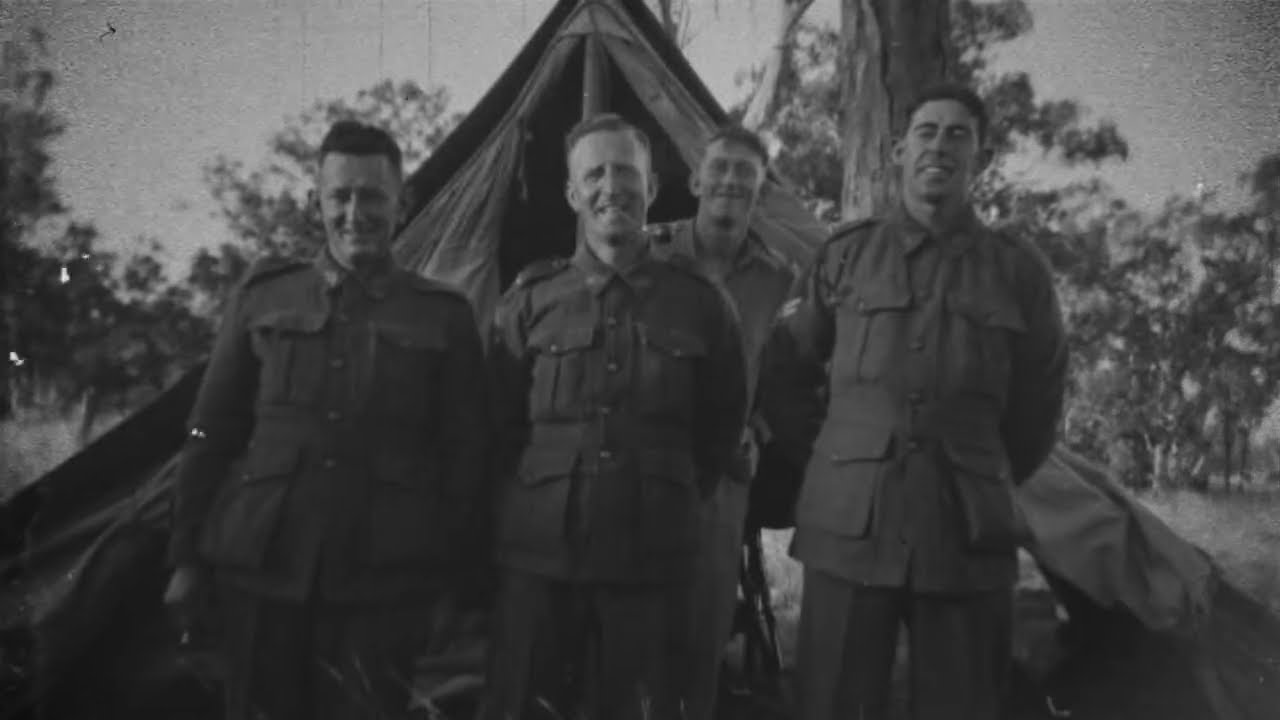
They had buried mates. They had carried wounded men through mud and heat with nothing to eat. They had held lines that were not supposed to hold, and they had come back to Australia proud and exhausted and ready to defend the country they had just been fighting for. That was the man standing outside the PX store in Brisbane.
Not a civilian, not a troublemaker, a soldier who had already paid a price that most people would never be asked to pay. And he had just been told by a foreign policeman in his own city that the door was not for him. Something was always going to give. On November 26th, it did. The evening of November 26th, 1942 began the way most nights in wartime Brisbane began.
Men on leave filled the footpaths. The pubs were loud. The air smelled of cigarette smoke and spilled beer, and the particular heat that sits over Queensland in late spring, heavy and close, the kind that makes everyone a little more restless than they would otherwise be. There was nothing about the early hours of that night that would have told you what was coming.
But the conditions had been building for months, and all it needed was one moment, one push, one man with a baton who did not understand what he was pushing against. The PX store on the corner of Adelaide and Creek Streets was exactly the kind of place that made the daily inequality impossible to look away from.
It sat in the middle of the city. It was stocked. It was open. and it was not for Australians. A group of Australian soldiers approached the entrance that evening. Some accounts say they wanted to buy goods. Some say they were pushing back against the exclusion itself, testing the line that had been drawn across their own sket. Most likely it was both.
These were men who had been walking past that store for months, watching Americans walk freely in and out, and something in them had finally decided to stop walking. What happened at that door in the next few minutes would start something that neither government could fully control and one of them was going to try very hard to make sure no one ever found out.
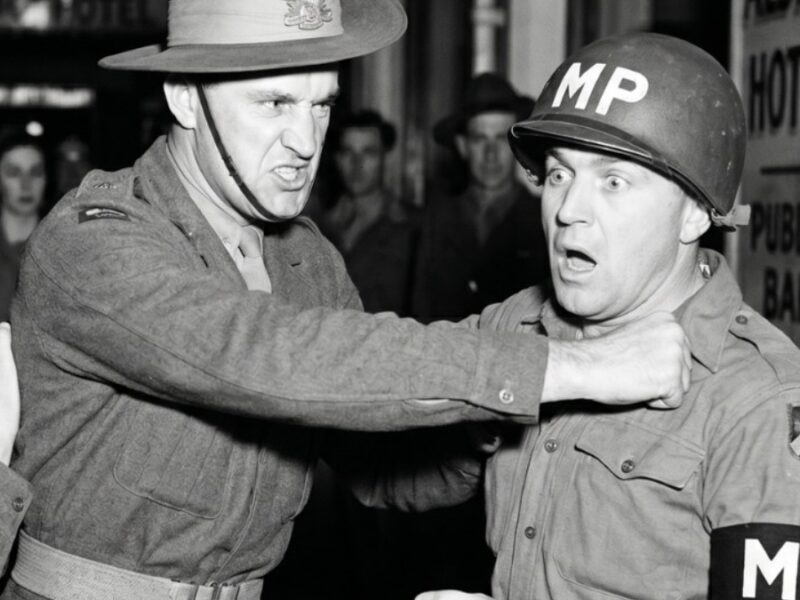
A US military policeman was posted at the entrance. He moved to block the Australians from entering. Words passed between them. The exact words are lost to time and to the cover up that followed, but the shape of the exchange is not hard to picture. an American MP in a white helmet, authority in his posture, telling Australian soldiers they could not come in.
Men who had already fought in North Africa and on the Cakakota track, being told by a foreign policeman in their own city that they did not belong at this door. Whatever was said, it carried the weight of every small humiliation that had been building for months. The locked door, the empty pockets.
The foreign policeman with authority over men who had bled for this country. It did not stay words for long. Physical contact was made. An Australian soldier was struck. Word moved through the streets of Brisbane the way it always moves through a crowd of soldiers. Fast. Within minutes, that intersection had drawn hundreds of men.
Australian and American soldiers who had been drinking in nearby pubs spilled out onto the footpaths. The argument at the PX door became something much larger. Punches were thrown. Then more punches. Glass broke. Men who had no idea how it started found themselves in the middle of it, swinging or being swung at.
The whole thing spreading block by block through the warm Brisbane night like a fire that had finally found enough oxygen. The US MPs pushed into the crowd with their batons out. They were not pulling back. Every time a baton connected with an Australian, the crowd grew angrier and the fighting spread further. The diggers did not run.
These were not men who ran. They stood and they fought with the same hard stubbornness they had shown in the desert and in the jungle. Except now the enemy wore a white helmet on an Australian street. And then in the middle of all of it, something happened that changed the night from a riot into something the two governments knew they could never allow the public to see.
A weapon was drawn. A shot was fired. Norbert Grant, 20 years old from New South Wales, went down. He was not armed. He was not, in the moment the shot was fired, the immediate physical threat that might justify a weapon being raised against him. He was a young Australian soldier on an Australian street and he was shot and he died and the night was not over.
The fighting continued into November 27. The riots spread across multiple city blocks. More Australians were wounded. The US MPs could not contain it and for a long time did not try to contain it in any way that reduced the violence rather than adding to it. By the time the streets began to quiet, the damage was done in every sense.
Buildings had been smashed, men had been hurt, one man was dead, and somewhere above all of it, in the offices where the decisions were made, the phones were already ringing, and the conversation was already turning, not to justice, but to silence. The sun came up out of Brisbane on the morning of November 27th, 1942. And the men who held power on both sides of the alliance looked at what had happened and made a choice.
It was not a hard choice for them. It did not take long. The war was too big, and one dead Australian soldier on a Brisbane street was, in the cold, thinking of men who moved armies across oceans, a problem to be managed rather than a truth to be told. By the time most of Brisbane was sitting down for breakfast, the decision had already been made. The story would not be told.
Not in the newspapers, not in official reports, not anywhere the public might find it. The speed with which they moved tells you this was not panic. It was a plan. Both governments knew exactly what they were doing. This was the real turning point of the Battle of Brisbane, not the shot that killed Norbert Grant, though that was the wound at the center of everything.
The turning point was the moment two governments looked at that wound and agreed together to cover it and tell no one it was there. That decision would follow every man who had been on those streets for the rest of his life. It would protect the men responsible from ever facing a public reckoning, and it would tell every Australian soldier who had witnessed it exactly how much his mate’s life had been worth to the people running the war.
General Douglas MacArthur’s headquarters moved quickly. Internal communications were controlled. The military censorship system that both Australia and the United States ran during the war was not just for keeping information from the enemy. It worked just as well for keeping information from the public at home. Editors of Brisbane newspapers received the message clearly.
There would be nothing in print about what had happened on those streets. Nothing about the riot. Nothing about the dead Australian soldier. nothing about the American MP who fired the shot. The newspapers that went to print in the days that followed contained no trace of it, and most Australians who were not into Brisbane that night never learned it had happened at all.
But here is the thing about burying a truth. You need everyone who saw it to stay quiet. And there were hundreds of men who had seen it. The Australian military board moved in step with the Americans. This was not one side pushing and the other reluctantly going along. Both sides wanted the same outcome. Australia needed American troops, aircraft, ships, and supplies to survive the Pacific War.
The Americans needed Australian bases, Australian ground forces, and the supply lines running through Australian territory. Neither government could afford to let one night of riots and one dead soldier put that arrangement at risk. So they did not let it. Soldiers who had been on the streets that night were told to say nothing.
Some received that instruction formally. Others understood it without being told. The way men in uniform understand when a line has been drawn they are not supposed to cross. The culture of military discipline did the rest. You did not talk about things you had been told not to talk about. You went back to your unit. You got ready for the next deployment.
You carried what you had seen and you kept it inside. Not officially, not where it could cause trouble. The man who fired the shot that killed Norbert Grant was never publicly identified, charged, or tried in any forum the Australian soldiers could see or take meaning from. Whatever happened within the closed system of the American military is not part of any record that has been made fully public.
He never faced justice in any form. the people most affected could witness. That absence is its own kind of statement about how much the Alliance valued the life it had just cost. Every Australian soldier who had been on those streets understood the message. Some of them never stopped hearing it. What makes this turning point so heavy is not just what was decided, but what it said.
When the order came down to bury the story, it told every Australian soldier who had been standing on those streets exactly where they stood. They had fought in North Africa. They had bled on the Cakakota track. They had done everything asked of them. And when one of them was shot dead in their own city, the answer from the men in charge was silence.
Not justice, not acknowledgement, silence. That silence lasted nearly four decades. And it cost more than most people will ever know. The quiet that followed the Battle of Brisbane was not the quiet of resolution. It was the quiet of pressure applied from above. The kind that does not feel like peace, but like a lid being pushed down on something that is still boiling underneath.
Within hours of the riots ending, the machinery of wartime censorship was already doing its work. And the city that had seen one of its own soldiers shot dead on its own streets was being asked to act as though nothing had happened. The Bris newspapers said nothing. Not a word about the riots. Not a word about Norbert Grant.
Not a word about the American MPs and their batons and the weapon that had been fired in the middle of an Australian city. The editors knew. Some of the journalists knew. But the orders were clear and the penalties for ignoring them were real. And so the pages that went to print in the days that followed were full of war news from every corner of the Pacific except the corner that mattered most to the men who had been standing outside that store.
What happened to those men in the weeks that followed is one of the quietest cruelties in this whole story. For the Australian soldiers who had been there, the silence was its own kind of violence. They went back to their units. They cleaned up. They got back in line. The military moved them the way it always moved men with purpose and direction and very little room for sitting still and thinking about what had just happened.
Some were shipped out to new deployments within weeks. Some were already earmarked for operations further north where the fighting was still going and the jungle was still waiting. The war did not pause for grief and it did not pause for anger and it did not pause for the particular exhaustion that comes from being told your mate’s death does not count enough to be spoken about out loud.
The soldiers talked among themselves. Of course, in the way that men who have been through something together always talk in low voices, in private moments, in the kind of conversation that falls quiet the moment an outsider appears. They knew what had happened. They knew what they had seen. And they knew without being told in so many words that the official position was that there was nothing to discuss. Nothing here.
Move on. The Grant family received word that Norbert had died. The specific circumstances of how and why and at whose hand were not given to them clearly or completely. A young man goes to war and does not come home. That is a grief that thousands of Australian families were carrying in 1942 and it is a grief with a shape people understood.
But there is a difference between a son who dies fighting the enemy and a son who dies on home soil in a situation his own government has decided to erase. The Grant family carried that difference even if for years they did not have all the words for it. And on the American side the response was not regret, it was calculation.
The documents that eventually surfaced make that plain. Internal American Records describe the Brisbane incident as a serious breakdown of order requiring careful handling. The language is the language of alliance maintenance, of keeping relations smooth, of ensuring the operational partnership was not disrupted. There is no language of justice for Norbert Grant. Not one line.
The framing from the first internal memo to the last is about what the incident might cost the alliance if it became public. not about what it had already cost the people it had touched most directly. Not every American soldier in Brisbane was part of the problem. Some were as troubled by the MP conduct as the Australians were.
Some had tried in the middle of the chaos to pull people back, to step between groups before blows landed, to use their voices to slow things down. The riot was not every American against every Australian. It was a specific institutional inequality expressed through specific men in white helmets with batons, meeting the accumulated fury of men who had been absorbing that inequality for months.
Those Americans who were troubled by what happened, who talked about it quietly among themselves afterward, were not part of the record either. Their discomfort, like the digger’s grief, was swallowed by the silence. In the weeks and months that followed, small and careful adjustments were made. Access to certain American facilities was quietly revised in some areas.
Guidance was issued to American commanders about MP conduct in shared spaces. None of this was announced as a concession. None of none of it was framed as an acknowledgement that something had gone wrong. It was managed from the inside out of sight with no public admission that anything had needed managing at all. The adjustments happened >> because the people in charge understood the pressure had not gone away simply because they had put a lid on it.
The pay gap that started all of this was never fixed. And that gap was going to keep shaping the lives of every man in that alliance whether the governments admitted it or not. Norbert Grant had a name and a family and a future that the war had already put at risk before a single MP ever raised a weapon. What happened to him happened in the dark and then the dark was made official.
But the men who were there did not forget. They were going to make sure eventually that no one else forgot either. To understand how much the battle of Brisbane mattered beyond that one night, you have to step back from the street corner and look at the whole shape of it. Not just Adelaide and Creek Streets, but the full weight of the Alliance resting on top of that intersection.
And what happened to that weight when the ground finally shifted? The most immediate consequence of the riots was that the men in charge on both sides were forced to acknowledge, at least privately, that the conditions they had allowed to develop were genuinely dangerous. The pay gap had not been a secret before November 26.
The PX exclusion had not been a secret. The tension in Brisbane and Sydney and Townsville had been reported up the chain many times by officers who could see what was building. What the riots did was remove the option of treating those reports as low priority. One dead Australian and two nights of street fighting in a major city could not be filed away as a routine discipline matter.
It demanded a response, even if that response could never be public. The response they chose reveals exactly what both governments believed was worth protecting and what they believed was not. The practical adjustments that followed were small and carefully made to avoid drawing attention to themselves. Access to certain American facilities was quietly revised.
Guidance was issued to American commanders about MP behavior in shared spaces. None of it was framed as a concession. It was managed from the inside silently. The adjustment happened because the people in charge understood the pressure had not gone away just because they had put a lid on it.
What did not change was the structure that had caused everything. The pay rates stayed where they were. That gap ran through every shared space the two armies occupied for the rest of the war, shaping every interaction, every night in a pub, every moment where a man with money stood beside a man without. The riots had shown this gap could produce death.
The response was to manage the surface, not fix what was underneath. And the man making the biggest decisions about Australian soldiers was someone who had already shown a particular talent for taking credit while others paid the price. General MacArthur’s relationship with Australian military leadership had been strained long before Brisbane.
He consistently directed credit toward American forces and away from Australian ones, treated Australian units as assets to be used rather than partners to be consulted, and made decisions about Australian soldiers without the kind of respect the Australians believed they were owed. General Thomas Blamey, who commanded Australian land forces, fought a persistent battle with MacArthur over exactly these questions throughout the war.
The Brisbane riots did not create that friction, but they gave it a specific and very human face. The argument the generals were having at the top of the command structure was the same argument the diggers had been having at street level, just expressed with different weapons. The impact on morale was real even where invisible in official records.
Morale is not just about whether men are willing to fight. It is about whether men believe the people sending them into danger see them as human beings worth protecting and honoring. The coverup sent a message on that question that every soldier who knew about it would have felt in his chest. It said the alliance was more valuable than the truth.
It said a dead Australian was a diplomatic inconvenience. It said silence mattered more than justice. That kind of message does not build anything. It hollows men out the way water hollows stone over years. And the Japanese watching from across the Pacific would have paid a great deal to have known what had happened on those Brisbane streets because it was exactly the story they had been trying to tell.
Japanese propaganda throughout the Pacific War worked hard to drive a wedge between Australia and the United States to convince Australians that the Americans were not truly their friends. that the alliance served American interests more than Australian ones. The Battle of Brisbane, had it ever become public during the war, would have been a gift to that effort.
Both governments understood this. It was part of why the censorship was so thorough and so fast. Keeping the story buried was not just about protecting the alliance. It was about denying the enemy a weapon that could have done real damage to the whole Pacific effort. What the Brisbane riots ultimately revealed was that the alliance between Australia and the United States in 19442 was real and necessary and also deeply unequal and that the men who managed it were willing to pay a considerable human cost to keep that inequality out of the
public conversation. The diggers on the street already knew the truth. The question was always whether anyone with power would ever be honest enough to admit it. Behind every decision made in those high offices, behind every censored newspaper page and every internal memo written in the careful language of alliance management, there were people, real ones with names and futures that had been changed by what happened on those Brisbane streets.
The story of the Battle of Brisbane is not just a story about governments and alliances. It is a story about what those things cost the human beings caught inside them. Norbert Grant was from New South Wales. He enlisted because his country needed him. The same reason hundreds of thousands of other young Australians had enlisted.
He ended up in Brisbane on a November night in 1942 at the wrong place at the wrong moment in history. His family was told he was gone. The full shape of how and why and at whose hand was not given to them clearly or completely. They grieved the way families grieve without the luxury of waiting until all the facts are in.
And they carried whatever version of the story they had been given into the years that followed. There is something in that image, a family handed an incomplete truth and told to make peace with it that says more about what was valued in this alliance than any official document ever could. There is no memorial with Norbert Grant’s name on it that marks what happened on that corner.
The men who died fighting the Japanese have their names on stone. The men who fell in the desert and in the jungle are honored at services every April. Norbert Grant died in uniform in his own country, and the circumstances of his death were considered too complicated for the kind of public recognition his service deserved. For the people who loved him, that absence said something very specific about how much he had mattered to the men who ran the war.
The hundreds of Australian soldiers on those streets that night did not have their stories told either. They went back to their units and then back to the war. And many of them went to places where the dying was still happening. Some did not come home at all, which means the battle of Brisbane was one of the last significant things they ever experienced on Australian soil.
The ones who survived carried the night with them. The way soldiers carry things they are not allowed to discuss. Folded up small, kept somewhere inside, brought out only in private with people who had been there too. The silence those men lived with for 30 and 40 years was not just a personal burden. It was a deliberate policy.
And the people who designed it knew exactly what they were asking those men to carry. For decades, the silence held. Not perfectly because silence never holds perfectly when enough people know the truth, but well enough that the Battle of Brisbane stayed outside the version of the war most Australians learned in school or read about in books. The veterans aged.
The war receded into history. And still the story sat in the dark where the governments had placed it. It was not until the 1970s and into the 1980s that the account began to surface seriously. Veterans who were now old men started to speak. Historians began asking questions and found that the answers, when pursued carefully, were there in records not fully destroyed, in letters that had slipped past the sensors, in the memories of men who had decided finally that they had been quiet long enough.
The work of researchers and journalists who took the story seriously gave those veterans something they had not had before, a public space in which what they knew was treated as real and worth recording. What those men described when they finally spoke was not just the riot itself.
They described the years of silence. They described what it felt like to know something your government had decided you should not say. They described the particular loneliness of carrying a truth that has no official home. One that exists only in the memories of the men who were present. In letters that slipped past the senses. in conversations that stopped when the wrong person walked into the room.
They were not bitter in the way that breaks a person. They were clear. They wanted the record corrected. They wanted Norbert Grant’s name to mean something beyond a file that had been closed before it was properly opened. And the American soldiers who had been on those streets, the ones who were not MPs, the ones who had tried to stop it, they had been carrying their own version of that silence.
And some of them were not finished with it either. The Americans caught in the middle of that night had their own complicated weight to carry. Not all of them had been on the side of the batons. Some had been as appalled by the conduct as the Australians were. Some had tried to pull people back in the middle of the chaos.
The alliance had required their silence, too. The story never belonged to just one side’s conscience. And in the women of Brisbane, the Australian women, who had spent months navigating the space between their own men and the well-funded Americans, pursuing them with chocolates and easy charm. Their lives had been shaped by the same inequality that filled the streets with anger, and their voices were among the quietest in a story already defined by silence.
The people who lived it deserved better than that silence. Most of them knew it. They just had to wait a very long time for anyone with the power to publish to agree. The corner of Adelaide and Creek Street in Brisbane looks nothing like it did in November 1942. The city has grown around it, rebuilt itself, moved forward the way cities do, filling in the gaps and smoothing over the rough edges until the ground beneath your feet gives no sign of what it once held.
There is no marker on that corner, no plaque, no stone with Norbert Grant’s name on it. You can stand exactly where the PX door once stood and feel nothing in particular because the street does not remember the way the people do. But the people do remember and that matters more than any stone. The process of remembering happens slow the way truth surfaces when it has been deliberately buried.
Through the 1970s and into the 1980s, pieces of the story began to appear in Australian journalism and historical research. Veterans who had spent 30 and 40 years keeping quiet decided one by one and then in growing numbers that the quiet had lasted long enough. Historians working through declassified documents in both Australia and the United States found the edges of what had been hidden.
The internal memos, the censorship orders, the careful language of men who had managed a crisis by erasing it. The Australian War Memorial eventually acknowledged the event as a real and significant part of the wartime record. By the 1990s, the Battle of Brisbane had moved from buried secret to documented history, imperfect and incomplete in places, but real on the record.
Undeniable. And what the veterans said when they finally got to speak after 30 and 40 years of silence was not what the governments had been hoping they would say. What that process meant for the veterans who lived to see it is hard to measure precisely. But it was not nothing. To have something you know to be true finally treated as true after decades of official silence is a specific kind of relief.
The men who had been on those streets in 1942 had not imagined what they saw. They had not exaggerated it. They had not misunderstood it. And the historians and journalists who eventually told the story were saying in effect that the governments which had ordered those men to stay quiet had been wrong to do so. That acknowledgement came late.
For many veterans, it came after they were gone. But it came for Australia as a nation. The Battle of Brisbane sits in an uncomfortable but important place in the story of who Australians are and how they understand their own history. The ANZAC tradition is the deepest thread in Australian military identity.
It carries ideas about equality, about standing up for your mate, about refusing to accept treatment that demeans you or the people beside you. The diggers who fought on those Brisbane streets in November 1942 were not acting against that tradition. They were expressing it in the only direction available to them against an injustice that had been building for months in their own city.
The fact that their government then chose the alliance over the truth does not erase what they did or why they did it, it adds a layer to the story that Australians should sit with honestly because the question the Battle of Brisbane leaves behind is not just a historical one. It is a question about what an alliance is really worth when it is tested from the inside.
The US Australia alliance that the coverup was designed to protect has endured. It is one of the most significant strategic partnerships in the world. Built on shared values and shared sacrifice across eight decades and multiple conflicts. That is real and it deserves to be acknowledged. But the Brisbane story asks a harder question that the alliance’s supporters should be willing to answer.
What is a partnership worth if maintaining it requires hiding the death of the people it is supposed to protect? That is not a reason to reject the alliance. It is a reason to hold it honestly with clear eyes about what it has cost and who has paid. Norbert Grant was 20 years old. He enlisted to fight for his country.
He died in his country on a street in his country in a dispute about whether he was allowed to walk through a door. He did not receive the recognition that soldiers killed by the official enemy receive. His name did not end up on the memorials where Australians gather every April to say thank you to the people who paid the highest price.
That gap is not a small thing. It is a statement made in stones and in silence about whose deaths are considered worth honoring and whose are considered too complicated for that. The street remembers nothing but the people who have carried this story through the decades. The veterans who finally spoke, the historians who listened, the Australians who learned it and refused to let it go quiet again.
They are the memorial, the one that was never built, but was built anyway out of words and memory and the simple refusal to let a young soldier be forgotten because his death was inconvenient for the men in charge. He deserved better. He still does.