What Delta Force Said After the SAS Arrested Two War Criminals They Spent Two Years Hunting
By the summer of 1,997, the intelligence product on Simo Drojaka had been building for almost 2 years. And by any objective standard, it was close to perfect. The men who built it knew the car he drove, a silver gay Mercedes, Bosnian plates, always parked outside the same entrance to the municipal building in Prejor.
They knew the restaurant on Kosarak Road, where he took lunch on Wednesdays, a narrow place where the owner had known him since the 1980s, and where the corner table stayed empty until he walked in. They knew the reservoir at Gradina, roughly 12 km south of Priador, where he fished on summer mornings the specific section of bank he preferred, the time he arrived, the fact that he brought his teenage son and a heavy set nephew who served informally as a bodyguard without ever being formally designated as one.
They knew the license plate of the vehicle the nephew drove, the frequency with which Djaka deviated from his observed patterns, and the specific morning hours during which he was most predictably at the reservoir and least surrounded by the broader social network that otherwise kept him visible and protected.
The product was the output of patient professional surveillance work conducted at the highest level. The authorization to act on it had not come was not expected and had not come for reasons that everyone in the intelligence and operational community understood and almost nobody would say plainly. The restriction was not a military decision.
It came from above the operational level from a policy framework that had been shaped in the corridors of the National Security Council and refined through State Department cables across three years of Balkans policy management. The argument that sustained the policy was not unreasonable on its face. The Republic of Serpska environment was genuinely hostile to the SFOR presence and the municipality of Prihador in particular was an area where the population’s orientation toward the international community was shaped by years of wartime
nationalism by the specific history of what had happened there in 1992 and by the practical reality that the local police force had been personally constructed by Drilljaka during his years as chief. chief. An arrest team entering Prejudor in a military vehicle in military uniform executing an ICTY warrant for a figure who was known and locally respected would not be operating in an environment of public indifference.
The risks were real and they had been assessed seriously by people who understood the Balkans. The fear was specific that American casualties in an arrest operation in contested territory would generate congressional and public pressure that the administration could not afford. Given that the SFOR mission was already operating on political borrowed time, the argument had weight.
It also had a consequence which was that for two years while the intelligence product on Duljaka and the other prejudtor indictes grew more precise and more actionable the men who had built the product had no operational order that allowed them to use it. Simo Djaka had been the police chief of Priador municipality in 1992, the year the ethnic cleansing campaign that destroyed the Bosnjak and Croat communities of the region was prosecuted with a systematic thoroughess that distinguished it from the ordinary chaos of the surrounding
war. The Omar detention camp located at an iron ore processing facility approximately 20 km east of Prehor on the road toward Banjaluca had processed somewhere between 3,000 and 5,000 prisoners between May and August of 1,992. The conditions documented there by the journalists Roy Gutman and Ed Vulamy who gained access in August 1992 by the survivor testimonies collected by human rights investigators over the following years by the forensic evidence assembled after the war’s end placed Omar among the most thoroughly documented atrocity
sites of the Yugoslav conflict. The camp had not been a peripheral improvisation. It had been a managed facility with a command structure, a processing procedure, and a population of prisoners that included virtually every prominent Bosnjak and Croat male of military age from the Priador area. Dr.
jaka had not been the sole architect of the broader ethnic cleansing campaign that accompanied the camp’s operation. He had been the administrator of its most visible instrument and his role in establishing Omar had been documented with sufficient precision that his ICTY indictment when it was filed in the Hague in March 1997 was a formality rather than a surprise.
He had been walking free in Prehor for 5 years. He attended public functions. He gave newspaper interviews. He had not been in hiding because hiding was in his assessment of the international community’s will unnecessary. Milan Kovasvich occupied a different position in the same story. He was the director of Preor Hospital, the institution whose relationship with the 1,992 campaign the ICT-wise investigation had examined in specific and documented detail.
His indictment filed alongside drilljacas in March 1997 under sealed conditions that prevented either target from knowing they were indicted charged him with crimes against humanity and genocide related to his role in the municipal coordination that had accompanied and enabled the ethnic cleansing operations. He was 61 years old in July 1997.
He was a physician and an administrator. He had continued to run the hospital through the post-war years. He continued to see patients. He continued to attend the professional and civic functions where his status as the director of the local hospital conferred a public legitimacy that stood in direct and visible contrast to the charges being prepared against him in a building in the HEG that he had no reason to believe he would ever enter.
When the ICTY indictment was eventually unsealed, it was not unsealed in a courtroom or a police office or through any formal legal notification. It was unsealed on the morning of the 10th of July, 1997 when a small group of men in civilian clothes walked through the front entrance of his hospital and told him he was under arrest.
The British operation was designated operation tango and had been planned under the authority of 22 SAS, specifically the special projects team structure that gave the regiment operational capability in the direct action and arrest mission sets that the Balkans deployment required. The planning had been thorough.
The intelligence product on both targets had been built over months, drawing on British national collection assets and on the military intelligence resources embedded in the SFOR structure. The legal authority for the operation derived from UN Security Council resolution 131 which authorized the NATOled SFOR to use all necessary measures to ensure compliance with the Dayton peace agreement and from the ICTY statutes provisions on the arrest and surrender of indicted persons.
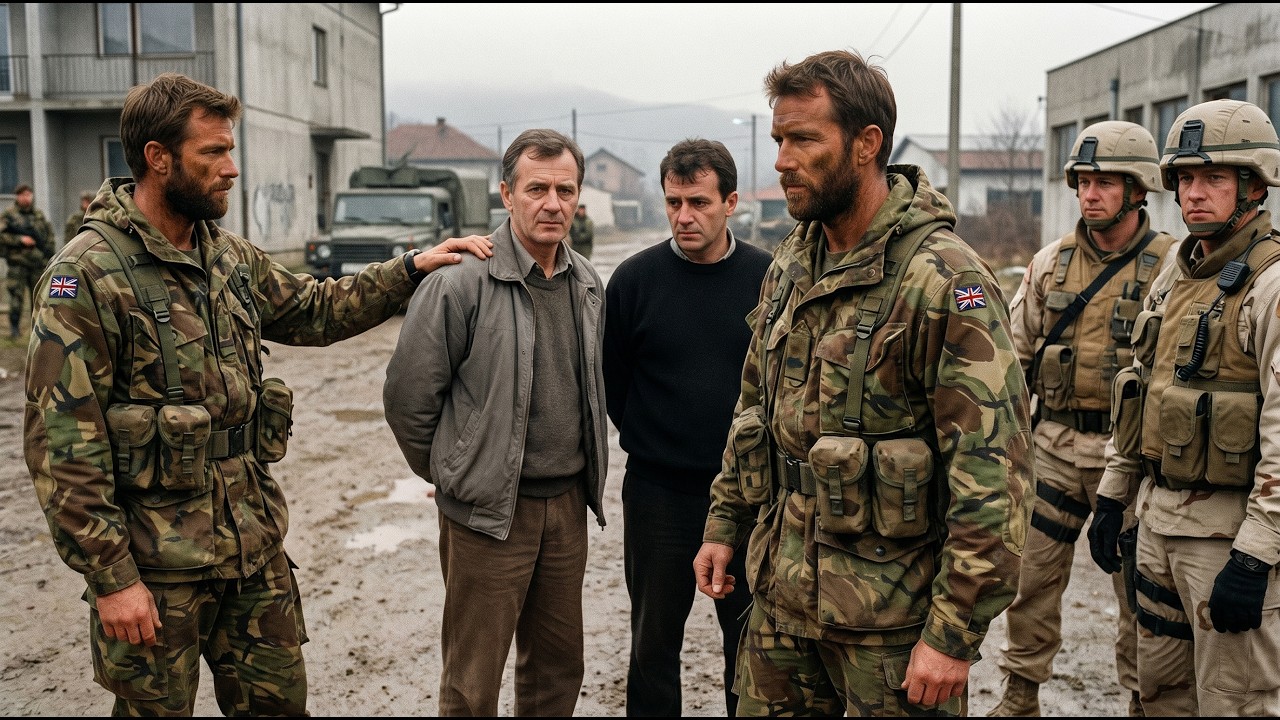
The SFOR commander, an American general, had that authority. The question of whether to exercise it had been the subject of internal alliance debate for the better part of two years. The British chose to exercise it. The operational concept they developed was straightforward in principle and demanding an execution. Two simultaneous arrests, one at the reservoir and one at the hospital, conducted in the early morning hours before either target had reason to be alert.
using small teams in civilian vehicles who would not require the kind of military cordon that would telegraph the operation hours in advance. The teams had been briefed on both targets in detail, had rehearsed the specific environments they would operate in, and had planned for the specific risks that each target presented. Duljaka was assessed as a potential for armed resistance. Kvasovich was not.
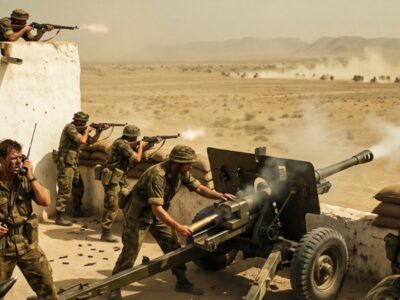
Both assessments proved accurate. The team designated for Duljaka moved to the Gradina reservoir before first light on July 10. The approach was quiet. The reservoir in those early morning hours was the kind of place where the specific absence of military vehicles, military uniforms, and military bearing was the deliberate condition the team had prepared to maintain.
Drill Jaka arrived with his son and his nephew. consistent with the pattern documented in the surveillance product. He set up his fishing equipment at the section of bank he consistently used. The morning was unremarkable up to the moment it was not. The SAS team moved from their approach positions to the arrest. Duljaka understood what was happening quickly.
The speed of his response indicated that he had at some level maintained an awareness that this moment was possible even if he had concluded it was unlikely. He drew a pistol from somewhere on his person. He fired. The round hit one of the operators in the leg. The wound was significant. It was not fatal. He fired again.
He was shot and killed before his second round had resolved into an outcome. His son was not harmed. The wounded operator was moved off the line, assessed, and prepared for evacuation. The operation at the reservoir had taken under 90 seconds from first contact to conclusion. Dr.jaka was dead on the path beside the water.
The sun was not yet fully over the Kosara range. At Preer Hospital, the second team had timed its arrival to coincide with the early morning period when the hospital’s public areas were active, but before the full administrative day had begun. They moved through the entrance in plain clothes, passed the morning’s first patients and the staff arriving for the day shift, and navigated to Kovasvich’s office without incident.
The hospital was a public building with no security apparatus designed to prevent entry. A group of people in civilian clothing, moving with the purposeful, unhurried confidence of people who had a reason to be in the corridor they were walking through, was invisible in the ordinary morning traffic of a functioning hospital. They located the office.
They entered. They identified themselves to Kvachevich. He looked at them, looked at the documentation they presented and understood what was happening. He was 61 years old. He was a physician. He had presumably thought about this possibility. He stood. He put on his jacket. He went with them. The hospital operation took 6 minutes from the moment the team entered the building to the moment the vehicle carrying Kasovich pulled away from the entrance.
By the time the hospital staff began to register that something unusual had happened in the director’s office, the vehicle was already 2 kilometers away on the road toward the British SFOR base at Sepovo. Both operations were complete before the SFO morning briefing had begun at the joint headquarters in Banjaluca.
The American command at Eagle Base in Tusla received the operational report within hours. The senior intelligence officer who read it first was the officer who had been managing the primary American collection effort against the pre-door target set. He had built the surveillance product on Duljika over the preceding months, had documented the reservoir visits, had mapped the Wednesday lunch pattern, had tracked the silver Mercedes across the operational area.
He had assembled the targeting package with the precision that his unit standards required. He read the British report describing how the operation had been conducted and which intelligence had been used. He had known about the lake. He had known about the fishing schedule. He had known about the son and the nephew.
He had known all of it. Had known it for a year and a half and had not had an operational order that allowed him to do anything with the knowledge. He put the report down. Several accounts of this period drawn from interviews with American personnel who served in the SFOR intelligence structure note that his response to reading the report was a silence of considerable duration.
Nothing further is recorded of what he said which is itself a form of documentation. Before we dive in, drop a comment and let us know where you are watching from. If you haven’t already, make sure you hit the subscribe button to not miss any story. And check out our Patreon in the description.
We post full uncensored stories there. Every graphic detail, every brutal moment, nothing redacted. Stories YouTube won’t allow. Now, let’s get into it. The planning for Operation Tango had proceeded through the SFOR command structure in a way that was deliberately opaque to the American command element. Not because the British were conducting an unauthorized operation, but because the authorization sat at the SFOR command level and the British team had no operational obligation to brief the American national component on the details of an
SFOR operation they had planned, staffed, and were prepared to execute within their own national area of responsibility. SFOR’s structure at the time gave national contingent commanders significant operational flexibility within their assigned sectors and the British sector encompassed the relevant area of Prejudor Municipality.
The operational planning was legal. The authority was valid. And the British decision not to circulate the details through the American intelligence and operational structure was a deliberate choice based on the assessment that the more widely a planned arrest operation was known in advance, the higher the probability that the information would reach the target through one of the many informal channels that connected the SFOR community to the local political environment of Republica Serpska.
The assessment was correct. The operation was not compromised. The planning discipline that protected it was one of the specific reasons it succeeded. The intelligence collection that had preceded the operation drew on sources and methods that the British national agencies had been developing in the Balkans since the early years of the conflict.
The GCHQ signals intelligence effort in the region had been substantial since 1992, tracking the communications of military and political figures across both entities of post Dayton Bosnia and providing the SFOR military intelligence structure with a collection product that complemented the human intelligence built through ground level operations.
The combination of signals and human intelligence that had produced the Drolljika targeting package was the product of a collection architecture that the British had built over years and that reflected the specific intelligence culture of a service that had spent decades learning how to collect against difficult targets in denied environments.
The package Androlikica’s routine was not the output of a few weeks of surveillance. It was the output of an intelligence cycle that had been running since well before his ICTY indictment because the British collection apparatus had been tracking the figures most likely to face indictment for months before the formal charges were filed.
When the indictment came in March 1997, the targeting package was already advanced. The months between the indictment and the operation were used to confirm the current accuracy of the package and to close the specific gaps that the planning required. Chapter 2. The Delta Force assessment of Operation Tango was conducted informally, which was the only framework that allowed it to be conducted honestly.
A formal assessment would have required American senior commanders to document in official records the gap between what their own units had been positioned to do and what the policy framework had prevented them from doing for 18 months. That documentation served no one’s institutional interest. What was recorded in the debrief notes and unit history files that researchers and journalists eventually assembled from partially declassified sources was the operational analysis.
The movement technique the British team had used, what the contact at the reservoir had looked like from a technical standpoint, how the simultaneous hospital arrest had been timed, and what the extended surveillance preparation had made possible. The analysis was professional and specific. It was also in the assessment of the Delta Force operators who contributed to it a description of an operation that their unit had been positioned to conduct for the better part of a year and a half and had not been authorized to attempt. The
political management in Washington of what operation Tango represented was careful in its public face and considerably less composed in its internal workings. The Clinton administration acknowledged the operation through SFOR channels and produced language noting that SFOR possessed and had exercised its authority to conduct arrest operations under the applicable UN Security Council resolutions.
What the public statement did not say was that the United States, which commanded the SFOR headquarters and which maintained the largest national military contingent in the force, had chosen not to exercise that authority while it had existed, and that the British decision to proceed had forced a public demonstration that the policy of restraint had been based on an inaccurate risk assessment.
The British had done it. The risk had been manageable. The casualty had been one wounded operator, not fatal. The political fallout in the region had been minimal. The detainee was in ICTY custody within 48 hours. The argument that the operation was too risky had been answered by the fact of the operation itself, and the internal policy review that followed was completed in two weeks.
The revised authorization that came out of that review was described in official statements as a routine adjustment of SFOR operational authorities in response to developing conditions in the theater. It was neither routine nor spontaneous. It was a direct response to the operational demonstration the British had provided on the morning of July 10.
And everyone who was involved in drafting it understood that the changed language gave American forces the authority to participate in ICTY arrest operations within the SFOR area of operations. Delta Force operators who had been working the Balkans target set since the IFOR deployment in late 1995 received the new authorization and noted with the professional restraint that their institutional culture both required and cultivated that it covered the precise operational scenario they had been prepared for and had not been
permitted to execute. The 18 months of surveillance work, the targeting packages, the pattern of life analysis, the source development, all of it had been built in preparation for operations the policy had prevented. The policy had now changed. The work was still current. The operations that followed drew on it directly.
Kasovvich arrived in the Hague and entered the ICTY detention process. He was cooperative with his legal representatives. He was 61 years old, a physician, a man who had spent his post-war years running a hospital in a town where the connection between his wartime role and the specific catastrophe that had unfolded in that town had not been publicly examined in any legal forum.
The examination was now scheduled. He never saw it. In August 1998, 13 months after his arrest, he died in the UN detention facility of a ruptured aortic aneurysm. He was 62. The trial for which Operation Tango had delivered him to the court’s jurisdiction was never held. the charges that the ICTY had developed against him over years of investigation, the evidence that the prosecutors had assembled, the witness testimony that would have been placed before a tribunal, all of it remained in the investigative record rather than in the
formal adjudication of a court. That outcome satisfied no one who had hoped for the accountability that the ICTY had been established to deliver. It was not in any sense the responsibility of the SAS operators who had walked into his hospital and arrested him on that July morning.
Their responsibility had ended when his vehicle cleared the hospital entrance. What happened to the case after that was the court’s problem, not theirs. The inquiry into the death of Simo Diljaka was conducted by the ICTY itself, which had a procedural obligation to examine the circumstances of the death of a person subject to its jurisdiction.
The inquiry reviewed the operational record, the medical evidence, and the accounts of the personnel present at the reservoir. It found that Drill Jaca had fired first, that he had hit an SAS operator with the first round, and that the lethal force used against him had been proportionate and legally justified under the rules of engagement that governed the arrest operation.
The inquiry’s findings were not publicly controversial. Duljaka had drawn a loaded weapon and fired at an authorized arrest team in the execution of a valid warrant. The legal framework for the arrest had been proper. The operational response to his resistance had been within the parameters set by the applicable law and rules of engagement.
The inquiry was closed. The detail that appeared most consistently in subsequent professional accounts of the contact. The detail cited by the operators and analysts who reviewed the record in the years that followed was not the wound or the death or the legal determination. It was the speed Dr. Jaka had fired twice.
He was dead before his second round had resolved. That speed was not the product of the morning of the 10th of July 1997. It was the product of years of continuation training at Heraford in the specific disciplines of close-range contact against armed and aware subjects. The training that produced the response time had been conducted long before the reservoir existed as a targeting objective.
It had been conducted because the regiment understood that the difference between a wounded operator and a dead one in a close-range contact against an armed and determined subject is often measured in fractions of a second. The surveillance product that the American collection effort had built against the Prejudor target set did not lose its operational value when operation tango removed two of its primary subjects.
The methodology that had produced the product, the patient pattern of life analysis, the source development, the integration of technical and human collection into targeting packages precise enough to specify which section of reservoir bank a target preferred on summer mornings was the methodology that governed the continued development of intelligence against the remaining ICTY indictes in the Balkans.
The work that had been done during the policy restriction was not wasted. It was the foundation on which the post-restriction operations were built. The Delta Force operators who had done that work understood this with the professional pragmatism that characterizes people who have spent a long time investing in a capability they have not been permitted to use.
The investment had been made in the conviction that the capability would eventually be needed and that its quality when needed would depend on how it had been developed in the period before the need became operationally actionable. The period of restriction had been long enough and frustrating enough to be professionally significant.
It had produced an intelligence product that was operationally decisive when the authorization finally came. Those two facts existed in tension that the Delta operators who lived through the period resolved in different ways. But the resolution that appeared most commonly in the accounts they subsequently gave was that the work had been worth doing and the restriction had not been worth maintaining.
Operation Tango had demonstrated both conclusions simultaneously. The subsequent arrest operations in Bosnia, the operations that followed Tango through 1,998, 1,999 and into the first years of the new decade were more numerous than the public record reflects. The SFOR command classified the operational details at levels that have only been partially released in the years since, and the joint nature of many operations made the attribution of specific actions to specific national contributions a matter of deliberate institutional ambiguity. What the
declassified record makes clear is that the operational template established by Operation Tango was the template that governed the successful operations that followed. The small team, the civilian cover, the precise intelligence, the exploitation of the targets predictable routine, the simultaneous or sequenced arrests designed to prevent one target from warning another.
American forces participated extensively in the post-tango operations. Delta Force operators who had spent 18 months watching the Prejudor targets walk- free were within months of the authorization change conducting operations against the ICTY indicti list using the intelligence they had built during the restriction period.
The joint operational structure that emerged was more capable than either national contribution would have been alone. And it was built on the operational foundation that the British had established on a morning in July when the Americans were still waiting for permission. The specific line that became the shorthand for Delta Forc’s assessment of Operation Tango, the phrase that circulated in debrief rooms and messauls and the informal settings where the most direct professional evaluations are made that appears in multiple accounts given to journalists
and researchers over the subsequent decade attributed to multiple operators in slightly different formulations but consistent in its substance did not appear in any official document. because no official document was the right place for it. It was said by people who had spent 18 months building the product that the British had used to make the arrests.
It said with the directness that characterizes special operations professional culture when the formal constraints on what can be said have been temporarily suspended by context that the British had done what the Americans had been ready to do and had not been allowed to do and that the gap between those two things was not a capability gap.
American capability had been adequate. British capability had been adequate. The gap was a gap in willingness to accept the risk of acting. The British had accepted it. Operation Tango was the record of what happened when you did. The Delta operators who said this were not being generous toward the British. They were being precise about themselves, about the policy that had governed their deployment, and about the cost of that policy in the specific currency of 2 years of watching indicted war criminals continue to attend their Wednesday
lunches on Kosarak Road. The Gradina reservoir is still a reservoir. The section of bank where Simo Diljaka died on a summer morning in 1997 is unremarked. The mountains behind Priador that were not yet in full light when the SAS team reached the water are unchanged. The Omar camp, where 5,000 prisoners had been processed through conditions documented in thousands of pages of survivor testimony and forensic investigation, became the subject of a long and unresolved debate about appropriate commemoration. Drill Yaka
never saw a courtroom. Kasovvich never stood trial. The two SAS teams who conducted Operation Tango are not publicly identified. The operations details entered the public record gradually through the ICTY’s own documentation of the arrest circumstances, through reporting by journalists with sources in the SFO community and through the institutional memories of the American and British special operations communities that understand what it represents.
The fishing schedule that the American intelligence effort had built over 18 months was in the Delta Force files. The decision to act on it was not. In July 1997, in the American operational authorization framework, the British made a different decision. That decision produced two arrests, one death, one wounded operator, and a revision of American policy that allowed the work of the subsequent years to proceed.
The ratio between those inputs and those outputs was in the assessment of every professional who reviewed it not a complicated one. It was in the end the ratio that defines the difference between a capability that is ready and a capability that is used. The question of what Delta Force had been building during the 18 months it had spent watching the Prehor target set was not abstract.
The Delta operators who had worked the Balkans assignment had developed what amounted to a complete operational capability against the primary ICTY indictes in the region targeting packages that met the operational standard for direct action surveillance that was current and regularly updated. a command and communications architecture that could support an arrest operation and the individual and collective training that the regiment selection and continuation system guaranteed was at the highest level.
The capability had been built incrementally across multiple rotations with the deliberate patience of a unit that understood that intelligence and operational preparation have a shelf life that exceeds the policy debate surrounding their use. The operators who built the product in late 1995 and early 1,996 were not building it in the expectation of an imminent operation.
They were building it because their professional judgment was that the operation would eventually be authorized, that when it was, the product would need to be current and that current product could only be maintained by continuous collection. The policy that prevented the operation from being executed did not prevent the collection from being conducted.
The product was there when the authorization arrived. The intelligence architecture that the Americans had built against the Prejudor targets was in several respects more extensive than the British product. The American technical collection resources available to Delta forces supporting intelligence structure exceeded the British equivalent in both volume and reach.
and the American Human Intelligence Network in the region had been developed through a different set of source relationships that provided coverage of the Republic of Serpska political and security environment from angles that the British architecture did not equally cover. In a specific operational sense, the American product on Duljaka was more comprehensive than the British product.
It contained more data points, more source confirmations, more historical tracking of the targets behavior. What it lacked was the operational authority that would allow the product to be converted into an arrest. The British product was somewhat narrower and had been developed with the specific operational requirements of an arrest in mind.
It had the detail that the operation needed in the form that the operation could use. That difference between a comprehensive intelligence product built for its own sake and a targeted intelligence product built to serve a specific operational concept was one of the specific things the Delta Force assessment of operation tango identified as a lesson for future target development cycles.
The institutional memory that the Bosnia rotation produced in Delta Force was not formally codified in the way that American military doctrine normally captures operational lessons. It was transmitted through the informal channels that characterize special operations unit culture, through the rotational debrief process that passed operational knowledge between deployments, through the institutional reputation that the Balkans assignment carried in the unit’s understanding of the kinds of targets and environments it would face in the decade ahead and
through the specific professional relationships that individual operators developed with their British counterparts during the periods of joint operation that followed the authorization change. The knowledge that the Balkans had generated about arrested war criminals, about the operational methodology for locating and apprehending subjects who were not in military compounds but in civilian environments, about the intelligence requirements of the arrest mission set and the specific training and preparation it demanded. All of this
entered the Delta Force institutional knowledge base not as a written doctrine but as a living operational tradition carried by the operators who had worked it. That tradition proved directly applicable in the years that followed when the mission set of arresting individuals in civilian environments in denied or semi-permissive territory became a defining feature of the operations in Iraq and Afghanistan.
The Balkans had been in retrospect an extended operational rehearsal for a broader campaign and the specific lessons of Operation Tango about the value of precise pattern of life intelligence about the effectiveness of small teams in civilian cover about the operational cost of policydriven delays in acting on actionable intelligence were among the most durable lessons that rehearsal produced.
The British assessment of the American reaction to Operation Tango was characteristically understated in its formal expression. The regimental culture that processes operational experiences with professional efficiency rather than institutional self- congratulation was applied to the aftermath of Tango in the same way it was applied to every other operation.
The lessons were identified, the report was filed, and the next deployment cycle began. The specific detail of the Delta Force reaction, the professional acknowledgment that the British had executed an operation the Americans had been ready for and had been prevented from attempting was noted without particular emphasis in the British liaison community’s accounts of the period.
What was emphasized in the British analysis was the operational lesson that the civilian cover arrest template was effective against the specific target environment that Balkans war criminals presented. Figures who were not in military facilities who had normal civilian routines who were predictable in their daily movements and who had concluded that the international community lacked the will to come for them.
That conclusion applied to the kind of target that the following decade would produce in larger numbers and different geographies was the most enduring product of Operation Tango’s operational record.