What US Rangers Said When Australian SASR Showed Up Unannounced in Afghanistan
11 days. The Australian patrol had been gone 11 days. No radio, no air support, no resupply, just six dust-caked Land Rovers somewhere in the Registan desert and a long silence on the net. The Rangers at Camp Rhino had been told an Australian element was inbound. Nobody had told them the Australians would arrive, refuel, eat a hot meal, and then vanish into the desert the same afternoon.
Nobody had told them what those Land Rovers could actually do. So, when the patrol rolled back through the perimeter at first light, weapons mounted, drivers half asleep at the wheel, the Ranger on watch lowered his rifle, keyed his radio, and said four words, “What in hell’s that?” He didn’t know it yet, but the men he was looking at were about to do things at Camp Rhino in the winter of 2001 that the American special operations community had never seen up close.
And the lessons that came out of that winter would echo through coalition special operations for the next 20 years. Camp Rhino, southern Afghanistan, November 2001. The base sat about 100 mi southwest of Kandahar, dropped into the middle of the Registan desert. It had started life as a hunting camp for an Emirati sheikh.
There was a paved runway around 6 and 1/2 thousand feet long laid into a dry lake bed, a few outbuildings, almost nothing else. On October 19th, 2001, 200 Rangers from 3rd Battalion, 75th Ranger Regiment had parachuted into that dry lake bed under the cover of darkness and seized the airstrip. It was the opening ground assault of the war in Afghanistan.
The Rangers held the runway, set up a perimeter, and within days handed it over to the 15th Marine Expeditionary Unit. By November, Rhino had become a forward operating base for the coalition’s push into the south. By the end of that month, the Australians had arrived. What follows is built from the documented record.
One SAS Squadron’s deployment. The LRPVs in 2001 and 2002. The casualty record of Australia’s longest war. The names of the operators are the names already on the public record. The dates, the equipment, the operations, the losses are what actually happened. The Americans noticed something different the moment the vehicles came through the wire.
Plenty of hardware had rolled into Rhino. Humvees, light armor, heavy trucks, USSOF platforms. The Australian vehicles weren’t any of those. They looked like museum pieces. Long wheel base Land Rovers, six wheels each, no doors, no roof. Dust caked from bumper to tailgate. Heavy weapons mounted in the middle.
Gunner’s seat up front. A small motorcycle strapped to the back. The men inside wore mismatched uniforms and carried rifles the Americans didn’t recognize. It was the first time the Rangers at Rhino had seen a long range patrol vehicle. It would not be the last. The LRPV was built on the six-wheel drive variant of the Australian Army’s Land Rover Perentie.
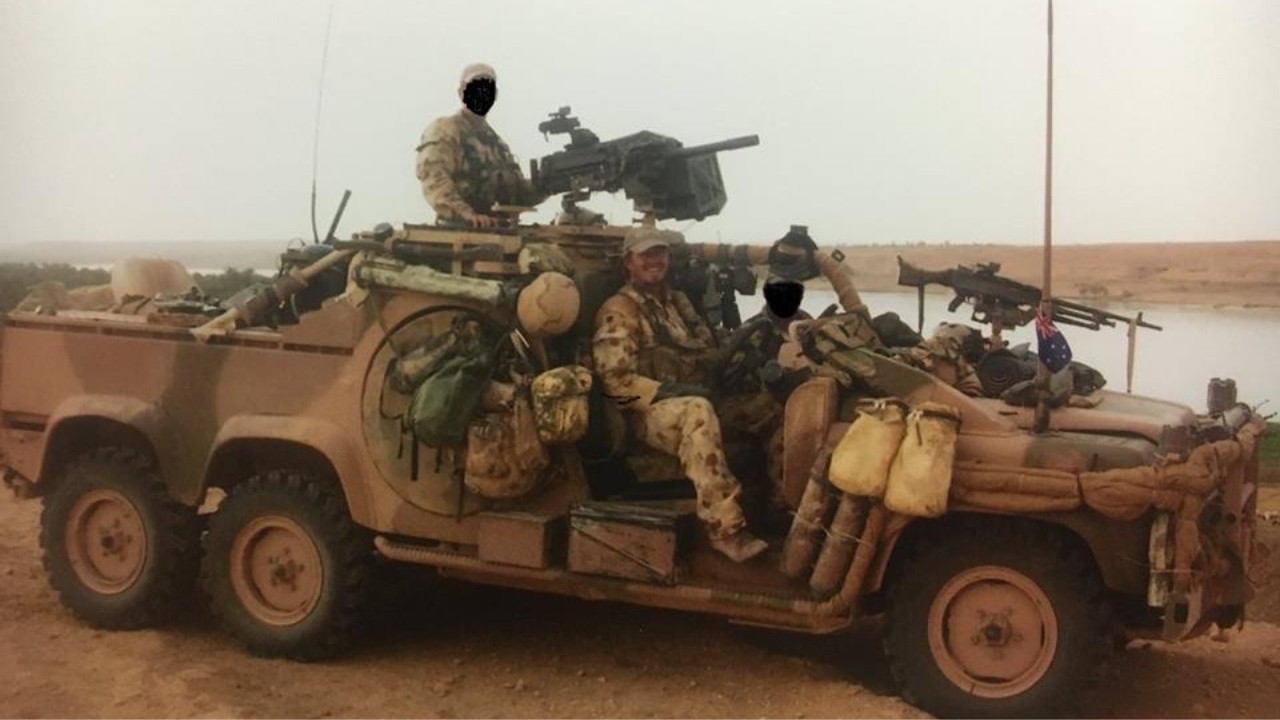
The design went back to the late 1980s. Originally intended for the SASR to patrol the remote interior of Western Australia. Turbocharged Isuzu diesel. Around 365 L of fuel capacity. Real world range north of 1,500 km on a single fill. The central weapons ring took either a .50 caliber Browning or a Mark 19 grenade launcher.
A MAG 58 sat in front of the left-hand seat. A Suzuki 250 cubic centimeters trail bike rode on the rear tailgate for dismounted scouting. Crew of three. Enough fuel, water, ammunition, and rations to keep a patrol running for weeks without any contact with friendly forces. It was, in the simplest terms, a vehicle built to disappear.
That was the part the Americans struggled to get their heads around. US special operations doctrine in 2001 was built on speed strikes. Get in, hit the target, get out. The longest American special operations missions in the post-Vietnam era were measured in days. The Australians at Rhino were measuring theirs in weeks.
The journalist Ian McPhedran, in his history of the SASR’s early operations in Afghanistan, would later write that the Australian-designed LRPVs proved ideal in the harsh Afghan environment because they could stay on patrol for weeks on end without needing to return to base. That wasn’t a sales pitch.
That was the actual capability. And in the winter of 2001, that capability was about to change what the coalition could see in southern Afghanistan. Within days of arrival, the first LRPV patrols were pushing out of Rhino and heading north. Small convoys, four to six vehicles. Night driving for the first leg, every leg. Long silences on the radio.
They kept going, hundreds of kilometers past the last friendly position, past every village the Americans had on their maps, past every spotter network the Taliban had built to watch for coalition movement. The LRPVs went into terrain that no coalition asset had touched. When the Rangers at Rhino asked the Australian command element where the patrols were going, the answer didn’t change.
Out. When they asked when the patrols would be back, the answer didn’t change. When they’re done. The Australians weren’t being rude. They didn’t know. The patrols had the latitude to operate. The orders were broad. The men in the field made the calls. It was a different way of fighting a war. The Rangers were direct action specialists, among the finest light infantry on the planet.
Trained at Fort Benning, drilled in airfield seizure, urban combat, raid operations, and quick reaction force missions. They were very good at what they did, and the 75th Ranger Regiment had spearheaded the ground war in Afghanistan by jumping onto Rhino. They would lead American direct action operations for the next 20 years.
The Australians at Rhino were doing something else entirely. Not kicking doors, watching, measuring, mapping. They were the eyes that would tell other forces where the doors actually were. What the eyes were seeing in November and December of 2001 was reshaping the coalition picture of the south one patrol at a time.
Australian patrols came back with things the satellites had missed. Taliban supply routes the drones hadn’t picked up. Weapons cache locations that human intelligence had only guessed at. They photographed compounds. They counted men. They timed convoys. They listened. Then they refueled, restocked, and went back out.
The cycle was relentless. By the end of December 2001, the Australian element at Rhino had become the coalition’s most productive reconnaissance asset in the south. Nobody outside the base could quite work out how they were doing it. The patrol craft itself was old knowledge dressed up in modern equipment.
The Special Air Service Regiment had been formed in 1957, modeled on the British SAS, based since its founding at Campbell Barracks in Swanbourne, Western Australia. It had inherited a philosophy from the elite reconnaissance work of the Second Australian Imperial Force in the Second World War, the Z Special Unit, the independent companies in New Guinea and Borneo, the commandos who had operated behind Japanese lines across the South Pacific.
The regiment carried that lineage. The motto was “Who dares wins”, shared with the British SAS. The method was patient, lethal, quiet observation. The LRPV was just the modern tool that let the method scale. That patient, quiet method was the part American observers found hardest to copy. US special operations training in 2001 produced operators who could do almost anything.
They could parachute, fast-rope, kick a door, clear a building, extract within minutes. They could fight in cold, heat, jungle, desert. They could do it all very well. What they couldn’t do, at least not yet, was vanish into a country for 3 weeks at a time and come back with a complete intelligence picture of an enemy network.
The Australians could. The reason came down to three things: selection, training, culture. The SASR selection course in Western Australia was among the most punishing in the world. Pass rates in the single digits in some cycles. The men who passed had spent weeks under sustained physical and mental load that broke almost everyone else.
Sleep deprivation, food deprivation, cold. They had been pushed through the bush carrying weight that approached the limits of what the human body could take. They had been interrogated, isolated, tested at every level of personal failure. The ones who came out the other end weren’t just fit, they were patient.
They could endure. They could wait. They could think clearly when every part of them wanted to stop. That capacity to endure was the actual weapon. The vehicles were transport. By January 2002, the Australian patrols out of Rhino were ranging deep into Helmand province and the borderlands of the Registan desert.
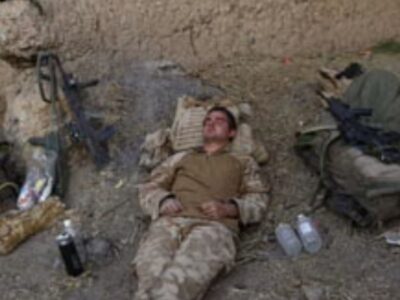
Working in temperatures that dropped to 20 below zero at night. Sleeping beside their vehicles in shallow scrapes covered with desert camouflage. Eating cold rations. Drinking water that had been sitting in jerrycans for days. Communicating in burst transmissions. Sometimes nothing more than a coded position report once every 48 hours.
They went weeks at a time without seeing another coalition asset and they kept finding things. The Australian humor at Rhino was something else the Americans hadn’t expected. The SASR called their officers by first name. They mocked their own commanders openly. They had built a small mess room out of plywood [music] and packing crates and had somehow procured a supply of beer that no American officer could account for.
They were the most informal special operations force any ranger or marine had ever met, and they were ferocious about loyalty. An Australian patrol would walk through fire for any of its members. When the bullets started flying, rank and politics disappeared, and the man on your left and right was the only man who mattered.
The Australians had figured out something it took the Americans longer to learn. Men who could joke under pressure could think under pressure. The humor wasn’t a coping mechanism. It was a tactical asset. That tactical asset was about to be tested by the worst day in the regiment’s modern history. On the 16th of February, 2002, an SASR patrol was operating in the Helmand Valley.
The patrol was mounted in LRPVs, moving across terrain that hadn’t been mapped by coalition forces. The exact mission remains classified. What is known is documented. One of the vehicles struck a land mine. The blast destroyed the LRPV. Two members of the crew were wounded. A third, Sergeant Andrew Russell, was killed. He was 33 years old.
He had a wife and a newborn daughter at home. He died during medical evacuation. He was the first Australian soldier killed in combat since the Vietnam War and the first member of the SASR to die in action since the regiment’s operations in Vietnam more than 30 years earlier. The news traveled through Camp Rhino within hours.
The Australians grieved privately. They held a memorial in their compound. Photographs on a small table. Letters written home. Then they put their kit back on and went out the gate. There was no extended pause in operations, no retraction of patrols. There was a quiet, fierce determination to honor the man by doing the job he had given his life to do.
Within a short time, every remaining LRPV in the squadron was fitted with what the regiment called a survival enhancement kit. Armor plating beneath the vehicle, shock absorbent seats, hardened components designed to give the crew a chance the next time a mine went off. The kit didn’t bring Russell back. It would save lives later in the war.
The Rangers at Rhino watched the Australian response and understood something that day they did not forget. There is a certain kind of professionalism that doesn’t need to be performed. It doesn’t need a speech. It doesn’t need flags or banners or formations. It just continues. The Americans had seen many forms of military discipline.
What they saw at Rhino in the weeks after Andrew Russell’s death was a regiment that had taken its first combat casualty in three decades, mourned him in private, and then walked out the gate the next morning and kept doing the job. That was professionalism in its purest form. That was the moment the American operators at Rhino stopped thinking of the Australians as allies and started thinking of them as peers.
That distinction matters in the special operations community. It is not given easily. It is not given for equipment or budget or branding. It is given for one thing only. Behavior under pressure. The 1 SAS Squadron rotation ended in April 2002. The squadron handed over to 3 Squadron, which served April through August.
2 Squadron followed, August to November. Each rotation continued the long range patrol work, the deep reconnaissance, the steady quiet professionalism that had been established in the first months at Rhino. The LRPVs kept rolling out and rolling back in. The patrols kept producing intelligence. The men kept coming and going through the same dusty gate where six vehicles had rolled in on a cold November morning in 2001.
By December 2002, the initial Australian Special Forces Task Group was withdrawn. Australia kept a very small presence in Afghanistan for the next 2 years. Then in September 2005, the regiment came back. What followed over the next 9 years was one of the longest sustained special operations deployments in the history of the Australian Defense Force.
The SASR served alongside US Rangers, Green Berets, Delta, Seals, British SAS, Polish Grom, New Zealand SAS, Canadian Joint Task Force 2. They operated through every province where the war touched. They lost men. They took medals. Trooper Mark Donaldson received the Victoria Cross for actions at Khaz Oruzgan in September 2008, the first Victoria Cross awarded to an Australian since the Vietnam War.
A second Victoria Cross followed in 2010 for actions at Tizak. The regiment earned a unit citation for its work alongside American forces. It earned a reputation that crossed every coalition force boundary. It paid a price. By the end of operations, 41 Australian soldiers had died in Afghanistan and more than 250 had been wounded.
The regiment came home different. Every regiment that fights a long war comes home different. But the work they had done from those first patrols out of Camp Rhino in November 2001 onward was on the record. The American operators who served alongside them knew it. The British operators knew it. The men who had been on the other side of the gate at Rhino, watching the dust-caked Land Rovers come and go, knew it.
The Australians had walked into Afghanistan as the smallest special operations element on the coalition order of battle. They walked out with one of its largest reputations. The lessons American special operations took from those first months at Rhino weren’t the kind that fit easily into a manual. They weren’t about equipment or technology, although the LRPV did eventually attract serious procurement interest from other forces.
They were about doctrine and culture. The Americans had learned that the patient long-duration patrol wasn’t an obsolete relic of the British SAS in the North African desert. It was a current and lethal capability. They had learned that a small force willing to disappear for 3 weeks could see things a large force could not.
They had learned that endurance was a weapon in its own right. And they had learned that the Australians, with their old Land Rovers and their mismatched uniforms and their plywood mess hall, were operating at a level no amount of money could simply replicate. Some American operators absorbed those lessons and carried them forward into their own careers. Others didn’t.
The ones who did, the ones who came home from Rhino and told the story honestly to their commanders, were the ones who shaped American special operations doctrine over the next decade. Today, the LRPV is mostly retired. The vehicles that rolled out of Camp Rhino in 2001 and 2002 have been replaced by the Bushmaster, the Nary, and other newer platforms.
The survival enhancement kit that was bolted onto every remaining LRPV after Andrew Russell’s death is now standard. His memory lives on at the regiment’s home base, and his daughter, born just before he deployed, is now a grown woman. The men of 1 SAS Squadron who rolled through the wire at Rhino in November 2001 are mostly retired or in senior staff positions.
Some have written a about that winter. Most have not. The regiment, as a matter of culture, does not advertise. The men who did the work do not seek attention for it. That is part of what makes the SASR what it is. The motto is “Who dares wins.” The method is quiet, patient daring. The men who practice it do not need an audience. Camp Rhino itself is gone.
The base was wound down as the war moved into other parts of Afghanistan. The runway the Rangers seized in October 2001 that the Marines turned into a forward operating base that the Australians rolled through on a cold November morning with their dust-caked Land Rovers is mostly desert again. But the work that came out of it, the patrols, the intelligence, the lessons, the casualty taken, and the casualties avoided is permanent.
It’s in the after-action reports. It’s in the doctrine. It’s in the memories of the American operators who watched the Australians come and go. It’s in the regiment’s history, written in the quiet way the regiment prefers, by men who knew exactly what they had done and felt no need to tell anyone about it. If you ever speak to a Ranger who served at Rhino in late 2001 or early 2002, ask him about the Australians.
Most will go quiet for for Then most will smile. Then most will say some version of the same thing. They will tell you that the men who rolled through the gate that morning with their old vehicles and their casual manners and their absurd plywood mess hall were the most professional special operation soldiers they ever served alongside.
They will tell you that the patrols those men did, the distances they covered, the time they spent alone in country were beyond anything the American operators had previously believed possible. They will tell you that the death of Sergeant Andrew Russell hit the Australian compound like a hammer. And that the way the regiment responded the morning after was something they have remembered for the rest of their lives.
They will tell you one more thing. Almost all of them, in some form, will say it. When the Australians showed up at Camp Rhino in the winter of 2001, unannounced and unheralded, looking like a band of dust-bitten farmhands carrying enough firepower to level a village, the American special operations community had no idea what was about to walk in.
By the time the Australians left, the Americans had learned something they would carry with them for the rest of their careers. Being the most powerful force on the battlefield is not the same as being the most lethal. Money buys equipment. Budgets buy training. The kind of patient, quiet, endless professionalism the Australians brought to Rhino comes from somewhere else.
It comes from culture. It comes from history. It comes from a regiment that learned its trade in the jungles of Borneo and the highlands of Vietnam and never forgot what it learned. The Australians didn’t come to Camp Rhino to impress anyone. They came to do a job. They did the job. When the job was done, they went home, and the regiment kept doing what it had always done.
“Who dares wins” is the motto. Quiet, patient daring is the method. And the next time someone tells you the most powerful military force always wins, point them at a dry lake bed in southern Afghanistan in November 2001, and a small Australian patrol that rolled through the wire one cold morning and disappeared into the desert for 11 days, and ask them to explain what those 11 days were worth.
The Americans who were there will tell you. The Australians, in their usual way, won’t. The record is on paper. The patrols are documented. The casualties are remembered. The men who served at Camp Rhino in the winter of 2001 and 2002 are still out there in offices and on farms and in small towns across America and Australia telling the story to anyone who wants to listen.
The story of how a small force with old vehicles and a long memory walked into the war on terror and rewrote a piece of coalition doctrine that no one had thought to question. The story of the Australians at Rhino. The story the official histories don’t always tell, but the men who were there have never forgotten.
>> [clears throat] >> That’s what the Rangers said when the Australians showed up unannounced in Afghanistan in November of 2001. That’s what they still say today.