When A Taliban Ambush Met the Full Fury of the Australian SASR
Trooper W rolled into the Mirabad Valley at 04:31 on a September morning in 2010 and the road ahead had the silence of a place where something was waiting. His thumb was already on the weapon pintle, not because he had decided to put it there, but because 40 patrols in this province had made the gesture automatic.
Somewhere on this stretch of road, a Taliban commander who had been watching this exact patrol route for 3 weeks had buried his kill ground. Right now, the only question that mattered was whether Trooper W had noticed it first. Taliban ambush tactics in Uruzgan had evolved to the point where prepared positions regularly produced coalition casualties.
That pattern was not luck. It was the product of a system someone had built deliberately over years of watching how coalition forces responded when things went wrong. Taliban fighters in Uruzgan had spent years studying how coalition soldiers moved, how they spaced their vehicles, how long it took them to respond when something went wrong.
They watched lead vehicles stop after a blast. They watched men climb out and push into cover. They counted the minutes between first contact and first helicopter. By 2010, that study had produced an ambush doctrine that turned the predictable responses of conventional forces into a weapon. Then they built their entire system around everything they had seen.
By 2010, Australia had around 1,550 soldiers serving in Afghanistan. It was the biggest commitment the country had made to a war since Vietnam. The center of that effort was Uruzgan province, a stretch of mountains and dry valleys in the south where the Taliban had been fighting coalition forces since 2001 and where Australia’s Special Air Service Regiment had been running sustained Uruzgan operations since 2005.
Five years on this ground. Five years of learning which roads were watched, which ridgelines had been used before, which compounds kept lights burning through the night for no clear reason. The SASR knew this province the way a man knows a room he had slept in for years. Every shadow in its right place. Every wrong shadow noticed.
The Taliban had been learning, too. In 2006, fighters in the Mirabad Valley would hit patrols from 500 m and pull back the moment the return fire got organized. By 2008, they were holding under 300 m and staying through the initial response. By 2010, they were closing to 180 m, holding under direct fire, and only breaking contact when a prearranged signal told them to.
Not when the pressure told them to. Someone had taught them patience. Someone had taught them to hold through the part that was supposed to make them run. The kill ground for this particular morning had taken 3 weeks to build. A command-detonated charge buried in the road surface at the narrowest point of the valley approach, set beneath a stretch of track the patrol had used twice in recent weeks.
RPG teams on the northern high ground. Their shot angles worked out in advance for a vehicle sitting still at 180 m. A PKM machine gun on the southeast ridge to cover the full length of the channel below. A blocking force watching the most likely withdrawal route to the rear. 12 to 15 fighters in total, each with one assigned task.
Each task timed to follow the one before it. The Taliban commander who had built this was not careless. He had run six ambushes in Uruzgan in the two years before this morning. Four of them had put coalition soldiers in hospital or in the ground. He had never targeted the SASR before. The patrol that rolled out of Camp Russell that morning was small and fast.
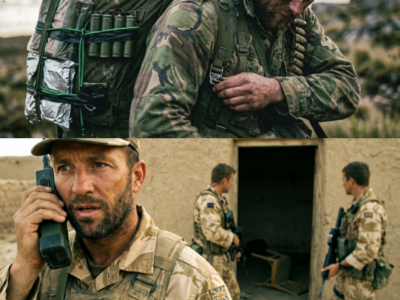
Two long-range patrol vehicles, each carrying a vehicle-mounted MAG 58 machine gun and a .50 caliber heavy weapon, six operators between them with communications capable of putting an air asset on target inside 4 minutes. Their job was a pre-dawn movement to a target compound further up the valley. The route was the direct one, the quick one, the route that put them at the compound before the sky got light.
Before they left, the patrol commander, Sergeant M, had gone through the intelligence brief with his men. Elevated activity in the Mirabad Valley, nothing confirmed. No threat with a name attached to it, just a pattern the analysts had noticed and flagged. One of his men had asked whether they should use the longer route.
Sergeant M looked at the map. The alternative added 40 minutes and put them at the compound after sunrise. He weighed unconfirmed intelligence against a mission with a hard timing requirement, chose the risk he could measure, and gave the order to mount up. The patrol moved out under a sky that had not yet decided to become morning.
In the lead vehicle, Trooper W watched the road. He had been awake since 0230, the same start time as every pre-dawn patrol in this province, and his body had learned to function in that before-light window the way it had learned most things out here. Not through choice, but through repetition. The ditch line at the bend ahead was wrong.
Nothing he could name, nothing concrete enough to put into a report. Just the wrongness of ground that has been touched by someone who did not want the touching noticed. His hand rested on the weapon. He kept his eyes on the bend and said [music] nothing. Three weeks before the ambush, Captain R sat in the operations center at Camp Russell in Tarin Kow and read through 6 months of contact reports.
It was late and the operations center was quiet, and he had a cold cup of tea he had forgotten about sitting next to the stack. He was not looking for individual engagements. He was looking for a line, a progression, the kind of slow change that does not show up in any single report, but becomes obvious when you lay them all out and read them in order.
He found it in the first hour. In early 2006, Taliban fighters in Uruzgan had initiated contacts from 500 m and broken contact within 90 seconds of return fire. By late 2008, the initiation range had dropped to under 300 m, and the holding time had stretched to 4 minutes. The most recent reports described fighters closing to 180 m, sustaining fire through the initial response, and withdrawing only when a commander’s signal released them.
Not when the pressure became too much. When the plan told them to. Captain R underlined the initiation ranges in three separate reports and set them side by side on the desk. The numbers told a story about a force that had stopped reacting and started planning. What Captain R was reading had taken 5 years to build.
The Taliban in Uruzgan had watched coalition forces long enough to understand exactly how a conventional patrol responded to an ambush. The lead vehicle would stop. The soldiers would dismount and push into cover. The section commander would radio for support. The patrol would hold its position and wait for either reinforcement or air cover before attempting to move.
Every step in that sequence was predictable. Every step could be planned for. The Taliban had built a doctrine around those steps, and by 2010, it was producing casualties at a rate that made every patrol route in the Mirabad Valley a known risk the moment it was used more than once. Captain R set the final report on the desk and looked at the numbers for a long time.
He knew what the Taliban had built. What troubled him was the gap in their research. They had never studied the SASR. Eight months before the September patrol, a troop sergeant stood at the edge of a training ground at Campbell Barracks in Swanbourne, Western Australia, and watched a simulated ambush play out for the third time that morning.
The exercise was straightforward. A vehicle patrol hits a scripted initiation point, takes simulated fire from two directions, and responds. Every other unit in the Australian Army trained to halt, dismount, find cover, and suppress. The troop sergeant watched his men do none of those things. The vehicles accelerated, both of them, into the kill zone, weapons firing in all directions simultaneously, closing the distance to the simulated firing positions, rather than opening it.
The drill had its roots in SAS operations in Malaya and Borneo in the 1960s, where patrols had learned that a kill ground was only lethal for the side that stood still inside it. Movement destroyed the geometry the ambush had been built around. It pulled the target out of the arc the machine guns were covering and gave the initiative back to the patrol.
The troop sergeant ran the exercise again. He said nothing about the theory. He just ran it until the response was no longer a decision, until it lived in the hands and the feet and not in the part of the brain that needed to think first. On the other side of the world, during that same preparation period, the Taliban commander walked the kill ground alone one night.
He checked the IED burial point at the bend in the road, pressing the soil with his boot to confirm the surface had settled evenly. He walked the arc of fire from the southeast ridge, counting his paces from the PKM position to the nearest cover point. He stood at the northern RPG team’s position and looked down the slope at the road below, judging the angle, confirming the range.
A vehicle sitting at the bend after the IED fired would be approximately 180 m from this position. He had run this calculation four times. The number held. He had been told that Australian special forces move differently from the regular coalition units. He had been given no further detail than that and he had not pressed for it.
He had run six ambushes in this province. He pressed the soil one last time with the toe of his boot, turned, and walked back into the valley. He trusted what he knew. Back at Camp Russell, on the morning of the patrol, Sergeant M finished his briefing and looked at his men. He had covered the route, the timing, the vehicle spacing, the KS asset that would be on station before the patrol reached the valley, and the intelligence flag about elevated activity in the Mirabad Valley.
One of his men asked about an alternate route. Sergeant M looked at the map one more time. The alternate route added 40 [music] minutes. The compound needed to be reached before first light. He closed the map case and told his men to mount [music] up. The patrol moved out. The kill ground was waiting.
Only one side knew what kind of men were coming for it. The IED fired at 04:47. At the bend in the road, a command detonated charge buried in the surface detonated with a pressure wave that Trooper W felt in his chest before he heard anything at all. The front of the lead vehicle lifted. Dust and rock and road surface came up in a column that blocked everything ahead for a full second.
The radio cut out. His ears stopped working the way ears are supposed to work. The world became a high ringing tone and a cloud of brown dust and the feeling of a vehicle that has just had its front axle cracked by a buried explosive. For a single moment, there was just the dust and the ringing and the weight of the weapon still under his hand.
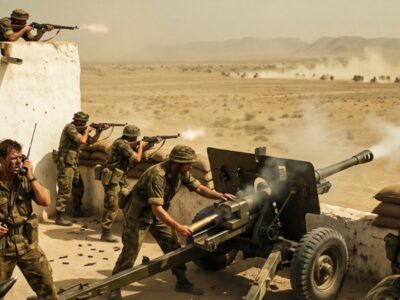
Then training took over. The Taliban’s plan ran perfectly for the first 30 seconds. The IED had fired. The lead vehicle was stopped. Within 4 seconds of the blast, the RPG team on the northern ridge initiated. The PKM on the southeast ridge opened up. The kill zone was fully active. 12 to 15 fighters on two ridgelines, 180 m to the north and 220 m to the southeast, pouring fire into a narrow valley channel at a vehicle sitting still in the exact position the Taliban commander had calculated it would sit. His preparation
had produced a textbook result. The geometry was correct. The ranges were correct. The timing was correct. Then the lead vehicle moved. Not backward, forward. The drill the troop sergeant had run over and over at Swornborn until it stopped being a decision and became a reflex was executing itself now in the dark of the Mirabad Valley.
The vehicle had a cracked front axle and two blown front tires and it was moving forward into the kill zone at speed. The MAG 58 on the pintle firing toward the northern ridge, the dust still hanging in the air from the blast. The RPG team’s pre-calculated shot angle already wrong because the target was no longer sitting at 180 m.
The first RPG round detonated behind the vehicle and to the left. The Taliban commander had calculated his shot for a stationary target. The target was not stationary. The second vehicle was already moving to flank. On the southeast ridge, the Konar fighter had been lying on bare rock since 0200 and Daja. 3 hours in the September cold.
The ground pressing against his ribs, the valley floor below him empty and black. He had stayed awake by running his task through his head again and again. Wait for the vehicles to halt. When the lead vehicle stopped after the IED, open fire. The halt was his trigger. Everything was built around that halt. He had been in five ambushes before this morning, and in every one of them, the coalition vehicles had stopped.
That was what vehicles did when a bomb went off under the front axle. They stopped. He watched the IED fire. He watched the dust column rise. He began to press the trigger. The vehicle did not stop. The Kounar fighter was not losing a firefight in that moment. He was staring at the collapse of the one thing the whole ambush had been built on.
All that preparation, all the cold nights on that ridge, all the calculations about range and timing had been built around a vehicle that would be sitting still below him. What was coming toward him now had been trained to behave like something else entirely. The PKM opened fire, but the geometry was already broken.
The vehicle was eating the ground between them. The angle was wrong, and the MAG 58 on the pintle was finding the ridge. The second vehicle crossed to the southeast, its own weapon covering the PKM arc. Two operators dismounted under the cover of their vehicle’s fire and pushed the flank on foot. Rehearsed. Automatic.
The Taliban blocking force positioned on the withdrawal route to the rear never received its trigger. The patrol had not moved backward. There was no withdrawal to block. The blocking force was prepared for an enemy in retreat. That enemy did not exist in the Mirabad Valley that morning. What came out of that valley was not a patrol that had survived an ambush.
It was the full fury of five years of SASR training releasing itself in 11 minutes. Controlled, predecided, already in motion before fear had any chance to weigh in. Sergeant M had the radio in his hand. The CAS asset, a US Army Apache, had been loitering at altitude since before the patrol left Camp Russell.
It had the valley on its sensors. It had watched the IED initiate. Sergeant M gave the grid reference and four words, “Contact, wait out.” His voice carried nothing extra. The Apache acknowledged. 11 minutes after the IED fired, the question was no longer whether the ambush had failed. The question was how completely. The Apache had been watching the valley for 90 minutes before the IED fired.
The US Army AH-64 out of Kandahar [music] had been loitering at altitude in the dark above the Mirabad Valley since before the SASR patrol left Camp Russell, its sensors covering the patrol route below. The pilot had the two vehicles on his screen the entire way in. He watched the IED initiate. He watched the dust column rise and the lead vehicle push forward into the kill zone.
He was already identifying the northern ridge firing position by muzzle flash when Sergeant M’s call came through. He had the target. He had the angle. He was waiting for one thing. That one thing sat with Corporal F. Corporal F was the forward air controller attached to the Australian task force working the targeting link between the Apache and the patrol on the ground.
He had the Apache sensor feed on his screen and Sergeant M’s grid reference in his ear and a single number running through his head that had nothing to do with either of them. The distance between the nearest SASR operator on the ground and the northern ridge target was inside the declared minimum safe distance for the weapon load the Apache was carrying.
Corporal F knew exactly what that number meant. He knew the deviation risk on the ground. He knew what happened to a man on the ground if the impact point shifted by the wrong margin in the wrong direction. He also knew that the northern ridge RPG team had been firing for over 3 minutes and that if it kept firing for another 60 seconds, the probability of SASR casualties past the point where the margin worked the other way.
He had approximately 8 seconds to make the call. The Apache pilot waited. Sergeant M waited. The northern ridge kept firing. Corporal F cleared the strike. [music] The Taliban commander had mapped every variable of this ambush. He had planned for the IED. He had planned for the RPG teams.
He had planned for the PKM and the blocking force and the withdrawal route and the timing. He had not planned for a forward air controller making a danger close call in the dark with 8 seconds on the clock. He had not planned for air support already on station before his ambush even initiated. He had built his trap for an enemy that waited for help to arrive safely.
That was not what had arrived. The Apache engaged the northern ridge position. The hellfire came in from an angle the RPG team’s position had not been built to defend against. The effect on the ridge was immediate and absolute. Secondary detonations followed within seconds. RPG rounds cooking off in the heat of the strike.
A chain of smaller blasts rolling along the rock face above the valley floor. Then silence on the northern arc. Total and sudden silence where 3 minutes of continuous fire had been. On the valley floor, Sergeant M did not pause. The moment the northern ridge went quiet, the ground element was already moving southeast.
The PKM on the far ridge had been firing for over 4 minutes. It was the last active position and it was Trooper W’s. The second vehicle drove a hard line to the southeast to put its weapons between the PKM position and the dismounted operators. Trooper W moved on foot from 40 m out using the vehicle’s suppressing fire as cover pushing to the ridge in short controlled movements.
The angles were tight. The light was still low and gray. At 20 m the suppressing fire shifted and Trooper W closed the last distance to the PKM position. The Konar fighter [music] who had lain on that ridge since 0200 worked waiting for vehicles to stop in the valley below did not get the ending his Taliban commander had promised him.
The last shot in the Mirabad Valley fired at 04.58. 11 minutes after the IED initiated the SASR patrol held both ridgelines. The valley was silent. The kill ground built across those preceding weeks was now controlled by the six men it had been designed to kill. Sergeant M reported the patrol status, noted the vehicle loss, and began the process of securing the position and calling for recovery.
He did it in the same voice he had used to call in the strike. Nothing in it that did not need to be there. The valley was quiet enough now that Trooper W could hear the metal of the disabled lead vehicle ticking [music] as it cooled. He sat on the hole with his back against the weapon mount and pulled a ration from his chest rig.
The vehicle’s front end had been pushed sideways by the blast. The axle cracked clean. Both front tires shredded down to the rim. The road around the IED point was cratered and dark. Somewhere above him on the northern ridge the secondary detonations had stopped. The only sounds left in the Mirabad Valley were the wind coming down off the high ground and the low voices of the patrol doing the work that came after a contact.
He opened the ration and ate it cold. He was not thinking about what had just happened. He was thinking about the ditch line at the bend. He had noticed it on the way in. That wrongness in the ground that his hands had responded to before his brain had caught up. He was trying to work out exactly when he had noticed it and whether 30 seconds earlier would have changed anything.
He was running the geometry of the PKM position in his head, checking whether his initial read of the arc of fire had been accurate, whether there had been a secondary position he had missed in the movement to clear. He pulled a small notebook from his kit and started writing. Not a formal report, just the things he wanted to get onto paper before the contact washed out the details.
Range estimates, timing, the angle of the first RPG round as it detonated behind the vehicle. He wrote in short, clipped sentences and ate the rest of the ration while the pen moved. There was nothing dramatic about any of it. That was the point. The patrol’s casualty state was this: no fatalities. One operator had taken a shrapnel fragment to the forearm during the southeast clearance, the wound cleaned and dressed on site, the arm functional.
One operator had blast-related hearing damage from the IED initiation, the kind that came with a high ringing tone and muffled voices, and the need to watch a man’s face when he spoke. Both men were standing. Both were on the ground with the rest of the patrol, securing the position and preparing the disabled vehicle for recovery.
Neither had said much about their injuries. There was nothing much to say. The second vehicle was undamaged and operational. Recovery had been called. The weapons and equipment recovered from the two ridgeline positions told the rest of the story. One PKM heavy machine gun, four RPG launchers, multiple AK platform rifles, resources that took time and effort to move into position and could not simply be replaced before the next operation.
The fighters the Taliban commander had assigned to those positions had had experienced enough to hold under direct fire and trained enough to execute coordinated initiation on a timed signal. They would not be replaced quickly, either. At Camp Russell in Tarin Kowt, the operations officer received Sergeant M’s contact report and read it twice.
Grid reference, personnel count, casualty state, enemy assessment, vehicle status, current position. The language in the report was the same bare functional language Sergeant M had used on the radio during the contact itself. Nothing in it reached for drama or emphasis. The operations officer added one word to the log next to the report’s timestamp and moved on to the next item on his board. The word was successful.
The RPG teams had calculated their shots for stationary vehicles. The vehicles had not been stationary. The CAS asset was on station before the ambush initiated, not responding from a distant base after a radio call. The time gap the Taliban commander had built his entire plan around had not existed on this morning.
A forward air controller had made a danger close call in 8 seconds that the ambush plan had never modeled as a possible move. And the Taliban commander who had spent those weeks studying coalition patrol behavior in Uruzgan province had not been studying the right patrols. Every variable he had prepared for was the wrong variable.
Every one. Through the Taliban network in Uruzgan province, word of the failed ambush moved fast. The detail that circulated in the hours after the contact was not about the Apache strike. It was not about the weapons lost or the fighters killed. It was about the vehicles. The thing that passed through the network and stayed there was the fact that when the IED fired, the vehicles had driven forward, not back.
Forward into the fire, toward the positions. That one detail did not fit the picture the Taliban had built for understanding how coalition forces behaved under contact. And the things that do not fit a picture tend to stay in the mind longer than the things that do. If you want to understand what the SASR’s Afghanistan campaign looked like at the level of the men who actually fought it, what it cost them to be this good for this long, on this ground, the next video in this series goes directly there.
Subscribe so you do not miss it. Trooper W finished his notes, closed the notebook, and put it back in his kit. The recovery vehicle was 40 minutes out. He settled back against the weapon mount and watched the ridgeline above the southeast position until it arrived. Something had shifted in Uruzgan province by the end of 2010, and it showed up the way these changes always do.
Not in a single event, but in a pattern of small adjustments that only became visible when analysts laid six months of data side by side and looked for the line. In the period following the September contact and engagements like it, Australian Defense Force assessments >> [music] >> and parliamentary committee testimony from 2011 and 2012 documented a change in Taliban targeting across certain sectors of Uruzgan province.
SASR vehicle patrols became lower priority ambush targets in areas where Taliban cells had previously committed significant resources to preparing complex kill grounds. A Taliban cell that put weeks into building an ambush and then lost its fighters, its weapons, and its kill ground without producing a single coalition fatality had consumed resources Uruzgan province could not easily replace.
The warning that moved through the Taliban network after the Mirabad Valley contact was not about the Apache, and not about the armor, and not about the weapons. It was about the patrols that drove toward the fire. Those patrols were no longer worth the cost of the preparation. The Taliban’s ambush campaign in Uruzgan did not stop.
That was never how it worked. Taliban commanders had been absorbing setbacks since 2001 and adjusting each time, and they were patient in a way that conventional military thinking often failed to account for. The fighting continued through 2011 and 2012 with the same intensity that had defined every year before it.
Australian patrols kept taking risks. Taliban fighters kept preparing kill grounds. The valley kept its teeth. But the men Australia was putting into it had built something the Taliban study had not anticipated, and that built thing cost the Taliban every time they ran into it. By 2010, Australia’s commitment had reached approximately 1,550 personnel in Afghanistan, the largest deployment since Vietnam.
And the weight of that commitment sat most heavily on the SASR troopers rotating through Uruzgan on back-to-back deployments. Between 2005 and the beginning of the drawdown in 2013, the regiment conducted what Australian Defense Force records describe as hundreds of significant operations in the province. The Mirabad Valley engagement was not singular.
It was one instance of a pattern that had developed across 5 years on the same ground against the same enemy by men who had learned this province the way a farmer learns a field. 41 Australians did not come home from that war. The men who did carry the weight of those names alongside everything else. And that weight did not disappear because the operations had ended.
The assessment from outside Australia reflected what those years had produced. Open-source accounts from this period, including testimony from senior US commanders and allied veterans who served alongside Australian forces consistently placed SASR operators among the most effective special forces units in the coalition.
The vehicle mounted patrol tactics developed and refined in Uruzgan were noted as a model worth studying. That recognition carried weight because the people giving it had their own hard-built standards and nothing to gain from generosity. It was not diplomatic language. It was professional assessment from people who understood exactly what they were looking at.
British SAS veterans who served alongside the SASR in Afghanistan gave accounts in the years after the withdrawal that were more direct than any official evaluation. These were men with their own institutional pride and hard-built standards. Men who did not reach for words like excellent lightly because they knew exactly what excellent cost.
The accounts they gave of watching SASR operators work under contact used language that SAS veterans reserved for peers, not allies, not partners. Peers. One member of the September 2010 patrol was later recognized for his actions that morning. The medal for gallantry awarded to SASR operators for operations in Uruzgan province during this period carries a citation written in the same language operators use to describe their own work. Not reach for, not attempt.
Did. The language of men who went to a place and did what was required and came back and did not make a large thing of it. Trooper W went home to Western Australia in late 2010 and started preparing for the next rotation before the jet lag had cleared. That was how the cycle ran for SASR operators in the Afghanistan years.
The gap between rotations was not long enough to forget the province and not short enough to feel like a real break from it. By 2010, Trooper W was on his third deployment to Uruzgan. He knew the Mirabad Valley by its light at different times of day. He knew which compounds in the villages along the approach road had dogs that barked at movement and which ones had gone quiet.
He had the kind of knowledge about a piece of ground that only comes from walking it over and over again until it stops being a map and starts being a place you know the way you know the streets near your own house. That knowledge was the product of years of rotations. The cost of building it was years of rotations. The two things could not be separated.
What accumulated across those years was not breakdown and not dysfunction. Something quieter than that and harder to put down. A Senate committee examining veteran welfare in 2011 and 2012 heard evidence about the pressure placed on special forces personnel who rotated through the same high-demand environment on tight cycles.
Men who were at the top of their profession and personally carrying things they had nowhere to leave. Trooper W went back to Uruzgan. He did his job. He came home again. He noted in his small notebook the things worth noting and kept the rest of it where it did not interfere with the work. That discipline was the same discipline that had moved his hand to the weapon pintle before his brain had caught up.
It did not switch off when the boots came off. Corporal F finished his rotation and returned to a base posting where the work was slower and the decisions were smaller. After the withdrawal, forward air controllers gave accounts to researchers and journalists about what danger close calls felt like from the inside.
They described them as arithmetic. A number on one side and a number on the other and a time limit that did not allow for anything except the calculation. Corporal F had run the calculation correctly. The men on the ground had come home. The arithmetic had worked. That did not mean he stopped running it. Veterans who had made danger close calls during the Afghanistan campaign described going back to the numbers in quiet moments years later, checking them again.
Not because they doubted the outcome, but because the weight of what the numbers represented did not stop being heavy once the correct answer had been confirmed. The answer was right. The weight stayed anyway. Three months after the Mirabad Valley contact, a coalition element operating further north in Uruzgan hit a compound tied to the Taliban’s ambush network in the valley.
The commander who had built the Mirabad kill ground was not in it. His trail went cold at the Pakistan border. In the years that followed, SASR and coalition forces dismantled the network piece by piece, killing some, capturing others, watching the rest go quiet and wait. After August 2021, when the Taliban retook Kabul and the coalition closed its last bases, some of those men came back to the positions they had held before the war.
The man who had spent those weeks studying coalition patrol behavior in the Mirabad Valley and chose to study the wrong patrols was somewhere in that number. History did not give him a clean ending. It rarely does. It just keeps running forward, and the men who shaped it keep running with it.
And the valley holds the silence it had on the morning before it stopped being a kill ground. The partners of SASR operators during the Afghanistan years lived inside a particular kind of silence. The communication rules that governed SASR deployments meant that the absence of a phone call was not necessarily alarming, and a phone call was not necessarily reassuring.
When something significant happened in Uruzgan province, the families in Swanbourne often learned about it through a pattern of changed silences and delayed contact rather than through direct information. The accounts SASR partners gave from this period describe the skill of reading absence. Knowing that no news arriving on schedule meant something different from no news arriving off schedule.
Building a life around a gap in the room that had a person’s shape. 41 Australian service members were killed in Afghanistan between 2001 and 2014. Sergeant Blaine Diddams, an SASR operator, was killed in Uruzgan province in July 2012. Private Robert Poate was killed in Uruzgan province in August 2012. Sergeant Brett Wood, second commander regiment, was killed in Helmand province in May 2011.
These men and the 38 others whose names are on the wall at the Australian War Memorial in Canberra are the reason this story cannot be told only as a story about what the SASR did right. They went to the same country on the same kinds of patrols in the same conditions. The difference between a morning that ended with a ration eaten cold on the hull of a damaged vehicle and a morning that ended differently was not always skill or preparation or doctrine.
Sometimes it was the ground beneath the road and the placement of a charge and the half second difference between a trigger pressed and a trigger not pressed. Trooper W knew that. Every man who came home knew that. They carried it alongside everything else and did not make a large thing of it because the men who did not come home deserved better than to be used as weight for someone else’s story.
The Australian War Memorial in Canberra holds the names of those Australians who did not come home from Afghanistan. It holds uniforms and photographs and the kind of objects that outlast the people they belong to and carry their weight forward to people who never met them. What no memorial can hold is what those years built in and men who went and came back.
Not what it cost them, what it made them. Those are different things and the difference matters. The SASR that came out of the Uruzgan years was an institution tested against a determined and adaptive enemy on the same ground for nearly a decade. The pace of operations was relentless. The back-to-back rotations demanded something that did not have an easy name.
Being the most capable unit in a province that required that capability constantly over years on ground that did not become familiar without also becoming personal. All of it produced something harder to measure than skill and harder to set down once it had been acquired. The Australian public, which supported the commitment in its early years and grew tired of it by the end, has not always sat with what those years produced for as long as the truth deserves.
In the years following the coalition withdrawal, researchers and journalists interviewed Taliban commanders who had operated in Uruzgan province during the war. The accounts came from different sources, men who had no contact with each other after the war ended, and they used language that aligned closely enough across sources to carry weight.
The description that appeared across multiple accounts was that Australian special forces behaved in a way that did not fit what Taliban commanders expected from coalition forces. Fighters who drove toward fire. Patrols that arrived with air support already in position rather than calling for it after the contact began.
The Taliban commanders who said this were not offering respect. They were describing the experience of watching the model they had built collapse beneath them at the moment it mattered most. They had studied coalition forces in Uruzgan carefully and drawn accurate conclusions. And none of those conclusions applied to the men in the Mirabad Valley on a September morning in 2010.
The ambush had been built for a certain kind of enemy. The wrong enemy had shown up. That is the answer the story has been carrying since the first sentence. The Taliban walked into the worst morning of its operational life because it had done its homework thoroughly and completely on the wrong subject. Preparation built around a false assumption does not become less dangerous when the assumption fails.
It becomes more dangerous because the men executing the plan have no way to deal with the world in which the central idea does not hold. The corner fighter on the southeast ridge pressing his trigger for a vehicle that was supposed to be stationary was not under prepared. He was precisely prepared for something that was not there.
By 2015, Trooper W had left the regiment following the pattern of operators who had given the Uruzgan years what those years demanded and found that the demand had taken something that did not grow back on the same schedule as everything else. In an account that reflects the experience of multiple SASR veterans from this period, a trooper was asked what stayed with him from the province.
Not the contacts, not the operations. He described the two seconds between the last shot and the first radio call. The moment after the noise stopped and before the professional process started again, the weapons check, the casualty count, the grid reference, the voice reporting status to the operation center.
Two seconds of silence in a valley that had been trying to kill him. He said he still measured certain things in that unit. Not because the memory was bad, because those two seconds were the clearest he had ever felt in his life. And the clarity had never entirely left him and he did not think he would have traded it even if he could.
Trooper W understood what those two seconds meant. He had earned them on a cracked axle vehicle in the Mirabad Valley before the sun came up and they were his and he kept them.