Why Japanese Commanders Couldn’t Explain How Australian Militia Held Kokoda Against Veteran D
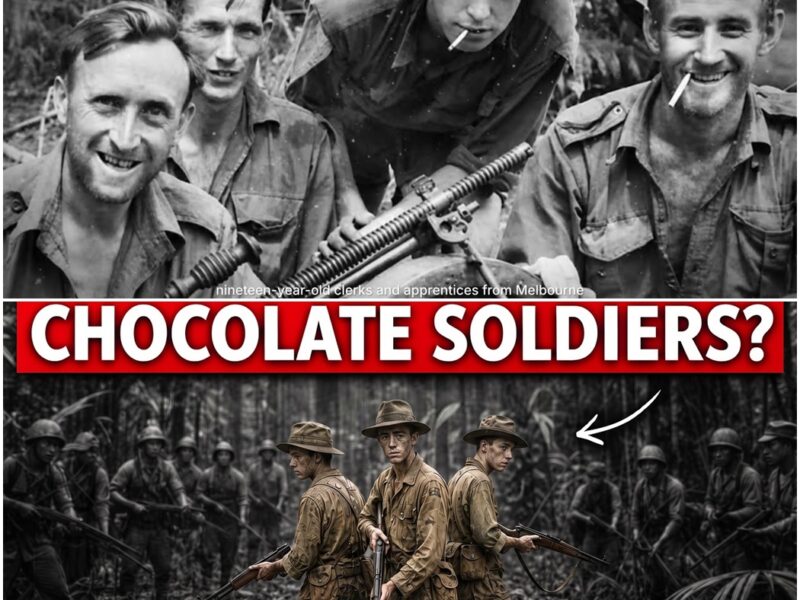
Their own army called them chocolate soldiers. Chacos because chocolate melts. And these were 19-year-old clerks and apprentices from Melbourne suburbs carrying rifles built for a war that had ended before most of them were born. The Japanese officers fighting them at Cota Village counted the Australian force in front of them at 1,200 men.
There were 77. That figure comes out of Japanese unit records. It wasn’t propaganda and it wasn’t panic. It was an assessment written by professionals and Major General Tomataroh’s staff kept producing assessments like it for weeks. So, how does a competent headquarters get the arithmetic wrong by a factor of 16 and keep getting it wrong? The men who made that mistake were not fools.
They were reading the evidence in front of them. The evidence had been arranged. The 39th Australian Infantry Battalion was raised in a hurry in 1941 out of Victorian militia elements and the militia could not be compelled to serve overseas. That single legal fact is where the contempt came from.
The regulars of the AIF, the volunteers who had fought in North Africa and Syria, called them choos koalas, not to be exported, not to be shot at. The nickname is usually credited to the AIF, though nobody can point to who said it first, which is often how the crulest labels work.
The kit followed the label. The best equipment went to the men doing the real fighting overseas. What reached the 39th in Port Moresby was leftover stock, some of it two decades old. They had been sent north as a garrison, a token, a gesture toward defending a territory nobody in Canberra seriously expected to be attacked on the ground.
In June 1942, they were ordered up the track. There is a photograph that isn’t a photograph, only a thing survivors described. Young men in shorts filing past veterans coming the other way and the veterans looking through them. Not hostile, just uninterested. You do not study the faces of men you have already written off.
8 days walk ahead of them was a plantation air strip at a place called Cota which almost nobody in Australia could have found on a map. Nobody had told these men what they were actually being asked to do there. On 21st July 1942, Japanese forces began landing near Giohna and Buna on the north coast.
What came ashore was not a garrison. Horayai Southeast Seas Detachment, the Nankai Chitai, was built around the 144th Infantry Regiment and the 41st, both regiments of seasoned troops. The 41st had fought Australians in Malaya and beaten them. They brought mountain artillery over the beach. Their objective was Port Moresby, and the road to it ran across the Owen Stanley Range on a single footpath.
Each Japanese soldier started that march carrying 16 days rations. Remember that number. The campaign would last four months. The stakes on both sides were symmetrical and brutally simple. If the Chacos were what everyone said they were, the track opened and Morsesby was a week’s marching away.
If they weren’t, the Japanese were about to walk a veteran regiment into a mountain range with two weeks of rice. The first clashes came at Aala and Gerrari in late July. B Company of the 39th was commanded by Captain Sam Templeton, the battalion’s only officer who had served in the First World War, which is why boys, 18 years his junior, called him Uncle Sam.
Men remembered his hand coming down over a rock face to haul them up, or his taking a rifle off a struggling 19-year-old and carrying it to the top of the climb himself. On the 26th of July at OEV, with his position surrounded, Templeton walked to the rear of the perimeter around 5 in the afternoon to check the line.
That is the last verified sentence anyone can write about Sam Templeton. He was apparently captured and killed. His body was never found. The same night, a Papuan police constable named Lance Corporal Senopa found a creek bed that ran out through the Japanese lines and led two surrounded platoon along it in the dark all the way back toward Deniki. Hold that name.
It will matter later and it barely appears in the official record. So, a shattered company, a missing commander, boys walking out through jungle at night on the Japanese side of the hill. The report being written described a substantial and organized enemy force. Both of those things were true. That’s the problem.
The rest of this is going to take a part. Start with the ground because the ground did most of the arithmetic. There is a persistent story that the Japanese blundered into the Owen Stanley’s expecting a road. That story is a myth and it’s worth killing here. The Imperial Japanese Army’s intelligence report on Papua was written by Major Toyuku Tetssuo, who had sailed into Port Moresby in March 1941, disguised as a member of a ship’s crew, bought maps, walked the town, and established that no road crossed the range. He carried that report into the campaign as the detachment’s intelligence officer, and he was wounded at Isarava. The claim that the Japanese thought they were driving to Morsby survives only in the diaries of junior soldiers repeating rumor. Their commanders knew exactly what the country was. Knowing it and solving it are
different problems. The track runs along the spines of ridges. On both sides, the ground falls away. In many places, two men cannot walk a breast, which means the fighting frontage, the width across which anyone can actually shoot, is measured in meters. Think about what that does to a regiment.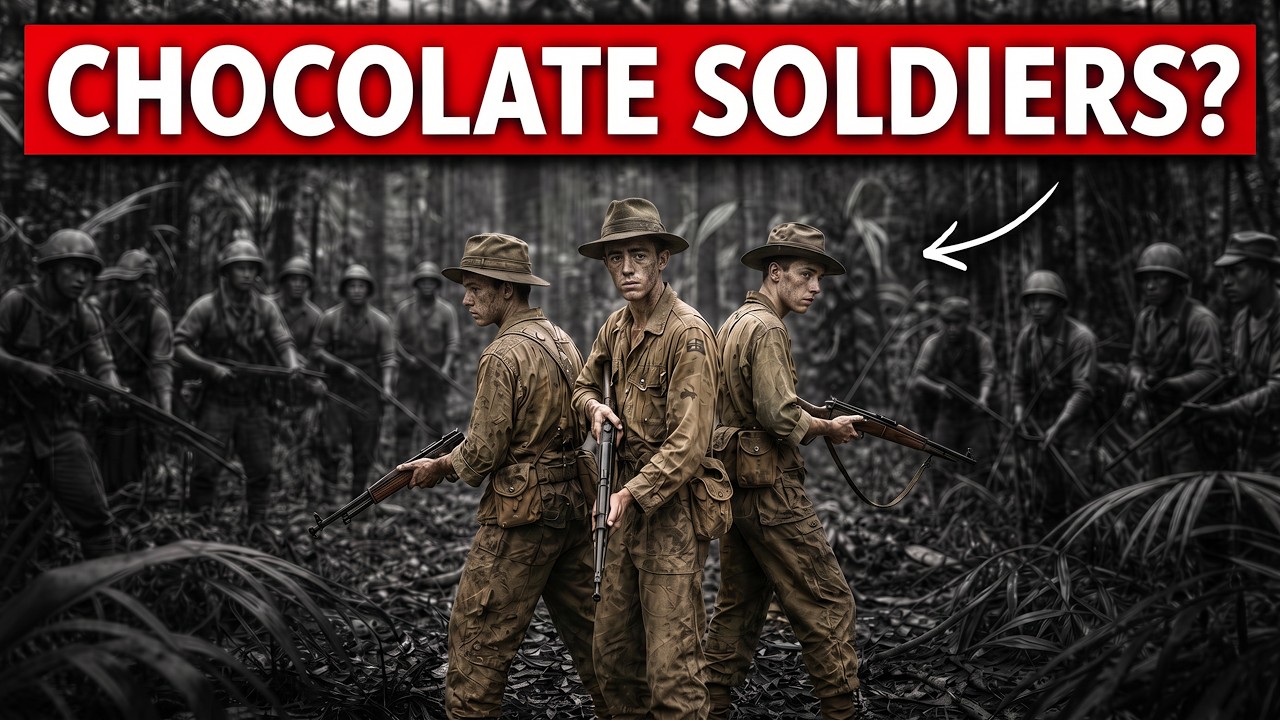
Numbers on a strength return are a promise about the future. On a 2 m front, they are irrelevant. Hori could have 5,000 men on that track and still only bring a platoon into contact at any given moment. The rest are queued behind, standing in mud in the half dark under the canopy, waiting for reasons nobody forward will explain to them.
And terrain is the only ally that never has to be fed or resupplied. Every Australian position on that path forced the same expensive cycle. Stop the column, deploy, work out what’s ahead, find a flank, climb it days each time. to a headquarters plotting this on a map. Resistance appearing on a fresh ridge every second day looks exactly like an enemy feeding fresh units into the line.
So, who was doing the reinforcing? Nobody. That’s the second part. What the 39th was doing had a name in the manuals, and it was not retreat. It was a fighting withdrawal. Ambush. Hold long enough to make the enemy deploy. Break contact before you’re fixed. Reset on the next ridge and do it again. Awala, garari, oei, cocota, deniki, Isarava.
Read as a list of defeats. It looks like a route. Read as a schedule. It’s a machine for converting ground into time. They dug in with what they had. There were no entrenching tools. Men cut weapon pits out of an overgrown Papuan garden using bayonets, steel helmets, and empty bully beef tins. Lieutenant Colonel Owen was killed at Cocaota leading a defense of the airirstrip with a handful of men.
Major Cameron came forward, saw the survivors of Bee Company, filthy, ragged, unshaven, and concluded they had run. He sent them back down the track in disgrace, which stripped the battalion of the only troops it had who knew what the enemy actually did in an attack. That’s the cost of the method.
From above, it is indistinguishable from failure. The men executing it were being called runaways by their own side while doing it. Here is the evidence that it wasn’t. After the fighting for Kakakota Village, the Japanese assessed the Australian force they had just engaged at as many as 1,200 men.
The Australians there numbered 77. That is the mechanism stated once. A small force that appears repeatedly on new ground at unpredictable intervals does not read as a small force. It reads as depth. The Japanese weren’t miscounting because they were careless. They were counting contacts and every contact was real.
Their timetable was being set by an enemy that existed mostly on paper. That arithmetic only held as long as somebody kept the food coming. Which brings in the part of this story that almost never gets told because the men who ran it mostly did not have surnames in the record. Lieutenant Bert Cayenzel was a Papuan plantation manager attached to the Australian administration unit put in charge of the carrier line.
His insight was structural, not heroic. Instead of having Papu and carriers walk the full track, he broke the route into stages and ran them in relay, each team working its own section. The reason is arithmetic again, and it’s grim. A carrier could shoulder roughly 13 days rations.
If he was feeding a soldier as well as himself, the pair ate the entire load in about 6 and 1/2 days. Before you counted ammunition, before you counted the man’s walk home, over a track that took 8 days to cross, a straight through carry consumed itself. Working in stages, each man carried less of his own food and more of somebody’s ammunition.
Then on the 3rd of August 1942, Kensley walked out of the bush onto a dry lake bed near the crest of the range, a flat open expanse of kunai grass in a country with no flat open anything. He named it Myola. A test drop was made the next day. Supply dumps went in at Ephogi, Kagi, Eora Creek, Alola, and Eizera.
Now put the two systems side by side. Every kilometer the Australians gave up shortened their own supply line and lengthened horizon. The withdrawal wasn’t just buying time. It was moving the Australians toward their food and the Japanese away from theirs. Somewhere on that track, a man with no rank and no service number, carried a case of ammunition on his head for one leg of a relay, handed it to the next man, and turned around.
There is no record of his name. Weeks later, Japanese troops reaching Myiola would find abandoned Australian rations and eat them, and an outbreak of food poisoning would stop the advance for a full day. The system was working. It was about to be tested by everything at once. Lieutenant Colonel Ralph Hunter took command of the 39th in mid August.
He put the 53rd battalion out toward Abuari, covering the side track by which the position could be turned and waited on the ridge at Iserava for the regulars to arrive. On August 26th, the Japanese attacked in strength with mountain guns. The Australians had no artillery of their own.
What that means in practice is that shells arrived and could not be answered, and men lay in shallow pits dug with helmets and listen to the guns register. The traditional account puts roughly 1,800 Australians against roughly 6,000 Japanese. It should be said plainly that historian Peter Williams, working from the detachment’s own manning and casualty returns, argues the numbers at Isorava were close to even, and that the Australian official history’s figure of a 10,000 strong Japanese force badly overstates what was actually committed. The plaque is cleaner than the record. The first companies of the 2y14th regulars, Middle East veterans, reached the ridge that same afternoon, and with them came the 39th chance to walk out. Hunter looked at what the relief was about to face and kept his exhausted militia in the line. The average age of the men he kept there was 18. On August
29th, the Japanese broke into the position. Private Bruce Kingsbury of the Tumia 14th was one of the few survivors of a platoon that had already been overrun. He volunteered into a different platoon’s counterattack, went forward with a Bren gun and cleared the ground and was killed by a sniper minutes after the position was retaken.
His was the first Victoria Cross awarded to an Australian for actions on Australian territory. They held four days. Four days was the entire product, not victory. The line broke anyway, and the withdrawal continued south exactly as the method required. On August 31st, what was left of the 39th answered roll call.
Of the 542 men who had stood on that ridge days earlier, 160 answered. Casualty tallies for the battle vary between accounts. That one is the number the survivors carried. At the aid post, wounded men who could still stand had picked up rifles and walked back toward the fighting. 3 weeks later, they stood on parade to be addressed by their commanding officer.
And and photographs from that day show what the track had done. They had walked in as boys. They came out looking like old men. Sam Templeton was still missing and always would be. Sonopa’s route through the Japanese lines got two platoon home and earned almost no space in the official account. Be fair to the men who laughed.
The dismissal was rational. The militia were undertrained, badly equipped, and had never been in action. And every one of those things was true on the day it was said. It was wrong anyway because training and equipment were never the variables that decided this campaign. Frontage decided it, tempo decided it, food decided it, and the Japanese, still advancing, were still counting an enemy larger than the one actually in front of them.
The bill for that miscount came due on both sides of the ridge at Iserava. Today, there are four granite pillars put up in 2002 on ground the 39th once opened with steel helmets and empty tins. One word each. Courage, endurance, mateship, sacrifice. What the campaign produced beyond the memorial is doctrine.
Delay, depth, withdrawal, governed by the length of your own supply line. Taught now as method, not improvisation. And the campaign is being rewritten in Australia using Japanese records the men who fought it never saw. So, a treker stands on that ridge reading four words on stone on the exact ground where a professional intelligence officer once wrote down a number that was 16 times too large.
Choco is said with respect now, mostly by people who have forgotten it was meant to sting. If this one held your attention, I’d appreciate a like and a subscribe. It’s the whole reason I can keep making these. And I want to ask something specific. If you had family in the 39th Battalion, in the Papuan Infantry Battalion, or among the carriers who ran the relay line up to my tell me their name in the comments.
I read every one of them, and those are the names I’d most like to get right.