Why Britain Gave Ukraine Its Last Big Guns And Borrowed A ‘Swedish’ Truck Cannon To Survive D
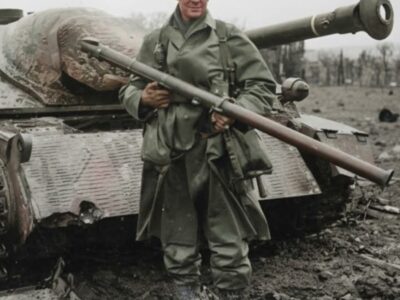
January 14th, 2023, Downing Street. Prime Minister Rishi Sunak announced Britain was sending 30 self-propelled guns to Ukraine. They were the AS90s, the mainstay of Royal Artillery firepower for three decades, the British Army’s only modern 155-mm self-propelled howitzers. By November of 2025, the Ministry of Defense quietly confirmed Britain had given Ukraine all 99 AS90s declared in its arms register, every single one.
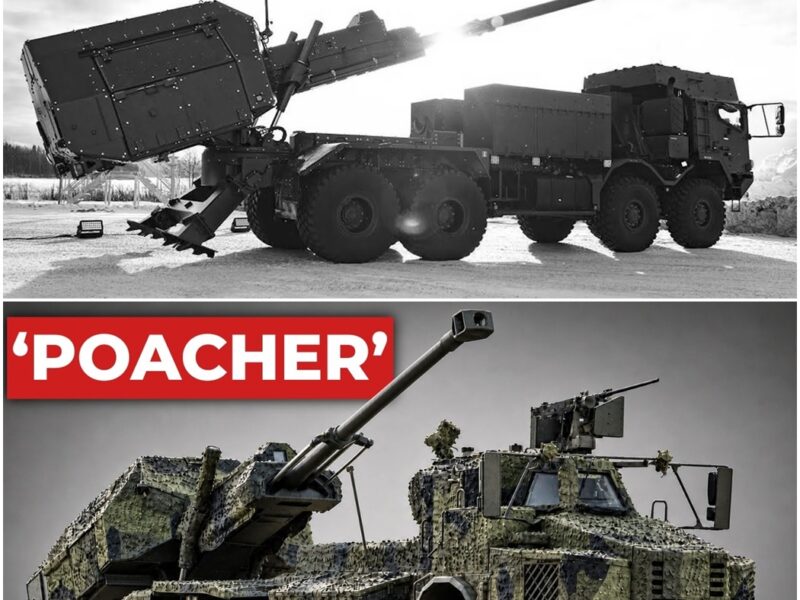
The British Army no longer operated a tracked self-propelled gun. What replaced them? 14 second-hand howitzers borrowed from Sweden, mounted on the chassis of a Volvo dump truck, designed for snow, not Salisbury Plain. A gun that had never fired a shot in British service until 2024. This is the story of the Archer, the Swedish truck cannon Britain leased in eight weeks to hide a strategic disaster.
And the story of what happened when those same guns reached Ukrainian hands, where they began destroying Russian artillery from over 40 km away. This is also the story of how Britain, the country that invented modern artillery, ended up with the smallest self-propelled gun fleet in its modern history.
The crisis began before Russia invaded Ukraine. The AS90 entered service in 1993. It was a 32-ton tracked howitzer firing a 39-caliber 155-mm gun. Range was roughly 25 km with conventional shells. The British Army originally received 179 of them. That number bled away through decades of defense reviews. By 2015, only 117 remained.
By 2016, roughly 89 were active. A funded upgrade to a 52-caliber barrel, which would have doubled the range, was proposed repeatedly. It was never financed. Then came February of 2022. Russia invaded Ukraine. The war became an artillery war. Ukrainian gunners burned through shells at rates not seen since the Korean conflict.
They needed Western guns to survive. Britain answered first. On January 14th, 2023, the initial 30 AS90s were promised. By April, that figure was 32. By April of 2024, 50. By the end of 2025, the entire declared fleet was gone. According to the Ministry of Defense Freedom of Information statement published in November 2025, all 99 remaining howitzers had been transferred to Ukraine, either as battle-ready platforms or as donor hulls for spare parts.
Two Larkhill regiments lost their guns. First Regiment Royal Horse Artillery and 19th Regiment Royal Artillery, the Scottish Gunners. The Mobile Fires platform program, the long-term replacement, was not due to deliver its first vehicle until 2028. That created a 5-year capability gap. Britain needed something. Something already in production.
Something that could be in service within 12 months. The answer was sitting in Swedish reserve storage. The Archer began as a Swedish problem. In the 1960s, Sweden replaced its French howitzers with a domestic design called the FH77. Built by Bofors at Karlskoga, it was a towed gun with a hydraulic loading crane and an auxiliary power unit that let it move short distances under its own power.
India bought the export version in the 1980s. That sale became the Bofors scandal, a kickback investigation that contributed to bringing down the Rajiv Gandhi government and canceled India’s option for 48 more guns. Those 48 canceled guns stayed in Sweden. Decades later, Bofors used them as the foundation for something new.
Engineers stripped the carriages, fitted longer 52-caliber barrels, and bolted the entire gun system onto the chassis of a Volvo A30D, a 6×6 articulated dump truck. The result was officially designated the FH-77BWL52. To everyone else, the Archer. The specification reads like a thought experiment in automation.
The crew sits in an armored cabin protected against small arms, fragments, mines, and chemical attack. They do not leave the cabin to fire. They do not load the gun. They do not aim it. A computer handles laying. A robotic magazine holds 21 rounds and feeds them automatically.
Modular charges feed in parallel. A muzzle velocity radar trims each shot in real time. The numbers that follow have caused British generals to use words like step change. From rolling stop to first round downrange, 20 seconds. From last round fired to back in motion, another 20 seconds. Maximum rate of fire, eight rounds per minute.
A full magazine empty in roughly 3 minutes of sustained fire. Multiple round simultaneous impact capability of four to six rounds, meaning a single gun can put six shells onto a single target at the same instant. Range with standard extended range ammunition reaches around 40 km.
With the M982 Excalibur precision round, sources put it between 50 and 60 km with reported miss distances under 2 m. The bonus sensor fused round handles armor from above. The crew compartment seats three to four soldiers, and the entire system can be operated by a single gunner in extremis. The Volvo chassis tops 70 km/h on road.
The British system it replaced managed 53. The Archer can wade through a meter of snow. It fits inside a C-17 Globemaster or an A400M Atlas. It can be loaded onto rail flat cars without disassembly. Sweden adopted 48 Archers. Norway co-developed the system, then withdrew in December of 2013 over delays, and chose the South Korean K9 instead.
Sweden absorbed Norway’s share and formally inducted the system on February 1, 2016. On March 16, 2023, Sweden agreed to sell 14 of those guns to the United Kingdom. The negotiation took eight weeks. Lieutenant General Sharon Nesmith, the Deputy Chief of the General Staff, called Archer a step change in capability and credited the speed of procurement as previously unseen in defense.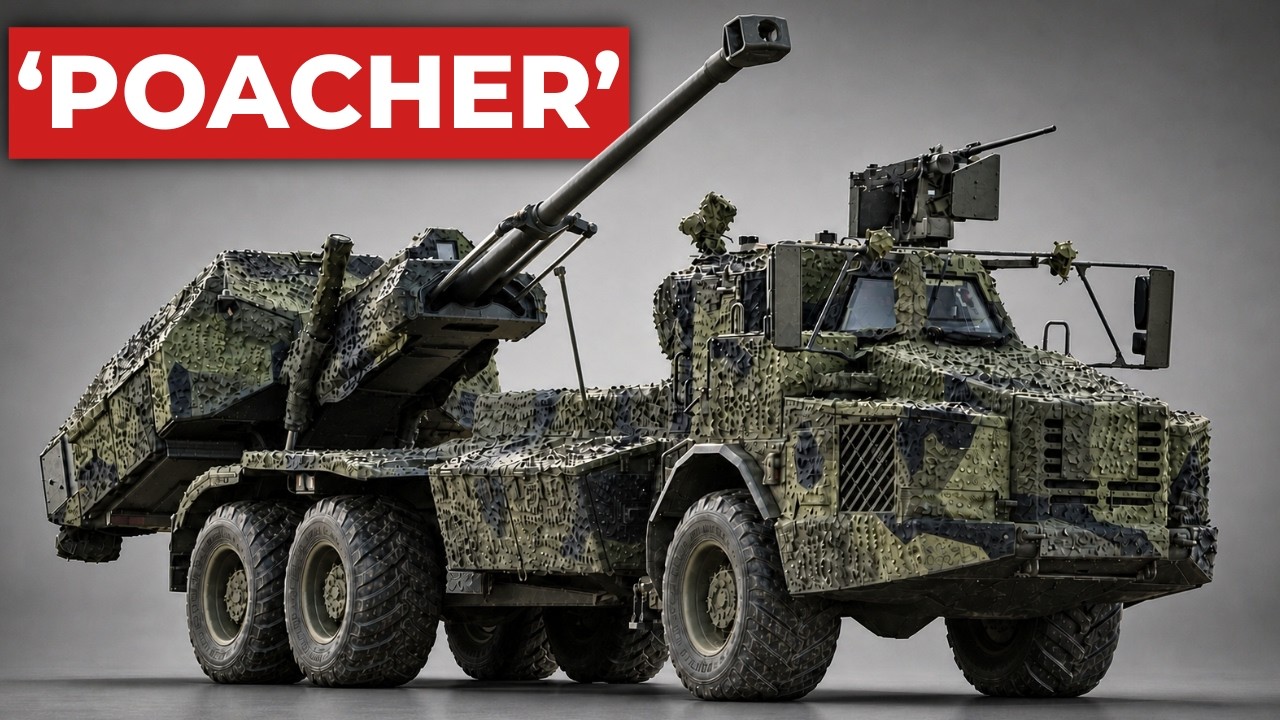
The acquisition price was never officially disclosed. Independent estimates place the per platform cost around 7 and 1/2 million pounds, but the figure remains unverified. The first gun arrived in October of 2023. All 14 had landed by July of 2024. 19th Regiment Royal Artillery brought the system into service, deploying a battery to Estonia in 2025.
First Regiment Royal Horse Artillery assumed the second tranche as their last tracked guns were withdrawn. Quick moment here. If you are finding this deep dive into British artillery interesting, hit subscribe. It genuinely helps the channel grow, costs nothing, and tells us to keep digging into stories like this one.
Now, back to combat. Eight Archers were the ones that mattered first. Sweden announced their donation to Ukraine on the same day in March of 2023 that Britain announced its own deal. The guns went to the 45th Separate Artillery Brigade named after General Myron Tarnavsky, based at Yavoriv in Western Ukraine.
Their crews had previously operated Soviet D-20 howitzers. They began learning a fully automated Western system in the middle of a war. The first publicly documented strike came in March of 2024 near Kreminna in Luhansk Oblast. Cued by drone reconnaissance from the 63rd Mechanized Brigade, an Archer crew destroyed three Russian D-20 howitzers in a single counter-battery engagement.
The 45th Brigade released grid coordinates and aerial verification footage. The Russian guns had been positioned to harass Ukrainian forces along the Svatove axis. They were gone within minutes of opening fire. In May of 2024 near Chervonopopivka, a 45th Brigade Archer destroyed a Russian 2S19 Msta-S, a tracked self-propelled howitzer roughly equivalent in concept to the British system that had been given away.
Drone footage confirmed the kill. The brigade’s caption read, “The Archer hits the target accurately.” A Ukrainian gunner interviewed in January of 2024 by a United 24 documentary crew gave the system its battlefield nickname. He had operated the Soviet D-20 for years. The Archer, he said, was sniper artillery. One shot, one kill.
The pattern was always the same. Drone spots the target. Coordinates uploaded over secure radio. Archer rolls into firing position. Four or five rounds in under a minute. Vehicle moving again within 30 seconds. Russian counter-battery radars usually got a return. By the time their guns fired back, the Archer was kilometers away.
That survivability is the real proof point, according to a French National Assembly Defense Committee report published in 2025, drawing on testimony from KNDS engineers. The German PzH 2000 and the Swedish Archer suffered availability drops to 32% and 38% respectively after 5 months of intensive Ukrainian operations. The French Caesar, by comparison, maintained over 60% availability with less than 10% of the fleet out of service at any time.
The reason is simple. A Ukrainian 155 mm gun in active service fires 60 to 90 rounds per day, peaking at 150, mostly at maximum range. Barrels wear out. Sweden responded in mid-2025 by shipping more than 10 spare barrels. By January of 2026, Sweden had delivered 26 of a pledged 44 guns to Ukraine.
The combat record is not flawless. In February of 2024 near Kupiansk, an Archer was struck by a Russian loitering munition. Russian sources claimed it was destroyed. Ukrainian sources said the damage was likely repairable. Later reporting described it as partially disabled. The dispute remains unresolved and is a clean example of how information warfare attaches itself to every battlefield event.
What is not disputed is the comparative picture. The Archer outranges the older British tracked system by roughly double. It deploys faster, displaces faster, and requires a smaller crew. It outranges the Russian 2S19 and the American M109 Paladin. It cannot match the heavy armor of the German PzH 2000 or the cross-country mobility of a tracked chassis under direct fire.
But it survives because it is rarely there long enough to be hit. According to Army Recognition, Russian artillery crews interviewed on Telegram channels have called the French Caesar the closest conceptual peer to the Archer, their most feared weapon. The Archer occupies the same tactical category. Strike fast, move faster, survive the counter-battery duel that kills slower guns.
The long-term British answer is not the Archer. It is the RCH155, a remote-controlled 155-mm gun module mounted on a Boxer 8×8 armored vehicle. The Ministry of Defense selected the system in April of 2024 under the Mobile Fires Platform program. On May 13th, 2026, the Organization for Joint Armament Cooperation awarded the contract for 72 RCH155s valued by Breaking Defense at close to 1 billion pounds.
According to the government statement first deliveries are in 2028 with a minimum deployable capability within the decade. The program supports at least 500 British jobs with steel forgings from Sheffield Forgemasters and assembly work at Rheinmetall Telford and KNDS Stockport. The RCH155 can fire eight rounds per minute out to 70 km, redeploys at speeds up to 100 km/h, and can be operated by just two soldiers from inside the vehicle.
Until those guns arrive, Britain depends on 14 Swedish trucks. The strategic picture is uglier still. The Royal Artillery’s two main self-propelled regiments share a single aging fleet borrowed from a country whose own army keeps only a handful of operational examples. The Commons Defense Committee, in its ready for war report, acknowledged the force could not sustain high-intensity war fighting.
General Sir Patrick Sanders, the former Chief of the General Staff, called the moment Britain’s 1937 moment, warning of gaps in inventory and ammunition stocks. He was effectively stood down early after raising the alarm too loudly. Lord Dannatt, another former Chief, argued that Britain must not only replenish what it gave away, but make a major new investment in land forces.
According to the Ministry of Defense, donations of artillery ammunition to Ukraine had reached 500,000 rounds by January of 2025. BAE Systems is building new plants at Glascoed and Washington to lift 155 mm production capability by up to 16-fold. Defense analyst Francis Tusa called artillery shells the bedrock of all armies, making adequate stockpiles essential. The bedrock has thinned.
The British Army that fielded 179 self-propelled guns at the end of the Cold War now operates 14. The Archer was not designed to save Britain. It was designed to defend Swedish forests in a Russian invasion that Sweden, until 2022, considered unlikely. The Volvo chassis came from a civilian dump truck. The gun came from a canceled Indian order tainted by scandal.
The whole system was built by a small Nordic neutral that, like Britain, had spent decades quietly underinvesting in heavy firepower. That gun is now in three armies. The Swedish one that built it, the British one that borrowed it, and the Ukrainian one that has used it to kill Russian artillery from over 40 km away with one round and a drone.
Britain gave away its last big guns to plug the gap, at least 14 trucks from Stockholm the truck cannon worked better than anyone expected.