“The Gambler” Was Turned Down Five Times Before Kenny Rogers Said Yes. D
Don Schlitz was 23 years old and working the overnight shift at a computer facility in Nashville when he wrote The Gambler. It was 1976. He had moved to Nashville two years earlier from Durham, North Carolina with the specific combination of ambition and uncertainty that characterizes the arrival of every songwriter who has decided that Nashville is where their career needs to happen and who has not yet determined whether Nashville agrees.
He was writing songs. He was playing them for anyone who would listen. He was learning in the way that professional songwriters learn which ideas were strong enough to go somewhere and which were not. The gambler came quickly. He wrote it in a single sitting, working through the metaphor of a card game and an old man’s advice on a train.
The idea that the strategy of a life could be condensed into the same logic as a hand of cards. that knowing when to hold and when to fold was a skill that applied to everything. That the most valuable gift one person could give another was the wisdom to read the situation rather than the rules. The song was structurally a short story, a narrative with characters and a specific moment and a piece of wisdom delivered at the end.
He recorded it himself. His version of The Gambler came out on his debut album in 1977 on a small label and entered the world without ceremony. The record received some airplay in some markets. It did not chart. Nobody came running to find out who had written it or what else this songwriter had. For most songs, this is the story.
A songwriter writes something good, records it, releases it, and the market responds with indifference. The song joins the enormous body of material that is technically available, pressed and distributed, and filed with the appropriate copyright office, and practically invisible. Schlitz knew this was possible.
He had not expected it to happen to this particular song because this particular song felt to him like something that was different from the material he recognized as merely good. But the market in 1977 was not yet confirming his assessment. Bobby Bear heard it. Bearer was a Nashville veteran, a country singer with a long career and good taste in material.
the kind of artist who could recognize a strong song when it crossed his desk. He recorded a version of The Gambler and released it. Bear’s version performed better than Schlitz’s version had. It reached the lower ranges of the country chart. It was, by the usual measures of what constitutes a successful career outcome for a song that has already failed once, a positive development.
It was not the outcome that the song deserved, and everyone who heard it knew it. The lyric was too strong, the concept too complete. The emotional hook too direct for a song that had now been recorded twice, and still not found the right combination of voice and production and moment that would allow it to become what it was capable of becoming.
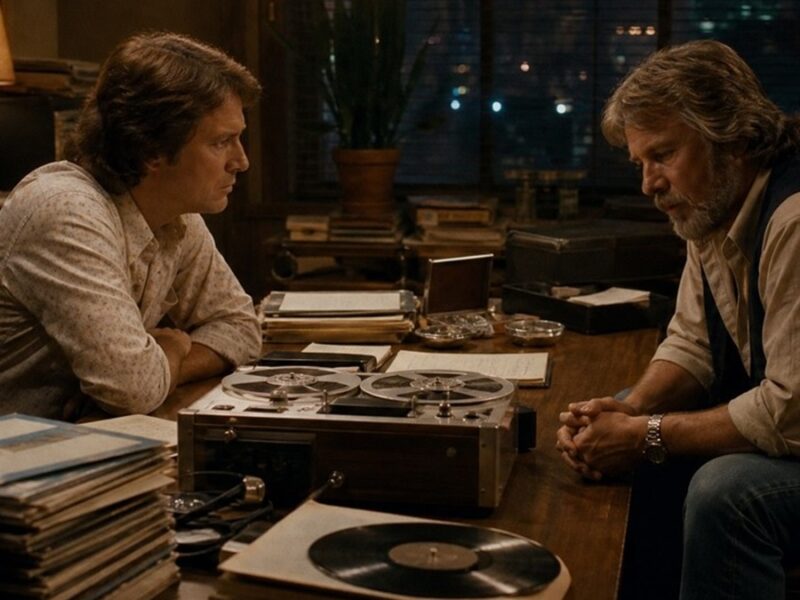
The song was not wrong. Something else was. The question was what and when and who. The recording session for the gambler produced what recording sessions sometimes produce when all the necessary elements are correctly assembled. A take that did not require extensive rethinking after the fact that arrived more or less complete in the form it needed to be in.
Larry Butler’s production gave the song the specific character that Kenny Rogers’s version has and that the earlier versions lacked. The slightly spare arrangement that kept the attention on the narrative rather than the sound. The tempo that allowed the lyric to breathe without losing momentum.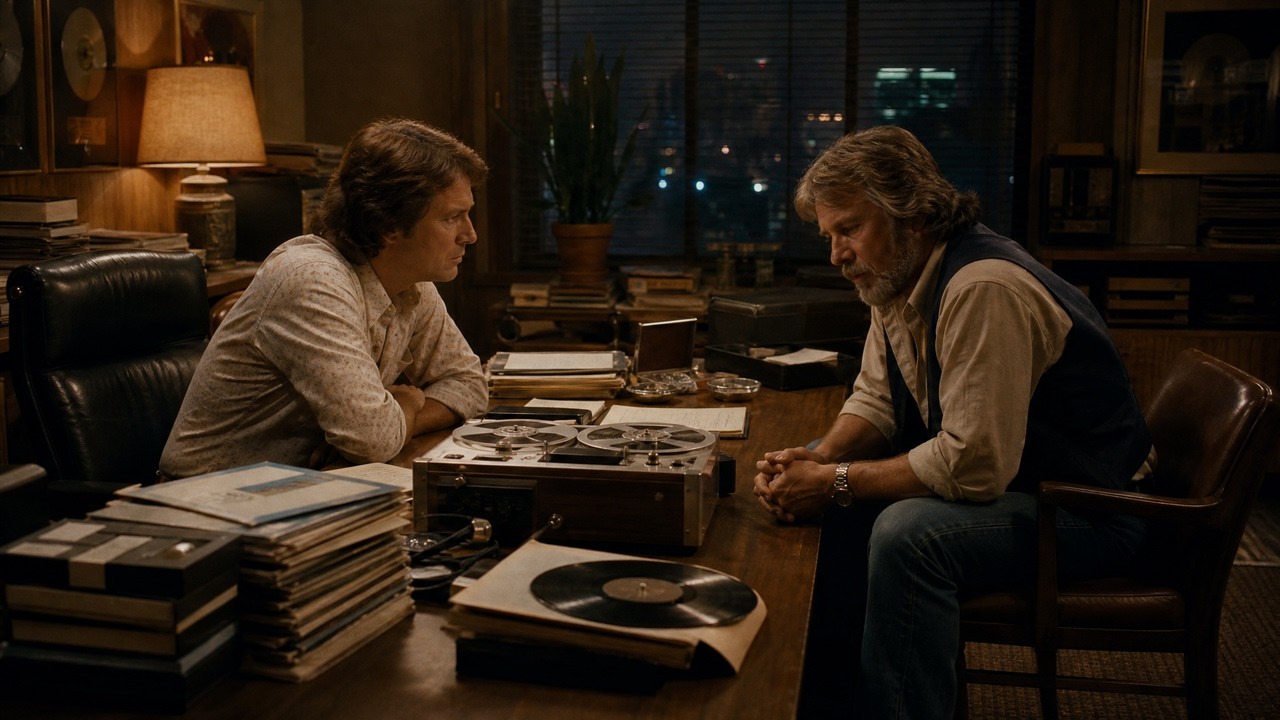
The way the instrumental track supported the storytelling without competing with it. Rogers’s voice delivered the old man’s advice with the quality of someone who had actually been on the train, who had actually had the conversation, who knew from their own experience what it meant to learn when to hold and when to fold. The song was released as a single in November 1978.
It reached number one on the country chart. It crossed into the pop chart, reaching number 16. It won the Grammy Award for best male country vocal performance in 1980. And the success of the single initiated a franchise that no one had anticipated in the recording session. A series of five television movies, all built around the character of Brady Hawks, the Gambler, that made Kenny Rogers one of the most recognized faces on American television in the early and mid 1980s.
Don Schlitz, who had written the song in his Nashville apartment in 1976 while working overnight at a computer facility, was by the early 1980s one of the most commercially successful songwriters in Nashville. In part because of what the gambler had become, in part because its success had finally made clear to the industry what his material was capable of.
He went on to win the Country Music Association Award for Song of the Year multiple times. He wrote songs for a range of artists whose combined record sales represented a significant portion of the commercial output of Nashville for the following two decades. The song that had failed twice before Rogers recorded it became after Rogers recorded it the most commercially durable song either of them had ever been associated with.
The lyric, hold them, fold them, walk away, run, became a piece of American vernacular that many people who had never heard the original recording could reproduce from memory. It entered the cultural vocabulary in the specific way that a very small number of songs in any era enter it.
Not as a record, but as a phrase, a concept, a piece of portable wisdom that people carried with them and applied to situations that had nothing to do with card games. Kenny Rogers in 1977 and into 1978 was at a specific and somewhat complicated moment in his career. Lucille had given him a number one country hit and crossed into the pop chart in 1977.
And the experience of crossover success had clarified something about what his career could become that had not been entirely clear before. He was not simply a country artist. He was not simply a pop artist. He was something that operated between the categories, a voice and a persona that appealed to audiences who did not define themselves through genre affiliation, who would follow him wherever his material took him.
The challenge in the period after Lucille was finding material that matched that specific quality. He needed songs that had narrative, that told a story rather than simply expressing an emotion, that had characters and a situation and a resolution, that gave a listener something to hold on to beyond the feeling the song produced.
His instinct for storytelling was in that period already welldeveloped. What he needed was a song that met that instinct at the level it deserved. Larry Butler, his producer, heard The Gambler. It is not entirely clear which version he heard first, Schlitz’s original, or the Bobby Bear recording, but at some point in 1978, the song arrived in the awareness of Kenny Rogers’s production team.
Butler brought it to Rogers. This is the moment that the entire subsequent history of the song depends on. the specific instance of a song, finding the person who could do with it what it needed to be done. Rogers listened to the demo. The song was in its existing recorded versions recognizably good. The lyric was intact.
The concept was complete. The story was there. But the version he was hearing had not yet become what the song was capable of becoming because the voice speaking the lyric had not yet been the right voice for it. The words fit Rogers in a way they had not fit the previous singers in quite the same degree.
not because they were better singers, but because the specific quality his voice carried, the warmth and the narrative directness, and the sense of a person speaking from experience rather than performing an emotion, was exactly what the lyric needed, and exactly what the previous recordings had not fully provided.
He decided to record it. This is the choice that the song’s entire subsequent life depends on. Not the decision to write it. Schlitz had written it and it had been written well. Not the decision to record it the first time or the second, but this decision by this particular person at this particular moment in this particular career.
the decision that The Gambler was the right song for where he was and what he was trying to do and that he was the right person for what the song had been waiting to become. There is a version of this story in which the decision Rogers made in 1978 is described as obvious in retrospect as the natural outcome of a great song finding its way to the right artist.
inevitable in the way that successful things are sometimes described as inevitable after they have happened. The problem with that version is that it erases the five years and the multiple failures that preceded it. Don Schlitz wrote the song in 1976. His own version, recorded and released, was ignored. Bobby Bear’s version reached the lower chart positions and then faded.
The song had demonstrated twice in public that it was capable of failing. The market’s response to the first two iterations was not encouraging. There was no obvious reason in the logic of the music industry as it operated in 1977 and 1978 to believe that a third recording would produce a different result. What Rogers brought to the song was not something that can be manufactured in advance.
It is only visible in the result and the result was the specific quality of his voice delivering that lyric in that arrangement at that moment in his career. The warmth he had, the narrative directness, the ability to make a listener feel that the old man on the train was not a fictional construct but a real person whose advice was specifically for them.
These qualities which had been developing in Rogers across 20 years of professional performing, the jazz clubs of Houston, the folk circuit of the 1960s, the first edition years, the country crossover, converged in the recording of The Gambler in a way that made the song finally become what it had always been capable of being.
Five attempts over several years, five moments when the song was available to anyone who wanted to record it to make it their own to be the voice that the lyric needed. And in each of those moments, something was not quite right. Not the song, but the combination of voice and timing and production and career context that a song needs to become something more than itself.
When all of those things finally aligned in a Nashville recording studio in 1978, the result was not merely a number one country record. It was a piece of American culture. It was a phrase that people would still be quoting 50 years later in contexts that had nothing to do with country music.
It was the song that defined the career of an artist who had already had a career and that turned a songwriter who had been writing in obscurity into one of the most celebrated writers in the history of Nashville. Don Schlitz wrote it in a single sitting in a Nashville apartment in 1976. It took two more years and five attempts and one final decision by one final artist to find out what it actually