Battle of Hürtgen Forest: The U.S. Army’s COSTLIEST Mistake in WWII (Sept.-Dec. ’44) D
In the autumn of 1944, Allied armies surged toward Germany’s borders. There was a widespread belief that the war in Europe was nearing to its end. Paris had been liberated. German forces appeared to be retreating, and optimism spread through Allied headquarters. Yet, in a dense woodland along the Belgian-German frontier, events would unfold that shattered this confidence.
The Battle of Hürtgen Forest became one of the longest continuous battles ever fought by US forces. It was also one of the most costly and least understood. While the Battle of the Bulge captured headlines and public imagination, the brutal struggle in the Hürtgen Forest remained overshadowed.
At first glance, the Hürtgen Forest seemed like an unlikely focal point for major operations. It was a rugged, densely wooded area covering roughly 140 square kilometers, filled with narrow trails and limited visibility. Yet, its location made it strategically important to ease lady approaches to the industrial heartland of Germany.
The American First Army under General Courtney Hodges saw the forest as a necessary obstacle to clear. The plan was straightforward. Secure the forest, protect the southern flank of the main advance, and move on to the Rhine. However, the German Army under General Walter Model had no intention of abandoning the region.
Known as Hitler’s Fireman, Model excelled in defensive warfare. He recognized immediately that the forest offered ideal terrain for attritional combat. Instead of retreating, he chose to hold and bleed the Americans dry. The Hürtgen Forest was not merely a battlefield, it was an adversary. Tall trees blocked visibility and muffled sound.
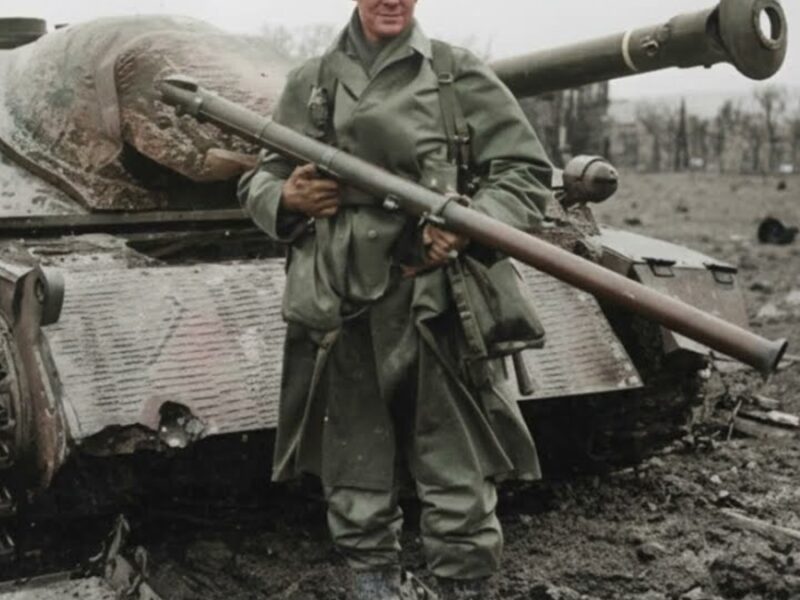
The ground was uneven, often muddy. Roads were scarce. Perhaps most deadly of all were the trees themselves. German artillery shells detonating in the canopy created lethal tree bursts. These explosions showered soldiers below with shrapnel, making even well-dug foxholes ineffective.
As autumn turned into winter, conditions worsened. Rain turned paths into quagmires. Cold seeped into bones. Resupply became a nightmare, and wounded men often lay for hours or days before evacuation. The forest negated many of the advantages the Americans held. Tanks were largely useless. Air support was unreliable.
Communications frequently broke down. In this environment, the battle developed into small unit engagements, close, brutal, and chaotic. The first American units entered the forest in September of 1944. The US 9th Infantry Division led the early assaults, targeting the town of Schmidt, a critical position controlling access to some river dams.
Progress was slow and costly. Every advance was met with stiff resistance as German troops used prepared positions, minefields, and artillery to devastating effect. Despite setbacks, the Americans pressed on. Commanders believed that persistence would eventually break German resistance.
Instead, the opposite occurred. German forces counterattacked repeatedly, often reclaiming lost ground. The battle became a vicious cycle. Attack, suffer heavy casualties, withdraw, regroup, and attack again. By October, it was clear that the forest would not be taken quickly. As casualties mounted, fresh American divisions were committed.
The 28th Infantry Division, known as the Keystone Division, entered the fight in November with orders to capture Schmidt and push toward the dams. What followed was a disaster. The division advanced into the forest under terrible conditions, facing entrenched German defenders. Communication broke down almost immediately.
Units became isolated. Supply lines collapsed. When the 28th reached Schmidt, they initially captured it, but could not hold it. German counterattacks, supported by armor, overwhelmed the exhausted American troops. The town changed hands multiple times in brutal fighting. Losses were staggering.
Entire companies were wiped out. The division was eventually withdrawn, shattered. Still, the attacks continued. The Hürtgen Forest became synonymous with suffering. The forest offered no respite. Even rest areas were within range of German guns. Psychological strain was immense. The inability to see the enemy, combined with the ever-present threat of sudden death, wore down morale.
Many soldiers described the battle as more exhausting than any they had previously experienced. Almost 33,000 American casualties were recorded, with German losses estimated between 12,000 and 16,000. But, beyond the numbers were countless cases of frostbite, trench foot, and combat fatigue.
So, the casualty figures tell only part of the story. One of the most debated aspects of the Battle of Hürtgen Forest is the decision to continue the offensive. American commanders believed that securing the forest was necessary to protect their flank and prevent German interference with operations toward the Rhine.
Yet, critiques argue that the forest could have been bypassed. The Americans might have advanced north, avoiding the forest entirely. Instead, the decision was made to attack head-on. Meanwhile, Walter Model exploited this choice masterfully. He committed just enough forces to hold the line, using the terrain to multiply their effectiveness.
For Model, the forest was a defensive dream, a place where he could inflict maximum casualties at minimal cost. In this sense, the battle became a classic example of strategic miscalculation. By late November, the fighting reached its peak intensity. The US 4th Infantry Division and other units launched renewed assaults, attempting once more to break through.
The results were devastating. Attacks bogged down almost immediately. Units advanced only a few hundred meters before being pinned down. Casualties mounted at an alarming rate. It was clear by this stage that the operation had become a grinding war of attrition, one that favored the defender.
Before we continue, this channel exists because it stays independent. If you believe serious military history should stay that way, consider channel membership. Link below. As December began, the Allies were still fighting in the Hürtgen Forest. Progress remained minimal. German resistance showed no signs of collapse.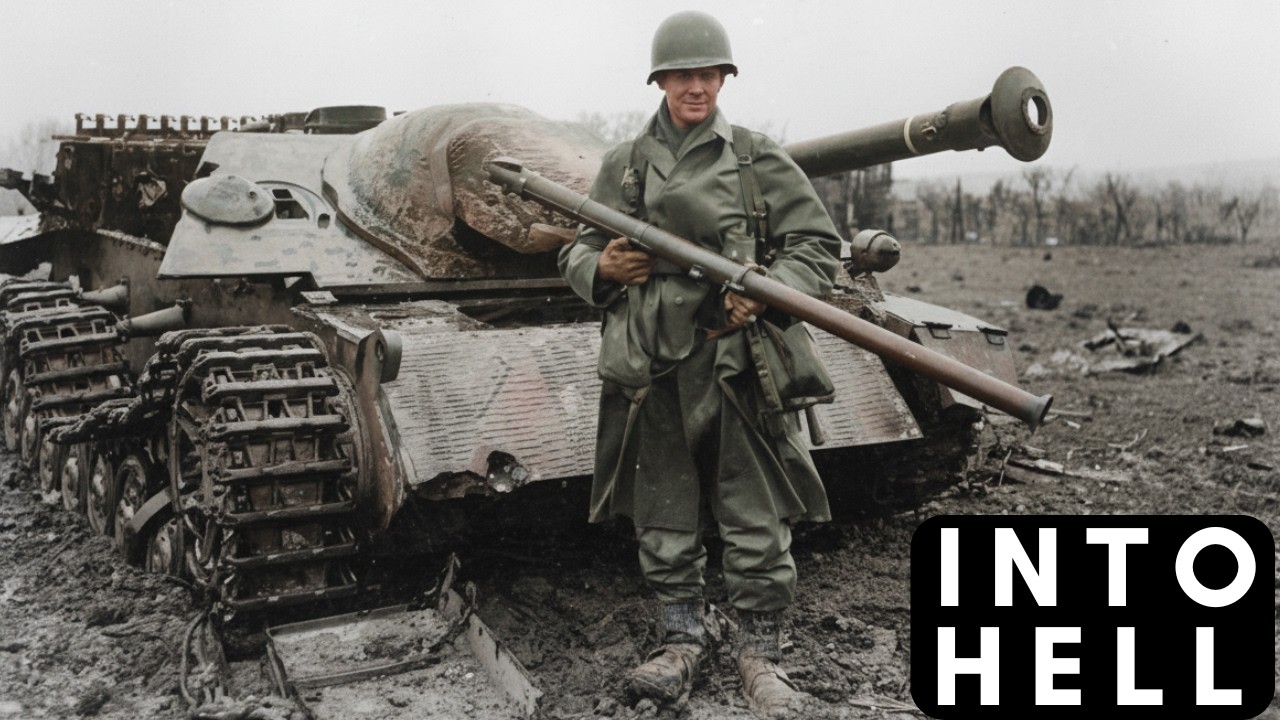
Then, on the 16th of December, everything changed. The Germans launched a massive offensive through the Ardennes, an operation that would become known as the Battle of the Bulge. The focus of the war shifted overnight. American forces were forced to redeploy to meet the new threat. The Hürtgen Forest, after months of brutal fighting, was effectively abandoned as a primary objective.
Ironically, the forest remained in German hands until after the Ardennes offensive had been repulsed. The Battle of the Bulge quickly overshadowed the Hürtgen Forest in public memory. This is not surprising. The Ardennes offensive was dramatic. A massive German counterattack that created a visible bulge in Allied lines.
It involved large-scale maneuver, famous units, and clear turning points. In contrast, the Hürtgen Forest was static, grinding, and difficult to narrate. There were no sweeping breakthroughs, no dramatic encirclements, only attrition. Yet, in terms of cost, the forest was arguably more devastating. The battle remains a cautionary tale.
It highlights the dangers of underestimating terrain and overestimating objectives. It demonstrates how even a technologically superior force can be neutralized by environment and determined defense. For the US Army, the battle provided hard-earned lessons in combined arms, logistics, and adaptability.
For historians, it stands as a reminder that not all battles are defined by victory or defeat. Some are defined by their cost. It was a battle fought in darkness, in mud, and under trees that turned the sky itself into a weapon. And for those who fought there, it was a place they would never forget, even if history did.
I hope you enjoyed this episode. If you want to support my channel, check out the PayPal donation link in the description, or consider becoming a member. To make sure you don’t miss my future work, subscribe to my channel and press the bell notification button. Thank you for watching, and see you in the next video.